
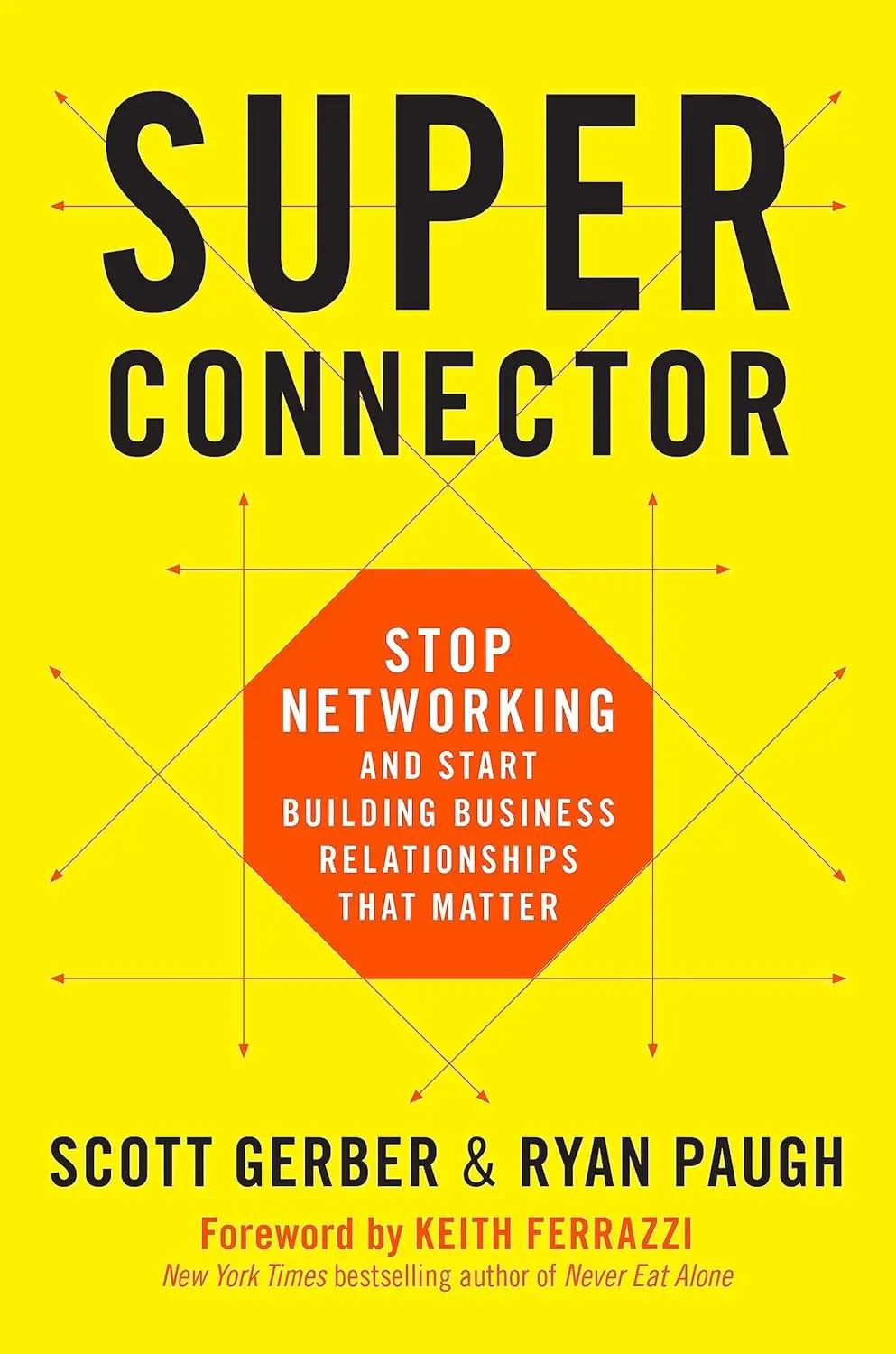
Superconnector is Scott Gerber and Ryan Paugh’s argument that the traditional approach to networking, meeting as many people as possible and exchanging business cards, is broken. The authors, who co-founded the Young Entrepreneur Council and have built large professional communities, argue that the best connectors are not the people with the most contacts but the people who build the deepest, most mutually beneficial relationships.
The book introduces three connector archetypes. The “Thinker” is strategic and analytical, building relationships through intellectual contribution and curated introductions. The “Enabler” is a natural helper who connects people to opportunities and resources. The “Connection Executor” is organized and systematic, maintaining relationships through consistent follow-up and structured communication. Most people lean toward one type but can develop skills from the others.
The practical advice centers on selectivity and depth. Instead of trying to meet everyone, the authors recommend identifying the specific relationships that would be most valuable and investing real time and effort in them. They cover how to add value before asking for anything, how to make introductions that actually work (by asking both parties for permission first), and how to maintain relationships without the overhead of managing hundreds of superficial contacts.
For founders, the book offers a more sustainable approach to networking than the “attend every event and meet everyone” strategy that many early-stage entrepreneurs follow. Building a smaller network of people who genuinely know you and want to help you is more effective than having thousands of LinkedIn connections who wouldn’t recognize you in person.
The writing is direct and the chapters are organized around specific skills rather than general philosophy. Some readers will find the book too focused on the mechanics of networking and not enough on the mindset. Others will appreciate the specificity. It pairs well with Never Eat Alone, which covers similar territory with more emphasis on the philosophy of generosity, while Superconnector focuses more on the operational systems for maintaining relationships.
