
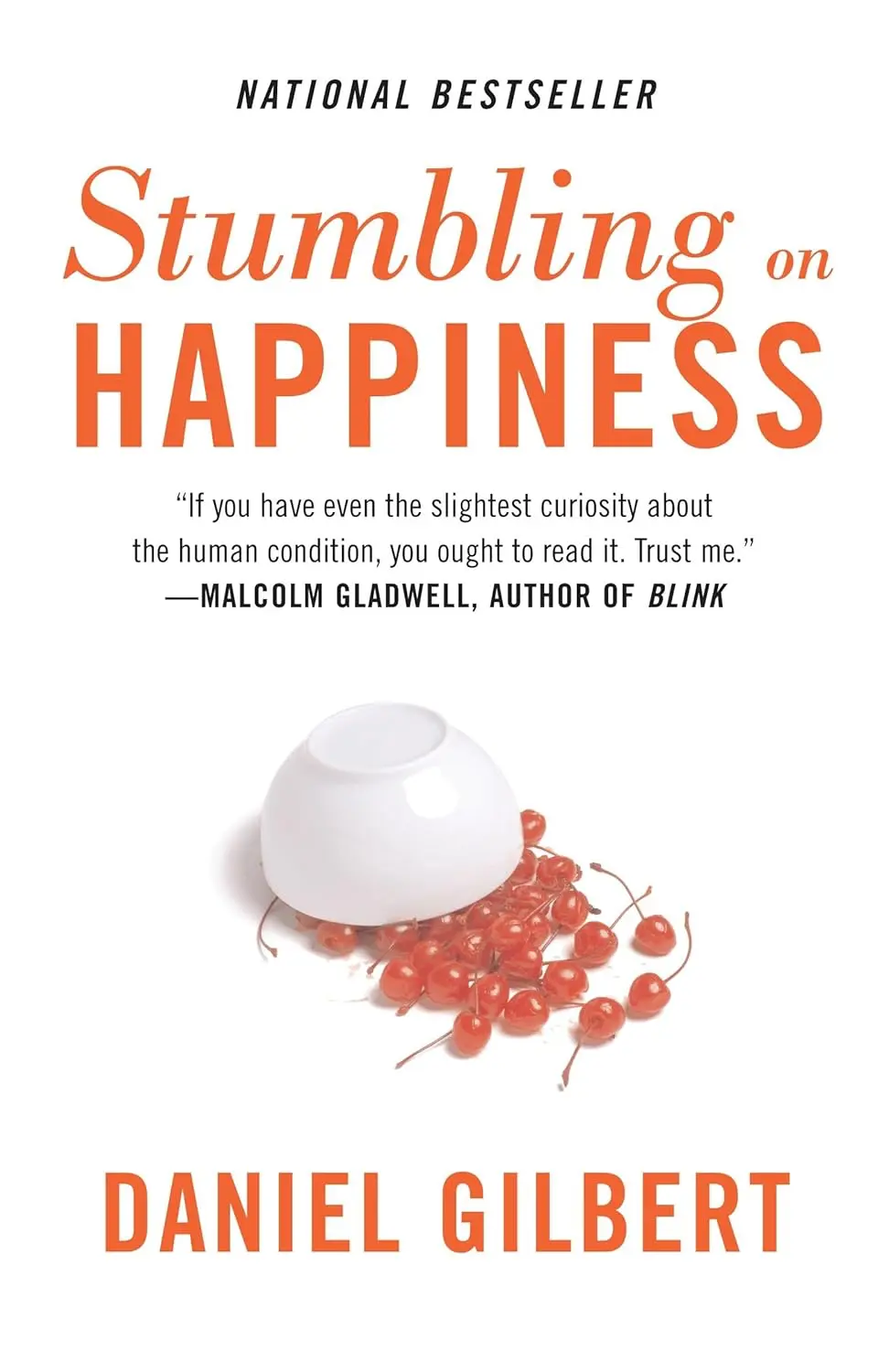
Gilbert’s research focuses on affective forecasting, the process of predicting how we will feel about future events. His central finding is that we are bad at it. Consistently, measurably, predictably bad. People overestimate how happy a promotion will make them, overestimate how miserable a breakup will make them, and underestimate how quickly they will adapt to both good and bad circumstances.
The book explains why. Our imaginations have several built-in flaws. They fill in details that are not there (you imagine a vacation but your brain conveniently skips the flight delays and sunburns). They project current feelings onto the future (when you are hungry, everything on the menu sounds good; when you are full, nothing does). And they fail to account for our psychological immune system, which is remarkably good at helping us rationalize and adapt to outcomes we did not want.
Gilbert writes with a dry humor that makes the research accessible without dumbing it down. The book is organized as a series of arguments, each building on the last, with studies and thought experiments illustrating each point. He is a good enough writer that the book reads more like an extended essay than a textbook.
The practical implication is counterintuitive: the best way to predict how you will feel about a future experience is not to imagine it in detail but to ask someone who is currently having that experience how they feel. We resist this advice because we think our situation is unique. It usually is not.
For founders, this matters because entrepreneurship is full of decisions based on imagined futures: how it will feel to raise funding, launch a product, hire a team, reach a revenue milestone. Gilbert’s research suggests that these imagined feelings are unreliable guides for decision-making, and that building feedback loops with people who are further along the path is a better strategy.
Tim Ferriss, Derek Sivers, and James Clear have recommended the book. At about 300 pages, it is well-paced and genuinely entertaining. The tone is more playful than most psychology books, which makes it a good palate cleanser between heavier reads.
