
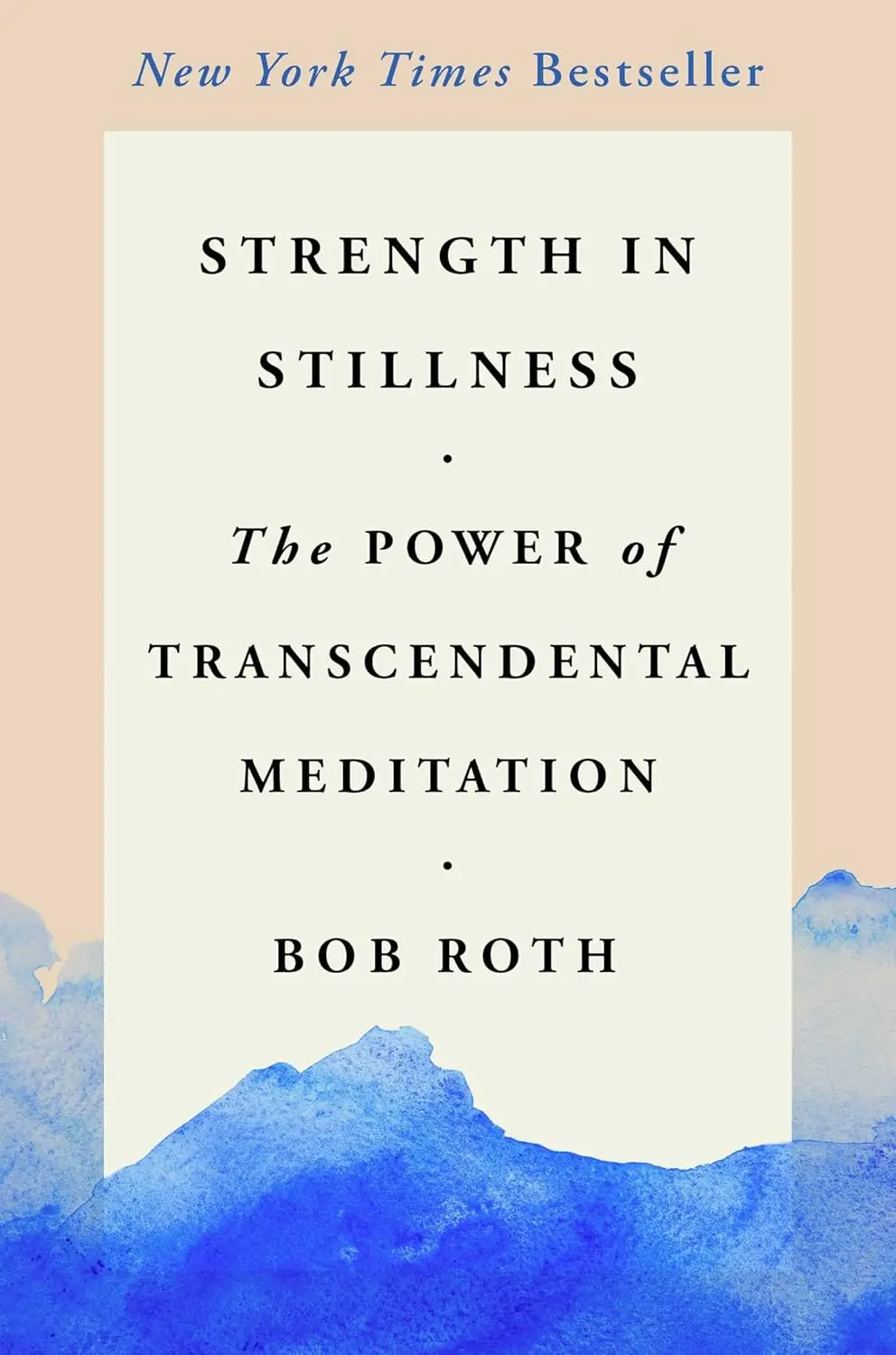
Bob Roth describes himself as the least likely meditation teacher you will meet. He wears suits. He works out of Midtown Manhattan. His friends joke that he is a meat-and-potatoes vegetarian. He is obsessed with science and allergic to anything that sounds like woo-woo. He has been teaching Transcendental Meditation for over fifty years.
The book makes a specific distinction that most meditation discussions skip. Roth identifies three categories of meditation: Focused Attention (concentrating on a single point, like a candle flame or a mantra), Open Monitoring (observing thoughts and sensations without attachment, as in mindfulness), and Self-Transcending (allowing the mind to settle inward effortlessly, which is what TM does). He argues that these are different techniques with different mechanisms and different outcomes, and that lumping them together under the word “meditation” creates confusion.
TM, as Roth explains it, involves sitting with closed eyes for twenty minutes twice a day, silently repeating a mantra given to you by a trained teacher. You do not concentrate on the mantra. You do not try to empty your mind. You use the mantra as a vehicle that allows the mind to settle naturally toward quieter levels of thought. The technique requires no belief, no effort, and no special posture. Roth emphasizes that the effortlessness is the point. TM is not about trying harder. It is about trying less.
The research section covers over 400 studies published in peer-reviewed journals, including JAMA Internal Medicine and the American Heart Association’s publications. Findings include reduced blood pressure, lower cortisol levels, improved cognitive function, and measurable changes in brain wave patterns. Roth is careful to cite specific studies rather than making general claims, which gives the science sections more credibility than meditation books that handwave about “proven benefits.”
The stories about Roth’s students provide the texture. Ray Dalio credits TM for his equanimity and decision-making. A combat veteran describes the first night he slept without nightmares after learning the technique. An inner-city school principal describes how a Quiet Time program using TM reduced disciplinary incidents.
The book was an instant New York Times bestseller. It is short, direct, and deliberately free of the spiritual language that makes some people dismiss meditation before trying it. Whether TM is actually better than other forms of meditation is debatable. That Roth makes the clearest available case for it is not.
