
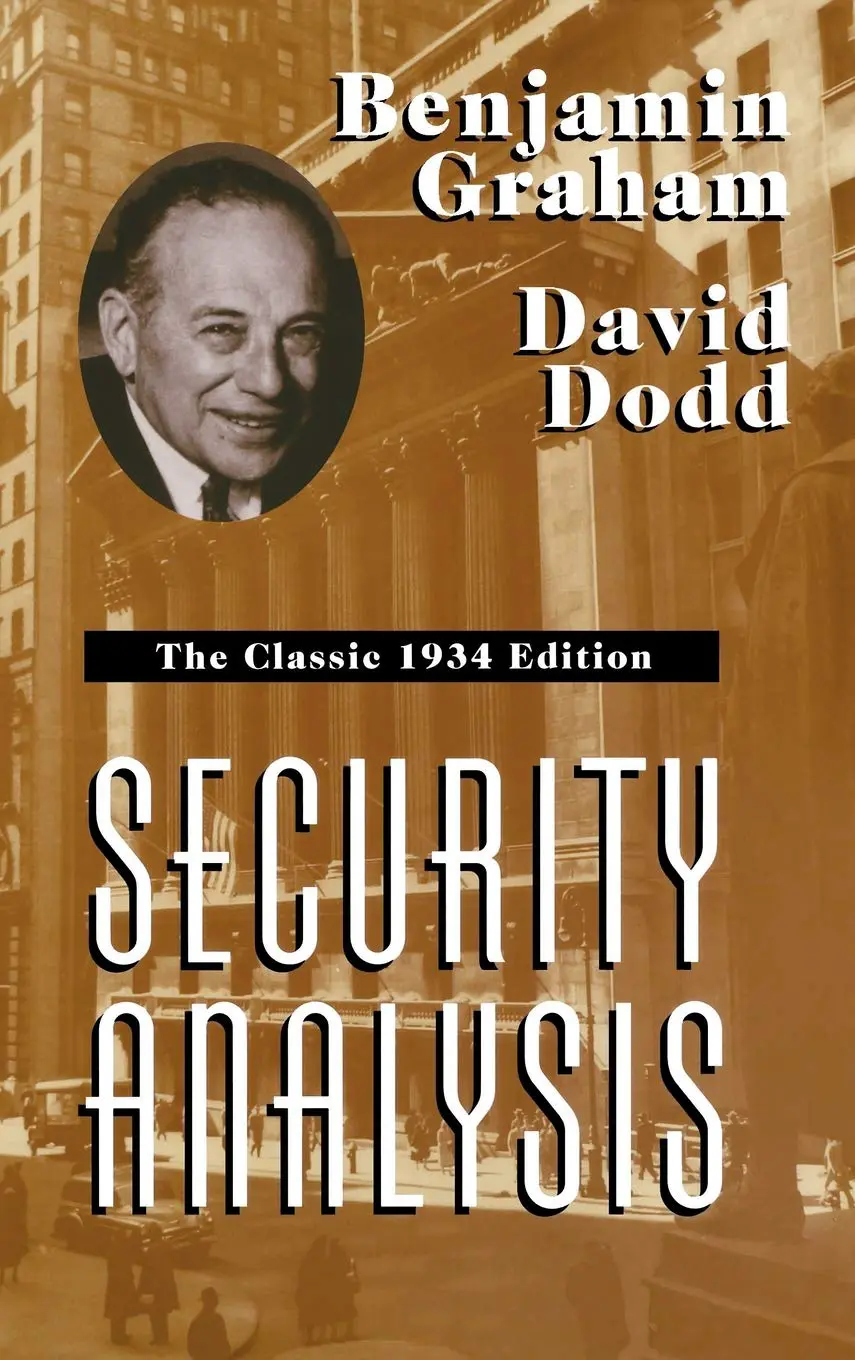
Security Analysis is the academic foundation for everything Warren Buffett and Charlie Munger do. Published in 1934, four years after the crash of 1929, it was written as a corrective to the speculative frenzy that had driven stock prices to absurd levels and then destroyed them.
The core method is what Graham and Dodd call “quantitative analysis”: studying a company’s balance sheet, income statement, and cash flows to estimate what the business is actually worth, independent of what the stock market says. If the stock price is significantly below that estimated value, buy. If it is above, do not.
The book is divided into sections on bonds, preferred stocks, and common stocks, with extensive discussion of how to read financial statements, how to identify accounting tricks that inflate reported earnings, and how to evaluate management quality. The analysis is detailed and methodical. Graham and Dodd do not make investing sound exciting because they do not think it should be.
The 1934 edition is the most commonly recommended, though later editions (1940, 1951, 1962) updated the examples and refined some of the methods. The 1934 edition has a rawness that reflects the post-crash environment in which it was written. Graham and Dodd had watched billions of dollars in paper wealth disappear, and their conservatism is a direct response.
At about 700 pages, the book is dense and technical. It was written as a textbook for Columbia Business School students, and it reads like one. This is not a weekend read. It is a reference that professional investors return to for decades.
For founders, the financial analysis skills covered in this book are directly applicable to evaluating potential acquisitions, understanding investor term sheets, and managing your own company’s finances. Warren Buffett and Charlie Munger have both called it the most important book on investing ever written.
The book is old enough that the specific companies analyzed no longer exist, but the method for analyzing them is timeless.
