
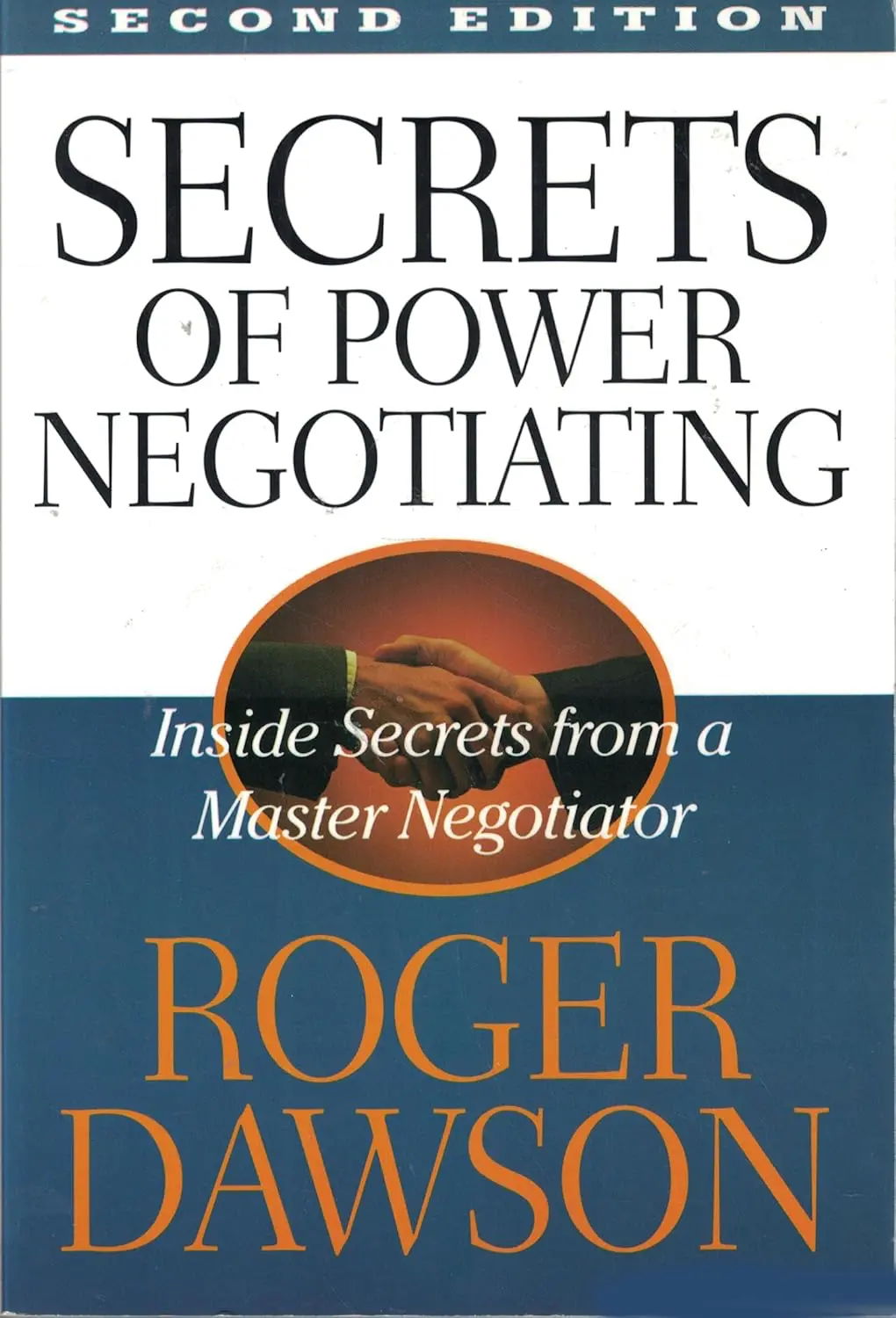
Roger Dawson spent decades teaching negotiation to business professionals. He was a former president of a major real estate company, a platform speaker, and a consultant who had trained thousands of people in hundreds of organizations. Secrets of Power Negotiating is the book he wrote to put his complete system in print.
The book is organized chronologically: beginning gambits, middle gambits, and ending gambits. A gambit is Dawson’s word for a specific negotiation tactic. Beginning gambits include asking for more than you expect to get (so you have room to concede), flinching visibly at the first offer (to signal that it is unacceptable), and never accepting the first offer (because the other side almost certainly has more room than they are showing).
Middle gambits cover how to maintain momentum and avoid concessions. Dawson teaches the vise technique: responding to any offer with “You’ll have to do better than that” and then staying silent. He covers the trade-off principle: never making a concession without getting something in return. He explains good-cop/bad-cop dynamics, how to recognize them, and how to use them.
Ending gambits address how to close deals. Dawson covers the nibble (asking for a small additional concession after the main terms are agreed), walking away (and knowing when the other side is bluffing about walking away), and the importance of making the other side feel like they won.
The approach is tactical and unapologetic. Dawson does not wrap his advice in collaborative language or pretend that negotiation is primarily about building relationships. It can be, but his focus is on getting better outcomes. He treats negotiation as a skill with specific techniques that can be learned, practiced, and applied, the same way you would learn to play a musical instrument.
The book has been through multiple editions and has sold hundreds of thousands of copies. It is commonly assigned in sales training programs and real estate courses. The audiobook version, which Dawson narrated himself, is one of the bestselling audio programs in the negotiation category.
Some of the tactics will feel aggressive if you are used to negotiation books that emphasize win-win outcomes, like Getting to Yes. Dawson is not opposed to win-win, but he is primarily interested in making sure you do not leave money on the table. The two approaches are not incompatible, but they start from different assumptions about what negotiation is for.
