
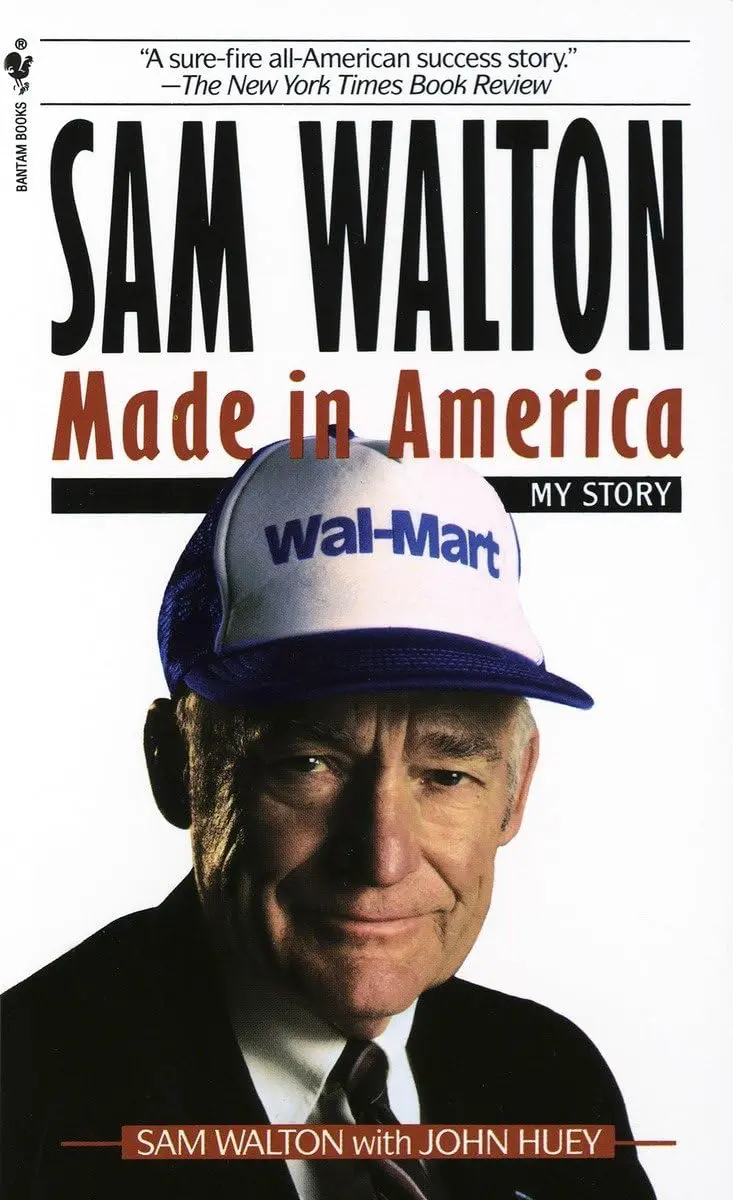
Sam Walton wrote this autobiography in the last year of his life, and it reads like a conversation with someone who genuinely cannot understand why everyone does not do things the way he does. His approach to retail was simple and he repeated it thousands of times: buy cheap, sell cheap, treat employees like partners, and never stop visiting your stores to see what is actually happening.
The early chapters cover Walton’s career before Walmart. He ran a Ben Franklin franchise store in Newport, Arkansas, and lost his lease after making it the most successful franchise in the region. Instead of quitting, he moved to Bentonville and started over. The experience of losing a store he had built from nothing taught him a lesson he never forgot about owning rather than leasing.
Walton’s competitive intelligence was legendary. He visited competitors’ stores constantly, measured their aisles, checked their prices, and talked to their employees. He flew his own plane to scout locations and would land in a field near a competitor’s store to walk around inside. This was not corporate espionage. It was a retail operator who believed the best ideas were already out there and his job was to find them.
The book also covers Walton’s management philosophy. He shared profits with employees through stock ownership, held Saturday morning meetings that combined business reviews with pep rallies, and cultivated a culture where store managers were treated as independent operators rather than cogs in a bureaucracy.
For founders, the most relevant lesson is Walton’s relentless focus on the basics. He did not chase trends. He did not try to be original. He found what worked, did it consistently, and scaled it efficiently. The compound effect of small improvements, applied thousands of times across thousands of stores, is what turned Walmart into the largest company in the world.
Jeff Bezos has called it one of the most important books for understanding retail. Warren Buffett and Howard Schultz have also recommended it. At about 290 pages, the book is direct and unpretentious, like Walton himself.
