
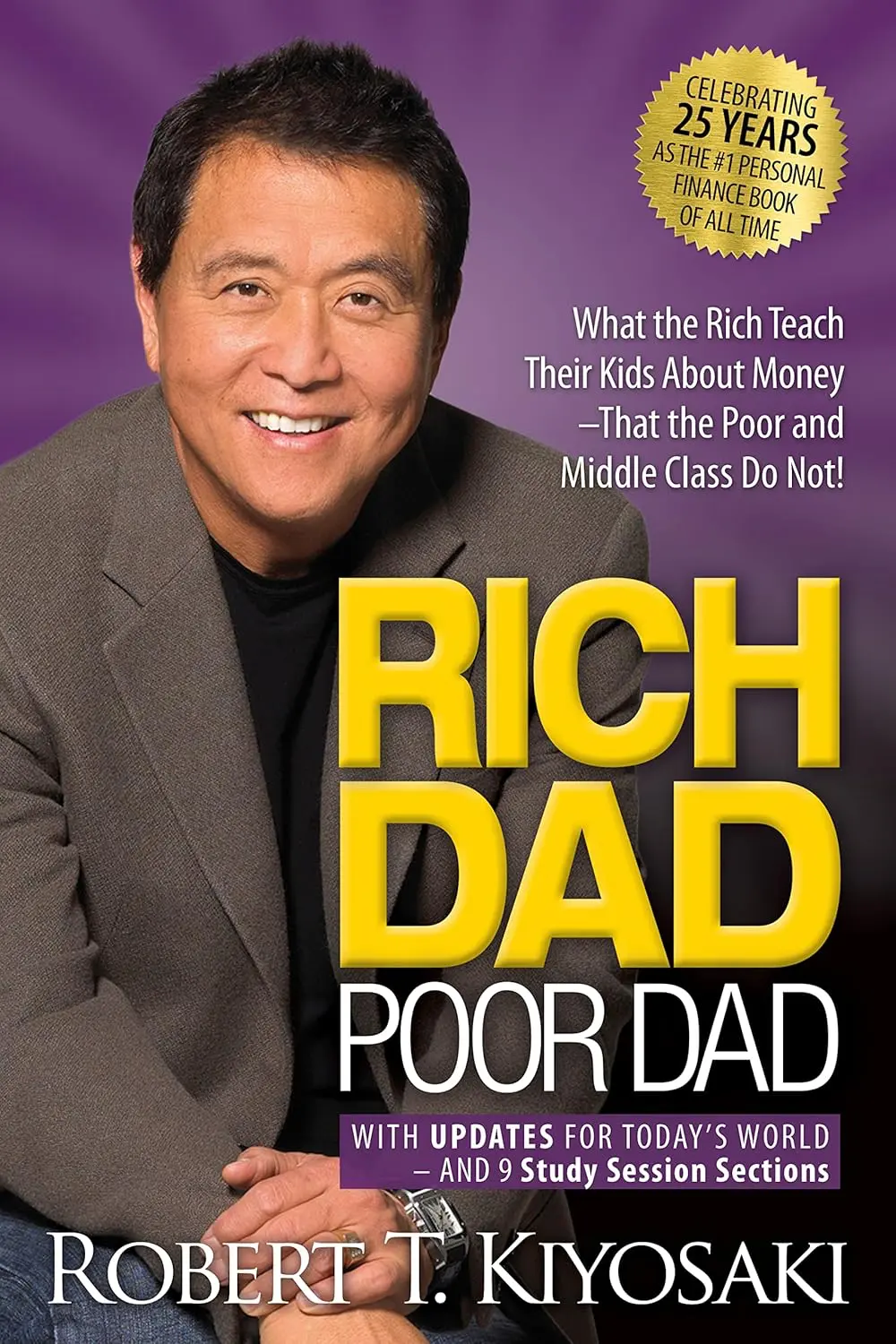
Rich Dad Poor Dad is structured around lessons Kiyosaki says he learned from two father figures growing up in Hawaii. His biological father was well-educated and held government jobs. His friend’s father never finished high school but built a real estate and business empire. The book compares their approaches to money, work, and wealth.
The core lesson is the distinction between assets and liabilities. Kiyosaki defines an asset as something that puts money in your pocket and a liability as something that takes money out. By this definition, a house you live in is a liability (it costs you in mortgage, taxes, and maintenance) while rental property is an asset (it generates income). The “poor dad” accumulated liabilities he thought were assets. The “rich dad” accumulated actual cash-flow-producing assets.
Other lessons include: work to learn, not to earn (take jobs that teach you skills even if they pay less). Mind your own business (build assets on the side while working your day job). The importance of financial literacy (understanding accounting, investing, market dynamics, and tax law). And the idea that the middle class works for money while the wealthy have money work for them.
The book is polarizing among financial professionals. Its core message about financial literacy and building assets that generate passive income is sound. But Kiyosaki’s advice is often vague on specifics, the stories may be partly or fully fictionalized, and some of his later real estate recommendations have been criticized as risky. The book is better understood as a mindset primer than a financial manual.
For founders, Rich Dad Poor Dad is relevant as an introduction to thinking about money as a tool rather than a reward. The emphasis on building systems that generate income independently of your time is aligned with how successful entrepreneurs think about business design.
The book has sold over 32 million copies worldwide and remains one of the most popular personal finance books ever published. Daymond John, Grant Cardone, and Patrick Bet-David have recommended it. Read it for the shift in financial thinking, not for specific investment advice.
