
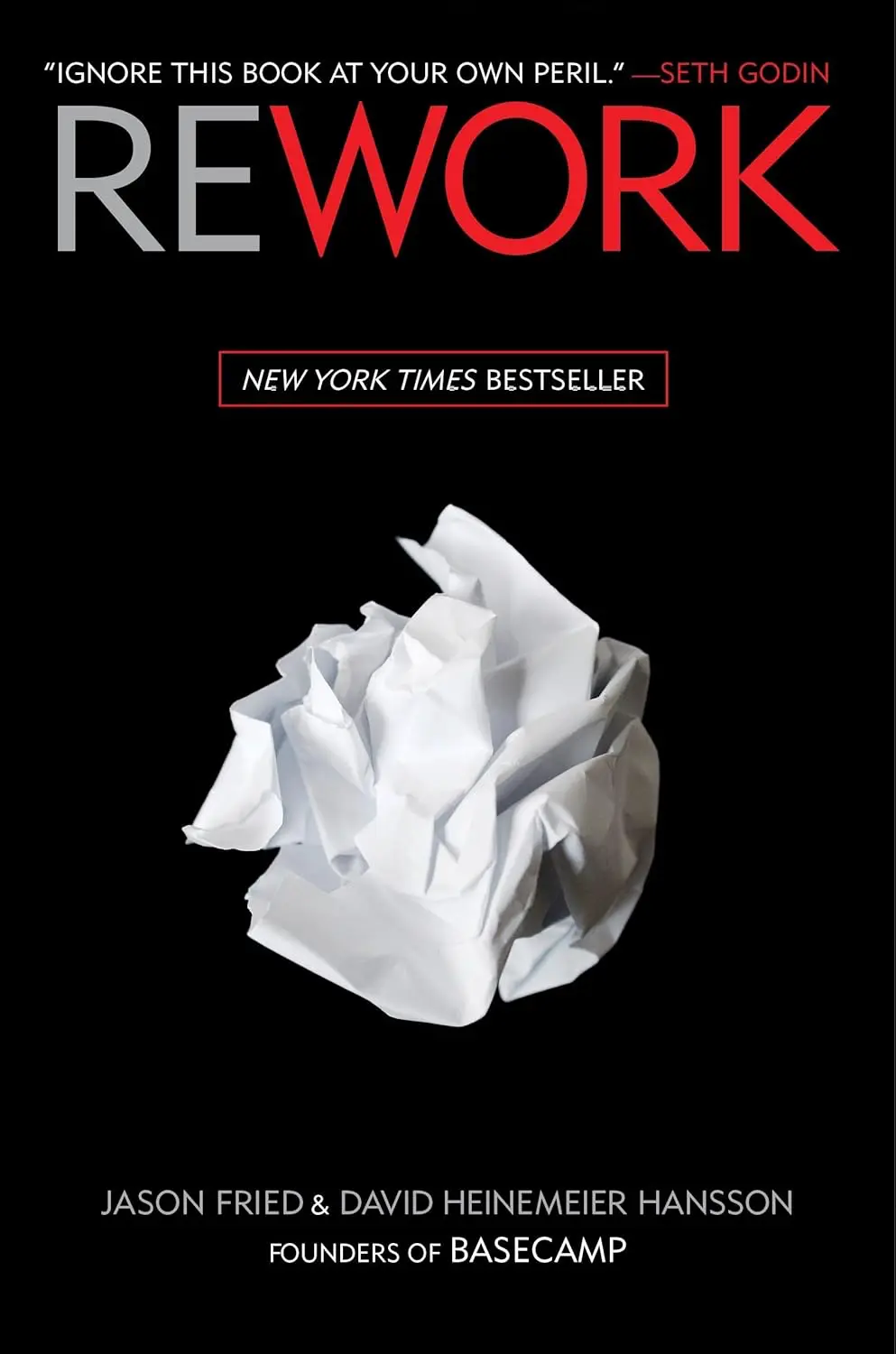
Rework is intentionally short, around 270 pages with large type and illustrations, and can be read in an afternoon. Each chapter is two to four pages making a single argument. There is no padding, no case studies, and minimal theory. Just a series of opinions backed by the experience of running Basecamp, a profitable software company, for over a decade without outside investment.
The arguments are contrarian by startup standards. Fried and Hansson argue against business plans (the world changes too fast for them to be useful), against raising venture capital (it distorts your incentives and puts you on someone else’s timeline), against workaholism (it produces diminishing returns and bad decisions), and against meetings (most of them waste everyone’s time).
They advocate starting small, charging for your product from day one, keeping your team small, saying no to feature requests, and focusing on making something useful rather than something big. The book’s tone is confident to the point of being combative. The authors are not interested in both-sides-ing their arguments. They have a point of view and they state it directly.
Some of the advice is genuinely useful. The chapter on “Scratch your own itch” (build something you personally need) is good guidance for first-time founders. The sections on keeping scope small and launching quickly are aligned with lean startup principles but stated more plainly. The argument against meetings resonates with anyone who has spent a day in back-to-back calls and accomplished nothing.
Other advice is more debatable. Not every business can be bootstrapped. Not every team can stay small. And the relentless anti-institutional tone can feel dismissive of legitimate reasons why some companies need scale, capital, or structure.
For founders, Rework is best read as a counterweight to the default Silicon Valley playbook of raise-grow-exit. It makes a strong case that building a profitable business that gives you freedom is a legitimate and often better goal than building a unicorn. Mark Cuban, Noah Kagan, and Pieter Levels have recommended it. The book is fast, opinionated, and unlikely to bore you.
