
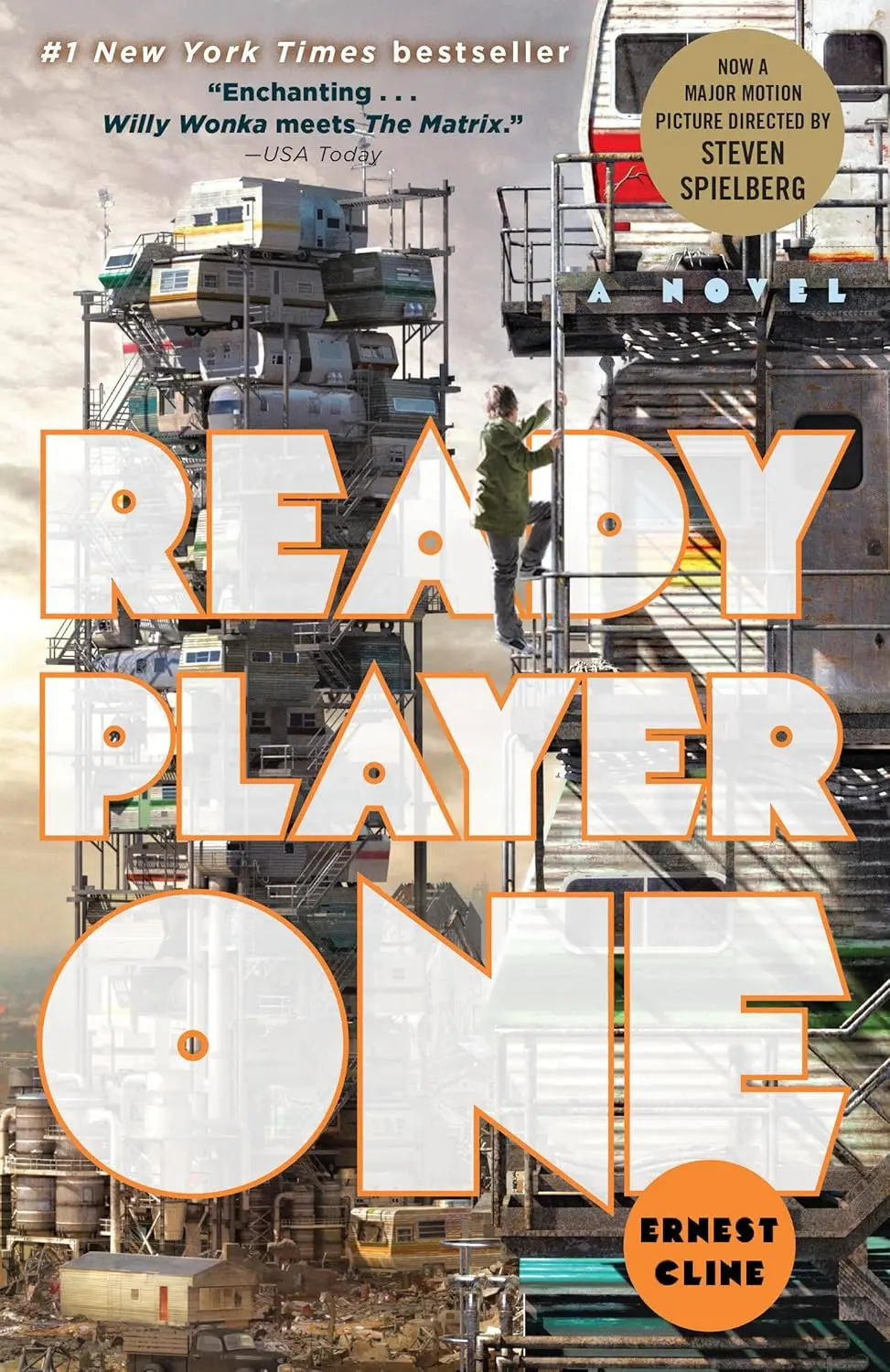
Ready Player One is set in 2045, where most of humanity spends its time in the OASIS, a massive virtual-reality simulation that functions as both an entertainment platform and a replacement for the decaying physical world. When the OASIS’s creator dies, he leaves behind a puzzle: whoever finds the Easter egg hidden within the simulation will inherit his fortune and control of the OASIS itself.
The protagonist, Wade Watts, is a broke teenager living in a trailer park who devotes himself to solving the puzzle, which requires encyclopedic knowledge of 1980s pop culture, the OASIS creator’s obsession. The story follows his competition against other egg hunters (“gunters”) and a sinister corporation that wants to win control of the OASIS and monetize it.
The book’s biggest strength is its pace. Once the hunt gets going, the story moves fast, with puzzles, virtual-reality battles, and narrow escapes that keep pages turning. The world-building around the OASIS is detailed and imaginative, especially the way different “planets” within the simulation recreate various fictional and historical settings.
The 1980s references are the book’s most divisive feature. Cline packs every chapter with references to video games, movies, music, and television from the decade, and your enjoyment will partly depend on whether you find this nostalgic or exhausting. Some readers feel the references substitute for character development; others find them entertaining in their own right.
For founders and tech readers, the book’s depiction of a virtual-reality platform that becomes more important than physical reality raises questions that have only become more relevant since publication. The corporate takeover subplot mirrors real debates about platform ownership, user data, and what happens when a single company controls the infrastructure of daily life.
The writing is straightforward and accessible, aimed at a broad audience. It was adapted into a Steven Spielberg film in 2018. The book works best if you treat it as an entertaining page-turner rather than serious literature, and on those terms it delivers.
