
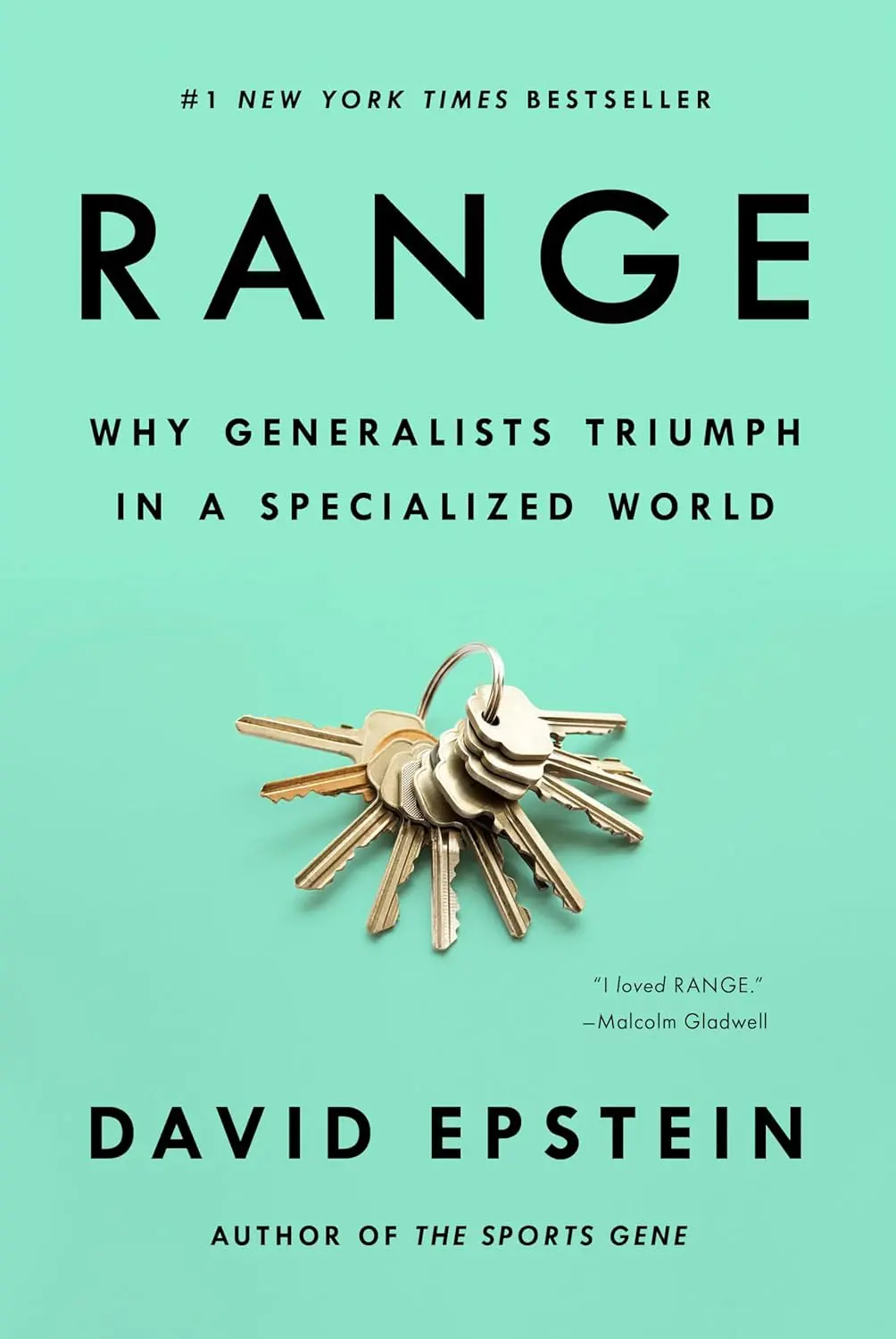
Range is a direct challenge to the “10,000 hours” narrative that Malcolm Gladwell popularized. Where that story says start early and specialize relentlessly, Epstein shows that in most fields, the people who end up at the top took a winding path. They tried multiple sports before settling on one. They changed majors. They worked in unrelated industries before finding their thing.
Epstein draws a distinction between “kind” learning environments and “wicked” ones. Kind environments have clear rules, consistent feedback, and repeating patterns (chess, golf, classical music). In these environments, early specialization helps. Wicked environments are unpredictable, the rules change, and feedback is delayed or misleading (business, politics, medicine, most of real life). In wicked environments, breadth of experience beats narrow expertise because the problems do not repeat in recognizable patterns.
The book covers several case studies. Roger Federer played many sports as a child and came to tennis relatively late. Scientists who win Nobel Prizes are statistically more likely to have hobbies outside their field. The most successful comic book creators are the ones who worked in the most different genres. The pattern is consistent: diverse experience builds the ability to make connections that specialists miss.
Epstein is not anti-specialization. He acknowledges that some domains reward early focus. But he argues that the default advice given to young people and career changers, pick one thing and stick with it, is wrong more often than it is right.
For founders, the book validates the generalist skill set that running a company demands. A founder needs to understand marketing, product, finance, hiring, strategy, and operations, often all in the same week. The ability to pull from multiple domains and connect ideas across fields is exactly what Epstein describes as the generalist advantage.
Bill Gates, Adam Grant, and Daniel Pink have recommended it. At about 340 pages, the book is well-researched and well-written. Epstein is a journalist (formerly of Sports Illustrated and ProPublica), and his storytelling is strong. The argument builds cumulatively through examples rather than hitting you with a thesis and repeating it.
