
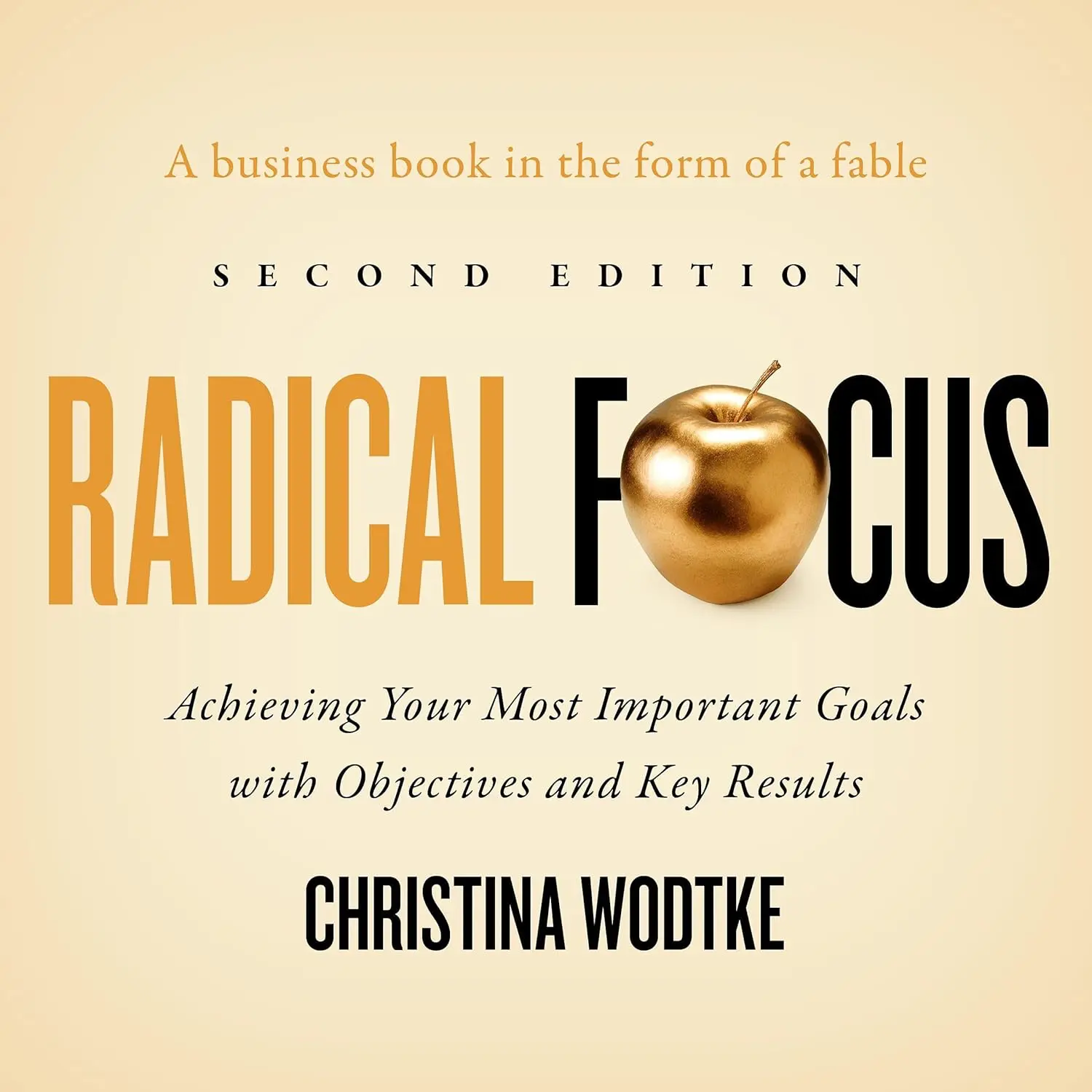
Radical Focus teaches the OKR (Objectives and Key Results) framework through two parallel tracks. The first half is a business fable about Hanna and Jack, co-founders of a struggling tea startup who adopt OKRs to focus their efforts and save the company before their funding runs out. The second half is a practical guide to implementing OKRs, covering the mechanics of setting objectives, writing measurable key results, running weekly check-ins, and grading OKRs at the end of a cycle.
The fable is the book’s distinguishing feature. Where most OKR books (like Measure What Matters or Objectives and Key Results by Niven and Lamorte) are structured as business guides, Wodtke uses narrative to show what OKRs look like in practice: the arguments about what the objective should be, the temptation to set too many OKRs, the difficulty of staying focused when new opportunities appear, and the satisfaction of actually achieving a stretch goal.
The practical chapters cover Wodtke’s specific recommendations. One objective per quarter. Three to five key results per objective. A weekly check-in ritual where the team scores each key result on confidence (not progress) and identifies what they’ll do in the coming week to move the confidence up. A “Friday wins” celebration that reinforces the habit of tracking progress. She also covers common mistakes: setting objectives that are really tasks, confusing key results with activities, and using OKRs as a performance management tool (which she argues defeats their purpose).
For founders, particularly first-time founders who struggle with focus, the book is one of the best introductions to OKRs because the fable makes the concepts concrete and the practical chapters are specific enough to follow. Wodtke is explicit about what makes OKRs fail (too many, too vague, not reviewed regularly) and what makes them work (few in number, genuinely ambitious, tracked weekly).
The writing is concise and well-paced. The second edition expands the practical sections and adds material on company-level versus team-level OKRs. At under 200 pages, it’s a quick read. If you’ve tried OKRs before and found them underwhelming, Wodtke’s approach might fix what went wrong.
