
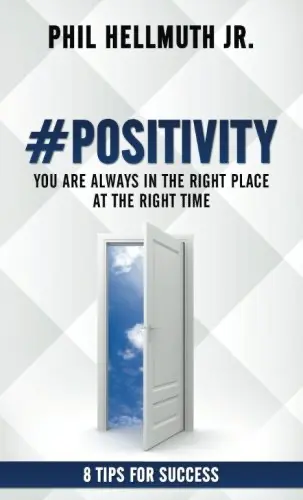
Phil Hellmuth has won more World Series of Poker bracelets than anyone in history. Fourteen, as of this writing. He is also famous for being one of the most volatile personalities in professional poker, a man ESPN loves to show screaming at dealers and berating opponents. His nickname is the Poker Brat.
So a book called #POSITIVITY, from this particular author, comes with a built-in tension. Hellmuth addresses it directly. The person blowing up at a poker table and the person writing about positive thinking are the same person, and the contradiction is part of the point. He argues that his success came not from the outbursts but despite them, and that the underlying habits, the ones the cameras do not show, are what actually carried him.
The book is organized around eight life lessons. Some are poker-specific: managing tilt (the emotional spiral that follows a bad beat), reading situations accurately, making decisions under incomplete information. Others are broader: choosing optimism as a default setting, treating setbacks as information rather than verdicts, believing that you are in the right place even when the results do not show it yet.
Hellmuth writes in a casual, conversational tone. The book is short and does not pretend to be a work of philosophy. It is a professional gambler sharing the mental habits that have kept him competitive across four decades in a field where most people burn out in five. Some of the advice will feel familiar to anyone who has read sports psychology or positive thinking literature. What gives it an edge is the source. Hellmuth has been tested under pressure more often and more publicly than most people will ever be, and his reflections on handling that pressure carry the weight of experience.
The poker analogies translate to business and decision-making in ways that feel natural rather than forced. Poker is a game of incomplete information, asymmetric risk, and emotional management. So is building a company. The difference is that in poker, you get immediate feedback. In business, you might not know whether a decision was right for months or years.
The book will resonate most with readers who already understand poker culture and appreciate hearing from someone who has operated at the top of a competitive field for longer than most careers last. It is not a deep book, but it is an honest one.
