
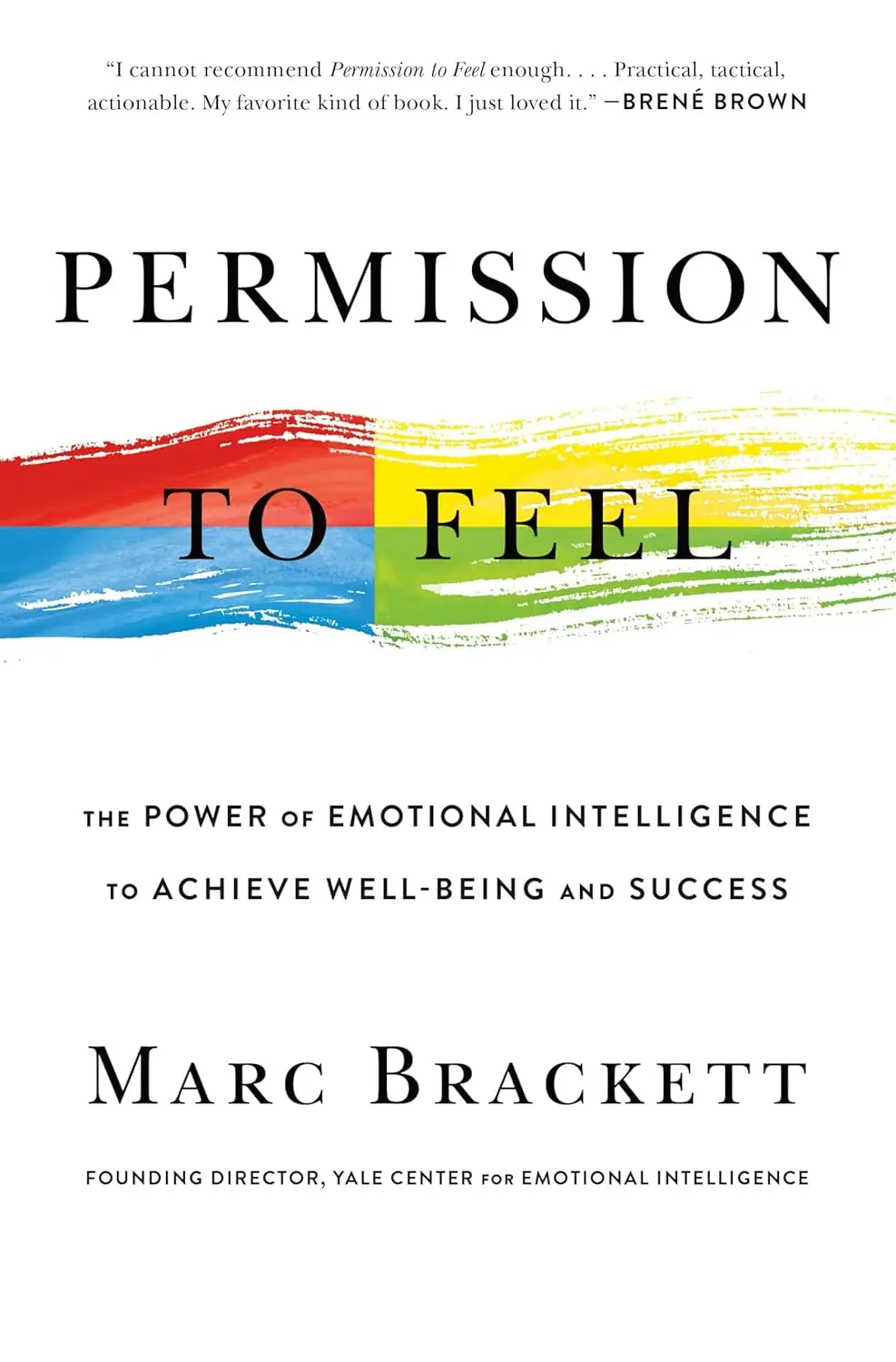
Permission to Feel is Marc Brackett’s case for taking emotions seriously. Brackett, who directs the Yale Center for Emotional Intelligence, has spent decades studying how emotional skills affect learning, decision-making, relationships, and physical health. His argument is that most people are bad at recognizing their own emotions, worse at expressing them, and almost entirely untrained in regulating them, and that this emotional illiteracy costs us personally and professionally.
The book introduces the RULER framework: Recognizing emotions in yourself and others, Understanding the causes and consequences of emotions, Labeling emotions accurately (there is a big difference between angry, frustrated, disappointed, and resentful, and knowing which one you’re feeling matters), Expressing emotions appropriately, and Regulating emotions effectively. Each step gets its own chapter with research, exercises, and practical guidance.
Brackett is candid about his own emotional journey. He grew up in a home where emotions were not discussed, was bullied as a child, and didn’t develop emotional skills until an uncle, who was a teacher, asked him how he was feeling and genuinely wanted to know the answer. That personal story runs through the book and gives it an emotional honesty that academic books on the same topic usually lack.
The section on emotional regulation is the most practically useful. Brackett distinguishes between helpful and unhelpful regulation strategies: mindfulness and reappraisal work well; suppression and avoidance make things worse. He provides specific techniques for managing emotions in the moment (breathing strategies, labeling, reframing) and longer-term strategies for changing the patterns that produce unwanted emotional reactions.
For founders, who operate under constant emotional pressure, denial, anxiety, frustration, excitement, fear, often within the same hour, the RULER framework is directly applicable. Most leadership failures have an emotional component: the meeting that went sideways because you were already angry about something else, the decision you made impulsively because you were scared, the feedback you couldn’t hear because it threatened your identity. Learning to recognize and regulate your emotional state improves every interaction.
The writing is accessible and personal. Brackett writes for a general audience, not just for psychologists. The book is relevant for anyone who interacts with other humans, which is everyone, but it is especially useful for people in leadership roles where emotional regulation has a direct effect on the people around them.
