
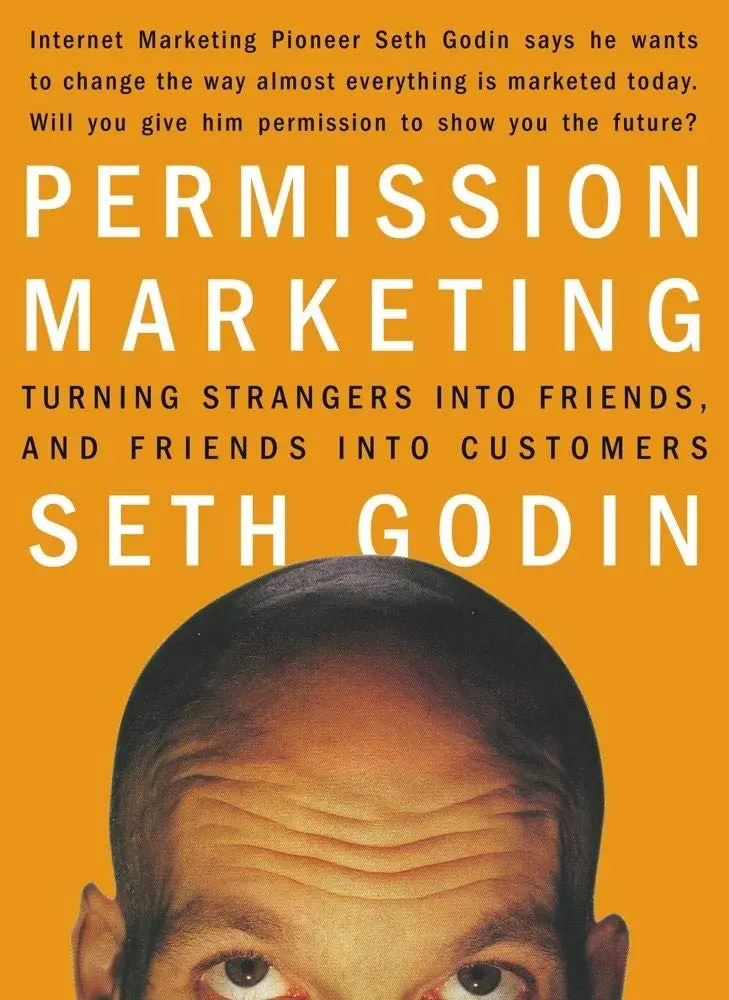
Godin wrote Permission Marketing in 1999, which means he was describing a marketing model that the internet would make dominant within the next decade. The core distinction is between interruption marketing (buying someone’s attention whether they want to give it or not) and permission marketing (earning someone’s attention by offering them something they value, then gradually building a relationship).
The book uses a dating metaphor. Interruption marketing is like proposing marriage on the first date. Permission marketing is like asking for a first date, then a second, then building a relationship over time. Each step offers value to the other person and earns the right to ask for the next step.
Godin identifies five levels of permission. Situation permission (the customer expects to hear from you in a specific context). Brand trust (the customer trusts you enough to try new products). Personal relationship (the customer feels a direct connection). Points permission (the customer participates in loyalty programs). Intravenous (the highest level, where the customer has given you standing permission to make decisions on their behalf, like a financial advisor managing a portfolio).
Many of the specific examples are dated (AOL, 1-800 numbers, catalog marketing), but the principle has only become more relevant. Email marketing, content marketing, podcast audiences, and newsletter subscriptions are all forms of permission marketing. The companies that build the largest permission-based audiences, those whose customers actually want to hear from them, have a durable competitive advantage.
For founders, the book provides the philosophical foundation for modern content marketing, email funnels, and audience-building strategies. If you are building an email list, creating a newsletter, or developing a content strategy, you are doing permission marketing whether you use the term or not.
At about 250 pages, the book reads quickly. The 1999 publication date means some examples need mental updating, but the framework is evergreen. It pairs well with This Is Marketing as a two-book overview of Godin’s marketing philosophy.
