
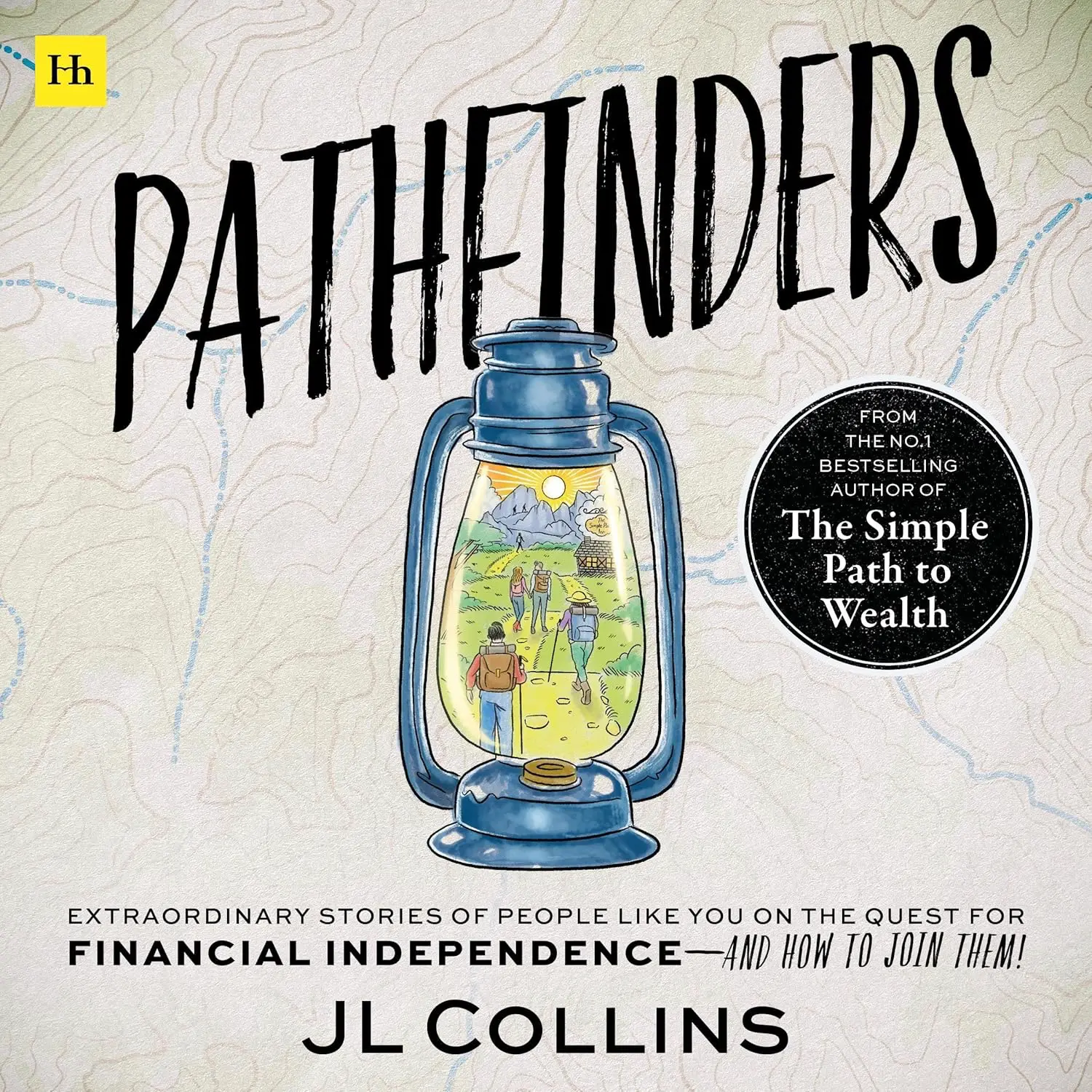
Pathfinders is JL Collins’s follow-up to The Simple Path to Wealth, and it takes a different approach. Instead of explaining the investment strategy himself (which he did thoroughly in the first book), Collins lets readers tell their own stories of achieving financial independence. Each chapter profiles someone who read his work, applied the principles, and reached a point where work became optional.
The profiles cover a wide range of backgrounds and circumstances. A military family that invested consistently on modest salaries. A single mother who started late but caught up by keeping expenses low. A couple that achieved financial independence in their 30s by saving aggressively and investing in index funds. A person who went through a divorce and rebuilt their finances from scratch. The diversity of situations is the book’s point: financial independence doesn’t require a tech salary or a trust fund. It requires a few basic habits applied consistently over time.
The basic habits, reinforced through every story, are the same ones Collins teaches: spend less than you earn, invest the difference in low-cost index funds, avoid debt, and don’t panic when the market drops. The magic is in the compounding, and the stories illustrate how compounding works over different timescales and starting points.
Collins adds his own commentary between stories, connecting the themes and occasionally offering updated advice. He also addresses common objections: “I don’t earn enough,” “I started too late,” “I have too much debt.” Each objection is answered not by Collins but by someone in the book who faced that exact situation and found a way through.
For founders, the book is a reminder that financial independence isn’t about how much you earn but about the gap between earning and spending. Building a company is a high-risk path, and having a financial cushion, even a modest one built through simple investing, gives you more freedom to take those risks. Several of the profiles in the book are entrepreneurs who used financial independence as a safety net for their business ventures.
The writing is warm and conversational. Collins has a friendly, avuncular style that makes financial topics feel approachable. The book is less instructional than The Simple Path to Wealth (since it assumes you’ve read the strategy already) but more motivating. It works best as a companion to the first book.
