
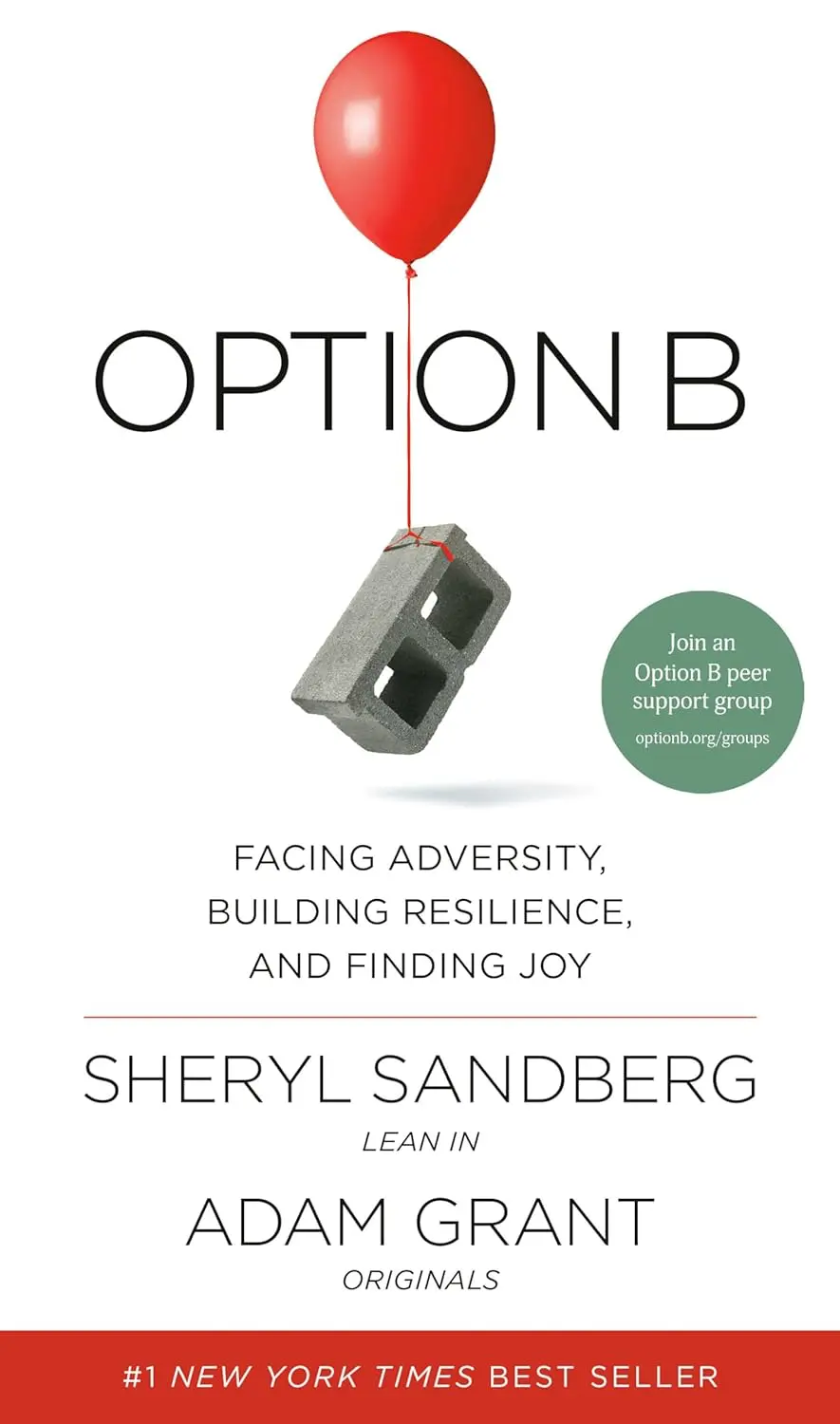
Option B grew out of Sheryl Sandberg’s experience losing her husband, Dave Goldberg, to a sudden cardiac arrhythmia in 2015. Sandberg, then COO of Facebook, was 45 years old with two young children. The book describes her grief, her recovery, and the conversations she had with Adam Grant about the psychology of resilience, specifically how people bounce back from loss and what helps versus what makes it harder.
The research sections, drawn from Grant’s work on resilience and post-traumatic growth, cover three factors that determine how well people recover from setbacks. The first is personalization: the tendency to blame yourself for things that aren’t your fault. The second is pervasiveness: the assumption that the bad event will ruin every area of your life. The third is permanence: the belief that the pain will never end. Grant presents research showing that people who challenge these three beliefs recover faster and more completely.
Beyond the psychological framework, the book covers specific ways to help people who are going through difficult times. Sandberg is honest about the fact that many well-meaning friends said the wrong thing or disappeared entirely, and she explains what actually helped versus what felt hollow. She also discusses how organizations can better support employees dealing with grief, illness, or other personal crises.
For founders, who face setbacks regularly, from failed products to lost customers to co-founder departures, the resilience framework applies beyond personal grief. The three Ps (personalization, pervasiveness, permanence) are exactly the thought patterns that amplify the pain of professional failures. Learning to challenge them is practical advice for anyone in a role where things go wrong frequently.
The writing alternates between Sandberg’s personal narrative and Grant’s research. The personal sections are the more powerful ones, particularly the early chapters about the immediate aftermath of Goldberg’s death. The research sections provide useful context but feel somewhat clinical in comparison. The book is at its best when Sandberg and Grant’s voices complement each other rather than alternating.
