
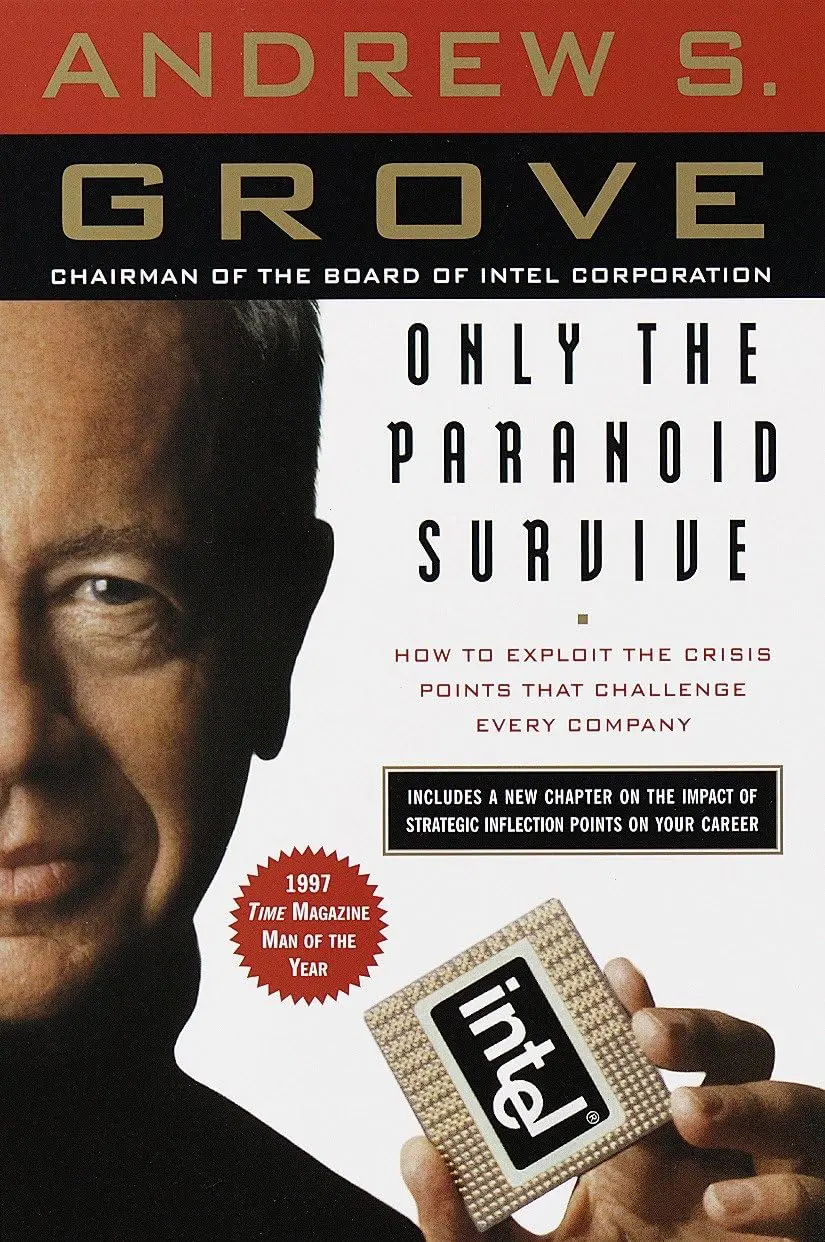
In the mid-1980s, Intel was losing badly to Japanese competitors in the memory chip business. Grove and cofounder Gordon Moore had a now-famous conversation where Grove asked, “If we got kicked out and the board brought in a new CEO, what would he do?” Moore answered: “He’d get us out of memories.” So they did. Intel abandoned its core business and pivoted to microprocessors, a decision that made the company one of the most valuable in the world.
Grove uses this story and others to develop his concept of the “strategic inflection point,” a moment when the balance of forces in an industry shifts so fundamentally that the old way of doing business will no longer work. These inflection points can be triggered by new technology, new competitors, changes in regulation, or shifts in customer behavior. The tricky part is recognizing them while they are happening, because they usually look like temporary problems before they reveal themselves as permanent changes.
The book offers a framework for detecting inflection points early. Grove advises paying attention to signals from the periphery of your business, from customers who are leaving, from competitors you do not understand, from technologies that seem inferior but are improving fast. He calls this “letting chaos reign” during the period of uncertainty, followed by “reining in chaos” once the new direction becomes clear.
For founders, the most relevant sections are about making decisions under uncertainty. Grove is honest about the fact that you often cannot know whether you are facing an inflection point or a temporary disruption. You have to act before you have certainty, and sometimes you will be wrong. The book does not pretend this process is clean or comfortable.
Jensen Huang, Tim Cook, and Ben Horowitz have all cited this book as influential. It is particularly useful for founders of growing companies who are past the startup phase and facing competitive threats or market shifts. At around 220 pages, it is concise and reads like a senior executive talking through real decisions rather than presenting academic theory.
