
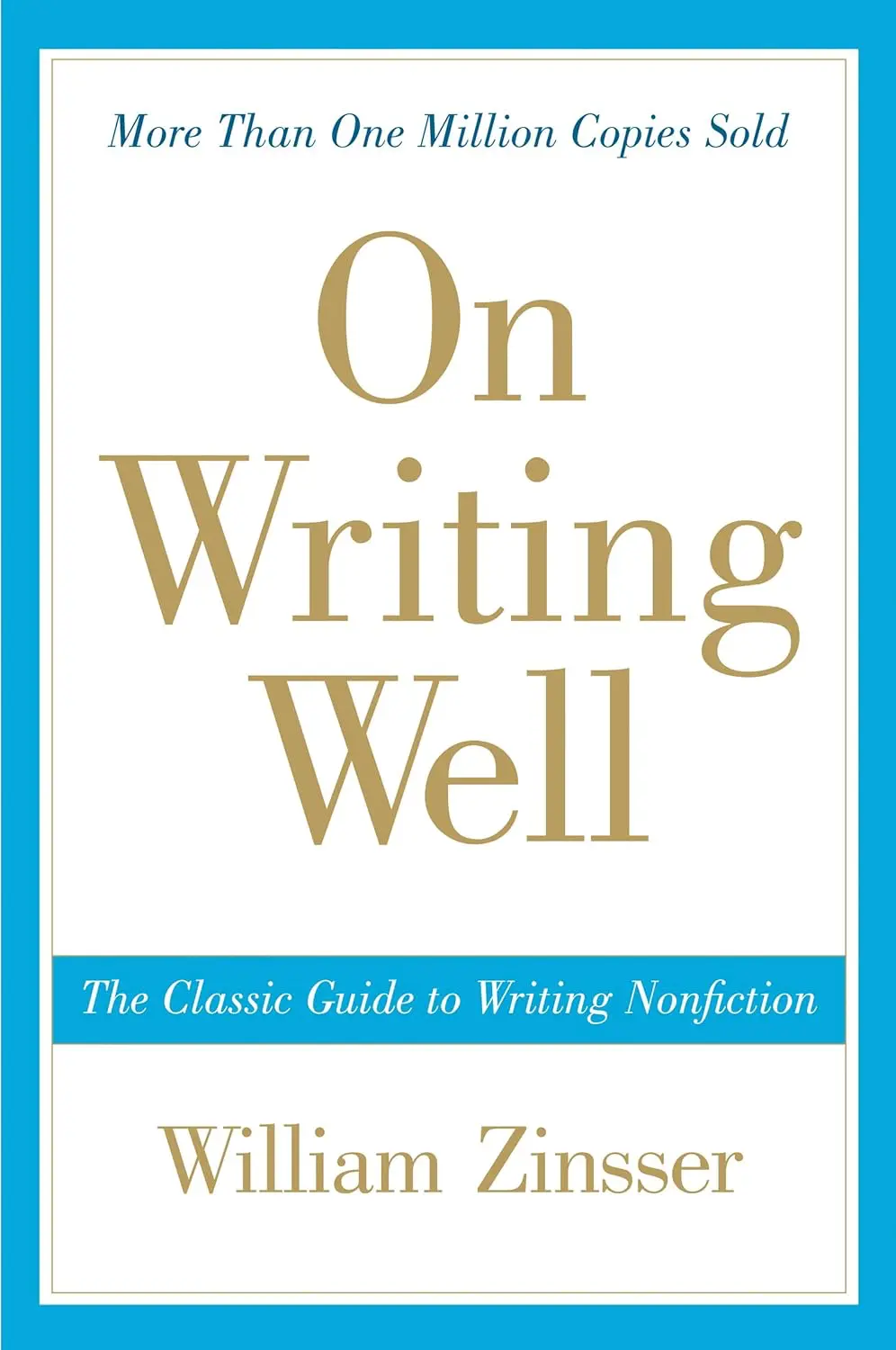
On Writing Well is William Zinsser’s guide to writing clear nonfiction prose. First published in 1976 and updated through a 30th anniversary edition, it has become one of the most widely assigned writing books in American universities and one of the most recommended by professional writers.
Zinsser’s core principles are simple: cut every word that doesn’t serve a purpose, write in short sentences when possible, use the active voice, and never use a complicated word when a simple one will do. He argues that most bad writing comes from clutter, the accumulation of unnecessary words, phrases, and pretentious language that obscure meaning rather than communicating it.
The book covers these principles in the first half and then applies them to specific forms of nonfiction in the second half: interviews, travel writing, memoir, science writing, business writing, sports writing, humor, and criticism. Each chapter in the second half discusses the specific challenges of the form and shows, through example, how the principles of clarity apply differently depending on what you’re writing.
The chapter on business writing is particularly relevant for founders. Zinsser points out that most business writing is terrible because it tries to sound important rather than to communicate clearly. Memos, emails, reports, and marketing copy all improve dramatically when the writer treats the reader’s time as something worth respecting.
For anyone who writes as part of their work, which includes virtually every founder, the book is one of the better investments you can make in a few hours. Clear writing is clear thinking, and the discipline Zinsser teaches, of stripping away everything unnecessary and leaving only what matters, applies beyond writing to how you explain your product, pitch your company, and communicate with your team.
The writing itself demonstrates the principles. Every sentence in the book practices what Zinsser preaches: it is clear, specific, and free of clutter. The 30th anniversary edition is the most widely available and includes Zinsser’s reflections on how writing has changed with digital media. The book pairs well with The Elements of Style by Strunk and White, which covers grammar and usage in an even shorter format.
