
Clausewitz fought in the Napoleonic Wars, was captured by the French at age twenty-five, and spent the rest of his career trying to understand what he had experienced. On War is the result. He died of cholera in 1831 before finishing it, and his wife Marie published the manuscript the following year. It has been studied by every major military leader since, from the elder Moltke to Eisenhower, and its concepts have migrated into business strategy, political science, and organizational theory.
The most famous idea is that war is the continuation of politics by other means. This sounds like a slogan, but Clausewitz meant something specific: military force is not an end in itself. It is a tool that political leaders use to achieve political objectives. When the political objective is unclear, the military effort loses direction. When the military becomes detached from politics, disaster follows. This insight, which seems obvious stated plainly, has been ignored in enough wars to fill a library.
Clausewitz introduced the concept of friction: the gap between what should happen in theory and what actually happens in practice. Plans fall apart. Communications fail. Soldiers get tired, confused, and afraid. Supply lines break. Weather changes. In any complex operation, the accumulation of small failures creates a drag on performance that no amount of planning can eliminate. You can only prepare for it. The concept applies directly to any complex undertaking, military or not.
The fog of war is a related idea. Commanders never have complete information. They act on reports that are late, contradictory, and sometimes fabricated. The ability to make decisions under uncertainty, to act on incomplete data and adjust as new information arrives, is what separates effective leaders from theoretically brilliant ones.
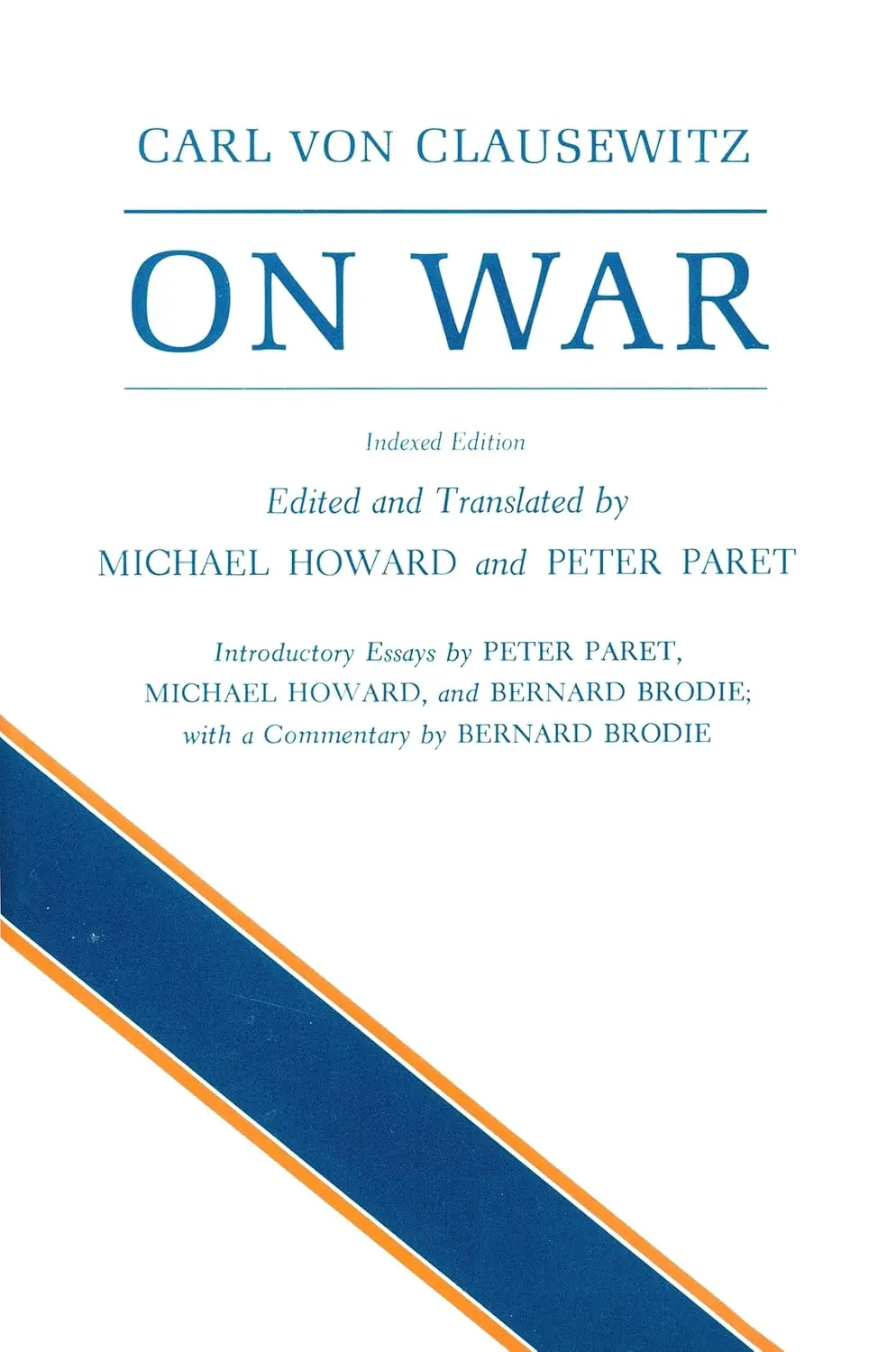
The book is long, dense, and unfinished. Clausewitz intended to revise it extensively before publication, and the text reflects this. Some sections are polished. Others read like notes. The Princeton University Press translation by Michael Howard and Peter Paret, published in 1976, is the standard English edition and includes introductory essays that help orient the reader.
On War is not a book most people read cover to cover. It is a book people read in sections, return to over years, and find increasingly relevant as they gain experience with complex organizations, uncertain environments, and the gap between planning and execution.
