
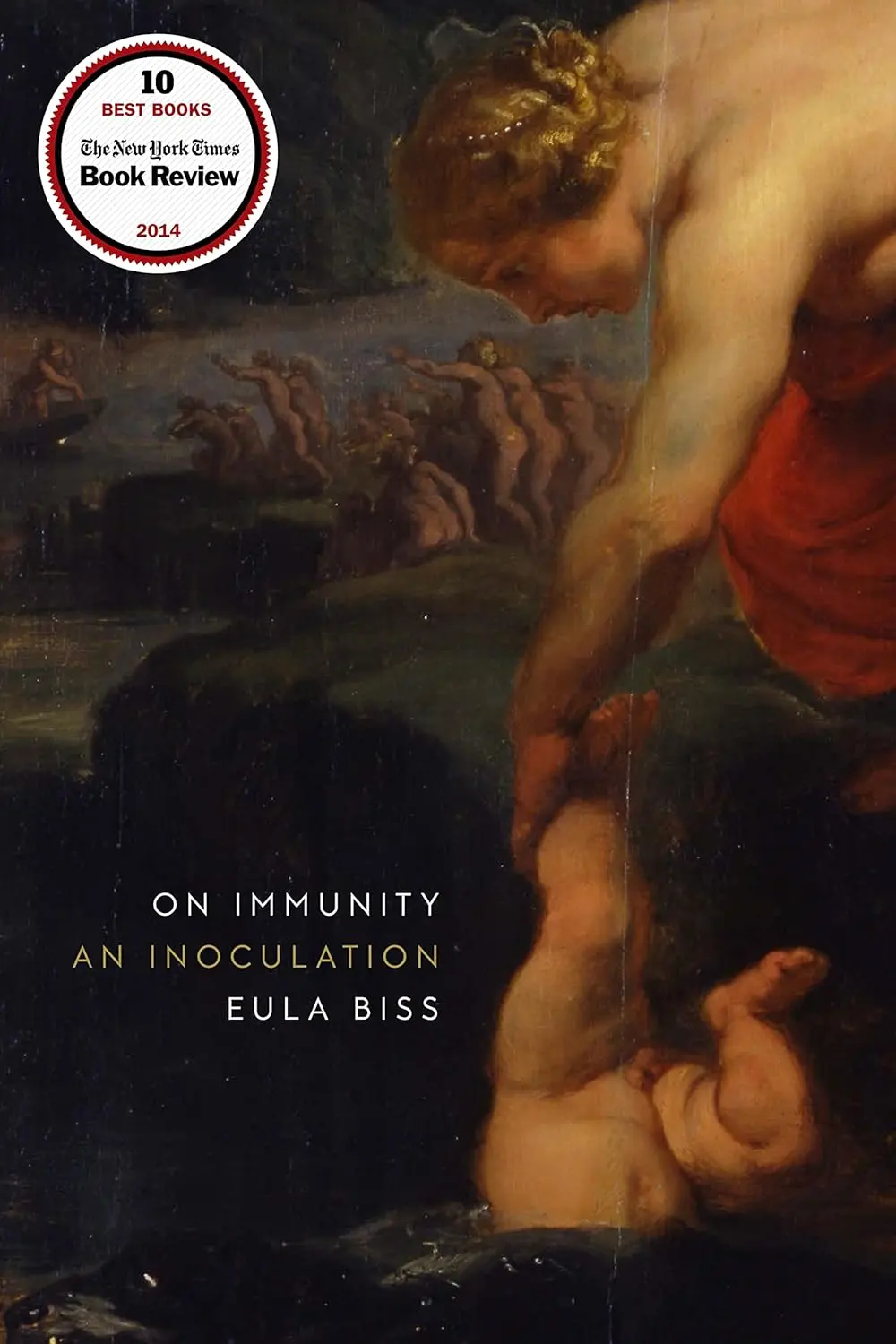
Eula Biss had a baby and immediately entered the world of parental anxiety about vaccination. Should she vaccinate on the standard schedule? Should she delay? Should she skip some vaccines? The internet was full of conflicting information. Her friends, educated and well-intentioned, had strong opinions in every direction. She started reading, and what she found was less a scientific debate than a cultural one.
On Immunity is the book she wrote from inside that reading. It is not structured as an argument for or against vaccination. It is structured as an exploration of the fears, metaphors, myths, and histories that surround the act of injecting something foreign into a child’s body.
Biss traces the history of vaccination from Edward Jenner’s use of cowpox material in the 1790s through the polio vaccine campaigns of the 1950s to the modern anti-vaccination movement. She examines the metaphors people use to talk about immunity: the body as a fortress, disease as an invader, the immune system as an army. She notes that these metaphors are not neutral. They shape how people think about purity, contamination, and the boundary between self and other.
The book is short and essayistic. Biss weaves together Dracula, Rachel Carson, Susan Sontag’s Illness as Metaphor, Voltaire’s views on inoculation, her own anxieties as a new mother, and conversations with other parents. The writing is precise and lyrical in a way that most health writing is not. She is not trying to win a debate. She is trying to understand why the debate is so charged in the first place.
Biss arrives at a position, she vaccinates her son, but the position matters less than the thinking that precedes it. Her central insight is that vaccination is an act of community, not just an act of individual protection. You vaccinate your child partly to protect other people’s children, particularly those who are too young or too immunocompromised to be vaccinated themselves. The decision is not just about your body. It is about your relationship to other bodies.
On Immunity was published in 2014, before the COVID-19 pandemic made vaccination a global flashpoint. Reading it now is strange, because the cultural dynamics Biss describes, the fear, the distrust of institutions, the conflation of personal choice with political identity, have only intensified since she wrote about them. The book feels more relevant than it did at publication, which is not necessarily a compliment to the world.
