
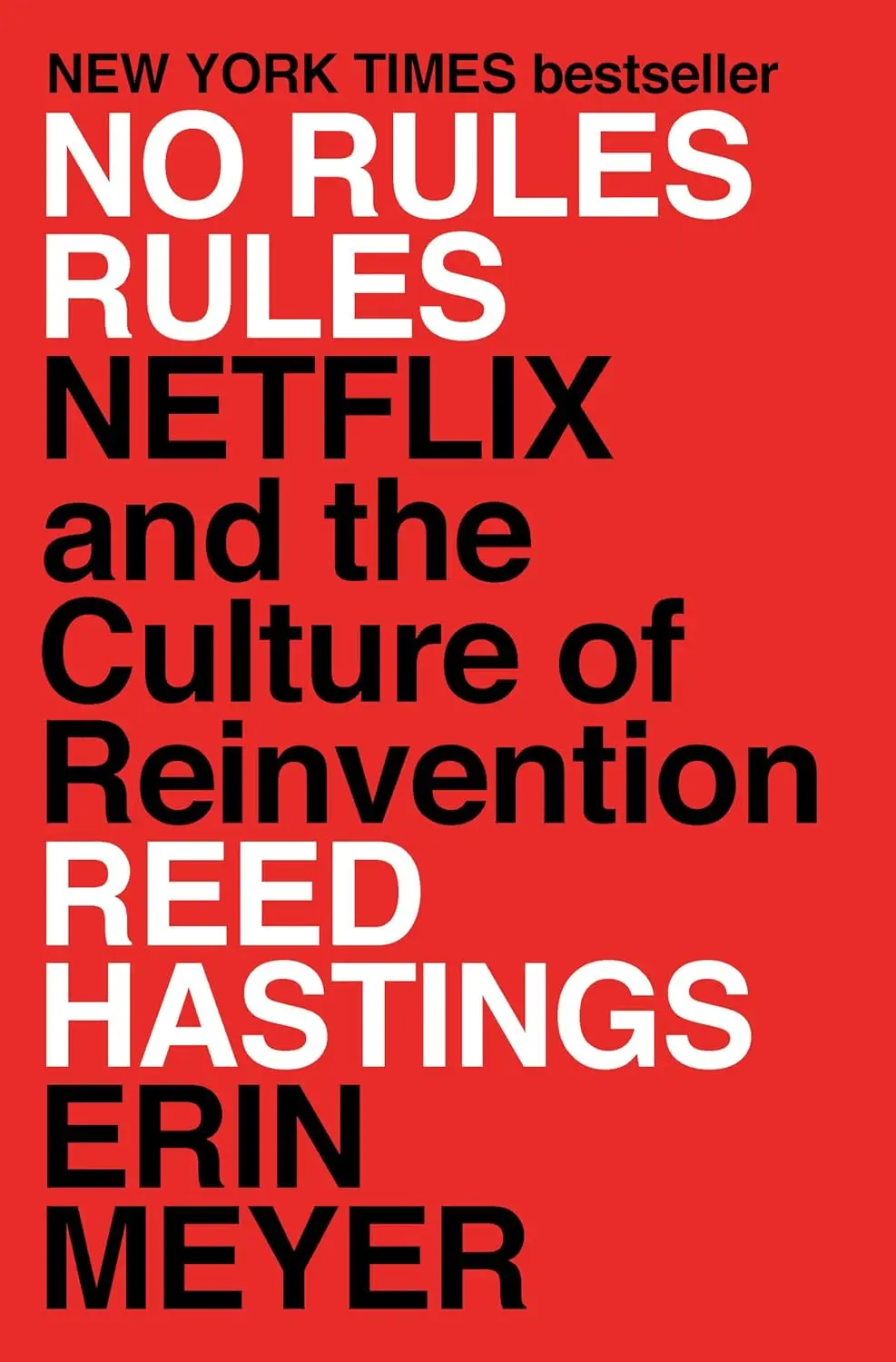
No Rules Rules describes a management philosophy that most companies would find terrifying. Netflix has no vacation tracking. Employees can spend company money without approval. Salaries are set at the top of the market and there is no annual bonus tied to performance. Managers are expected to use the “keeper test”: if a team member were leaving, would you fight to keep them? If the answer is no, give them a generous severance package and hire someone better.
Hastings and Meyer alternate chapters. Hastings describes a Netflix practice. Meyer, a professor at INSEAD, provides context, research, and sometimes pushback. The format works because Meyer asks the skeptical questions a reader would ask: Does this work outside Silicon Valley? What about industries where mistakes cost lives? What about people who abuse the freedom?
The practices rest on a foundation Hastings calls “talent density.” Netflix pays top of market because they want the best people, and they believe the best people do not need rules and processes designed to control average performers. Remove the rules, keep the talent, and the company becomes more innovative and more agile.
The book also covers the “culture of candor” at Netflix, where employees are expected to give each other direct feedback regardless of hierarchy. Hastings shares examples where feedback from a junior employee changed a senior decision. He also shares examples where the feedback culture went wrong and had to be calibrated.
For founders, the most transferable ideas are about talent density (a small team of excellent people outperforms a larger team of good ones) and about removing process that exists to compensate for mediocre performers. Not every practice Netflix uses will work for every company, and the book is honest about the fact that some people hate working there. But the principles behind the practices are worth considering.
At about 320 pages, the book is well-organized and readable. The alternating structure between Hastings and Meyer keeps it from feeling like a corporate PR exercise. Hastings is candid about failures, including times when the no-rules approach backfired.
