
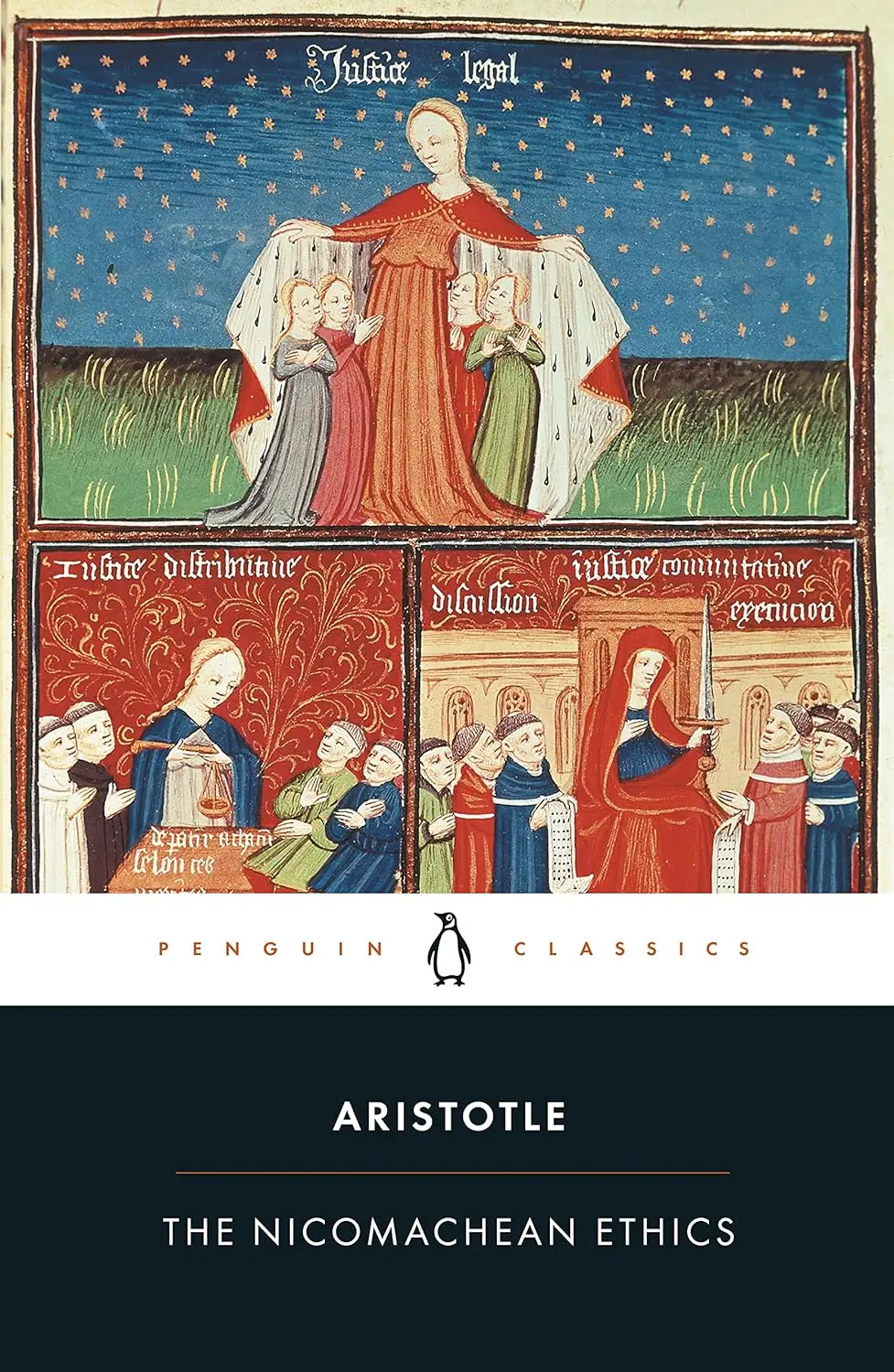
The Nicomachean Ethics (named after Aristotle’s son Nicomachus) is one of the most influential works of moral philosophy. Its central question is: what is the good life for a human being? Aristotle’s answer is eudaimonia, often translated as “happiness” but better understood as “flourishing” or “living well and doing well.”
Aristotle argues that eudaimonia is not a feeling. It is an activity. Specifically, it is the activity of living according to virtue (arete), which he defines as a disposition to choose the mean between extremes. Courage is the mean between cowardice and recklessness. Generosity is the mean between miserliness and wastefulness. Honesty is the mean between self-deprecation and boastfulness. The right action in any situation is not a formula but a judgment call that depends on circumstances.
The discussion of practical wisdom (phronesis) is the section most relevant to decision-making. Aristotle argues that knowing what is right in a specific situation requires experience, judgment, and the ability to see the relevant features of the situation clearly. You cannot learn practical wisdom from a book. You develop it through practice, by making decisions and reflecting on the results.
Aristotle also covers friendship (which he considers essential to a good life), justice (how to distribute benefits and burdens fairly), and the relationship between individual virtue and good governance.
For founders, the practical wisdom concept maps onto the judgment required to run a company. Most important decisions involve competing considerations where the right answer is context-dependent. Aristotle’s framework, look for the appropriate response between extremes, based on experience and reflection, is a useful mental model for navigating ambiguity.
At about 300 pages depending on translation, the book is academic. The Penguin Classics edition translated by J.A.K. Thomson is accessible. Aristotle’s writing is denser than Plato’s because these were lecture notes, not dialogues. But the ideas are practical in a way that surprises readers who expect ancient philosophy to be abstract.
