
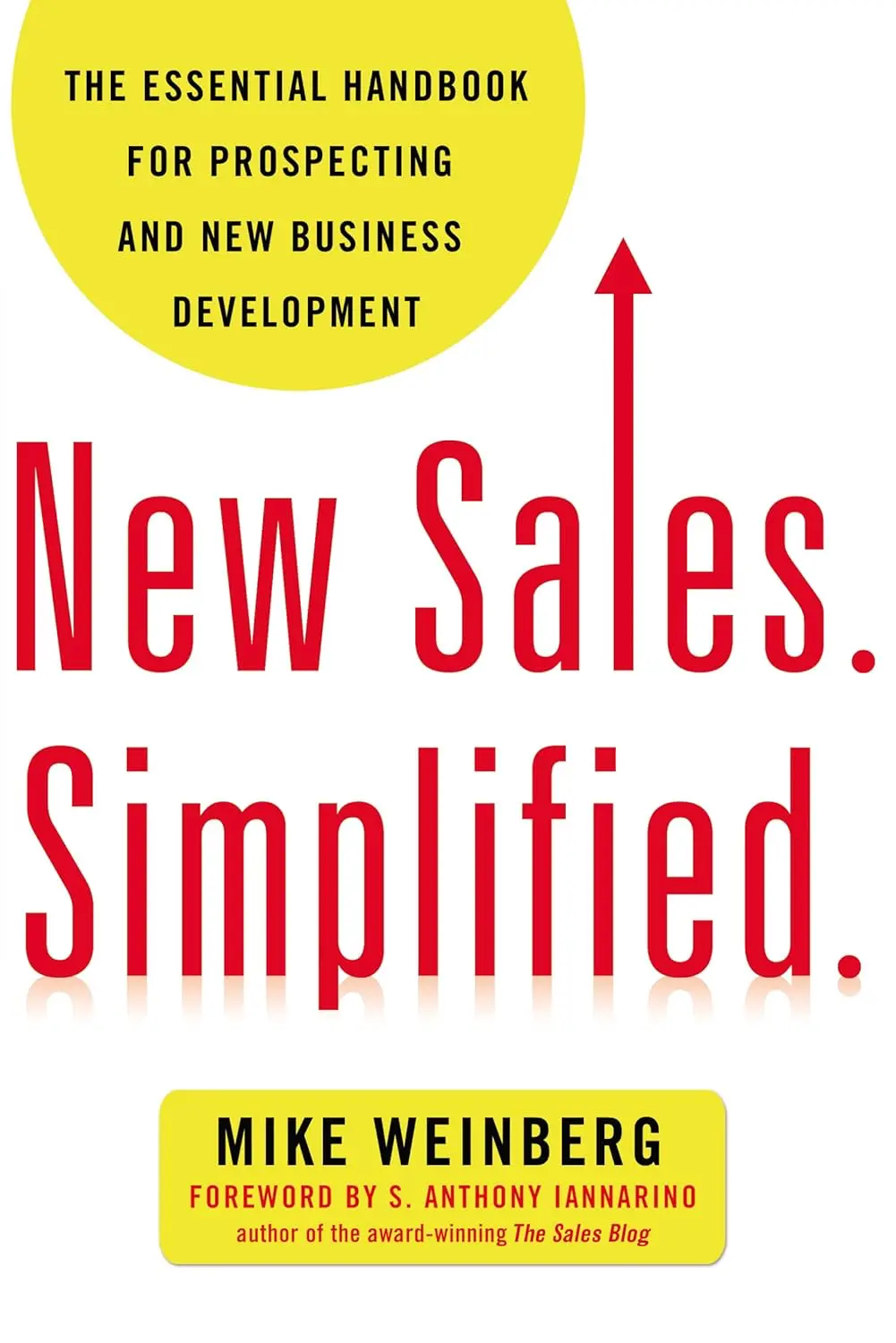
New Sales. Simplified. is Mike Weinberg’s manual for proactive new business development. Weinberg, a sales consultant and trainer, wrote the book out of frustration with how many companies and salespeople neglect outbound prospecting in favor of waiting for inbound leads to arrive. His argument is straightforward: if you want new business, you have to go get it, and that means building a disciplined prospecting habit.
The book covers three main areas. First, building your weapons: identifying your target accounts, crafting a compelling sales story (what Weinberg calls your “power statement”), and preparing the tools you need for outreach. Second, planning the attack: structuring your prospecting calendar, blocking time for outbound activity, and building a pipeline that doesn’t depend on luck. Third, executing the attack: specific techniques for phone calls, emails, voicemails, and face-to-face meetings, with scripts and examples for each.
The sales story section is one of the book’s most useful contributions. Weinberg argues that most salespeople describe what they do rather than why the customer should care. His framework for building a power statement starts with the customer’s problem, explains the consequences of not solving it, and then positions your solution in terms of specific outcomes. This reframing changes the entire tone of outbound conversations.
For founders who need to generate new business but find prospecting uncomfortable or tedious, Weinberg’s directness is useful. He doesn’t sugarcoat the fact that prospecting requires effort and that most people resist doing it. But he also makes the case that once you build the habit and refine your messaging, outbound prospecting becomes the most reliable and controllable source of new revenue.
The writing is energetic and no-nonsense. Weinberg writes like he speaks: directly, with a bit of edge, and with zero patience for excuses. Some readers will find the tone motivating. Others might want a gentler approach. The content is solid regardless: the frameworks for targeting, messaging, and execution are specific enough to apply immediately and flexible enough to work across industries.
