
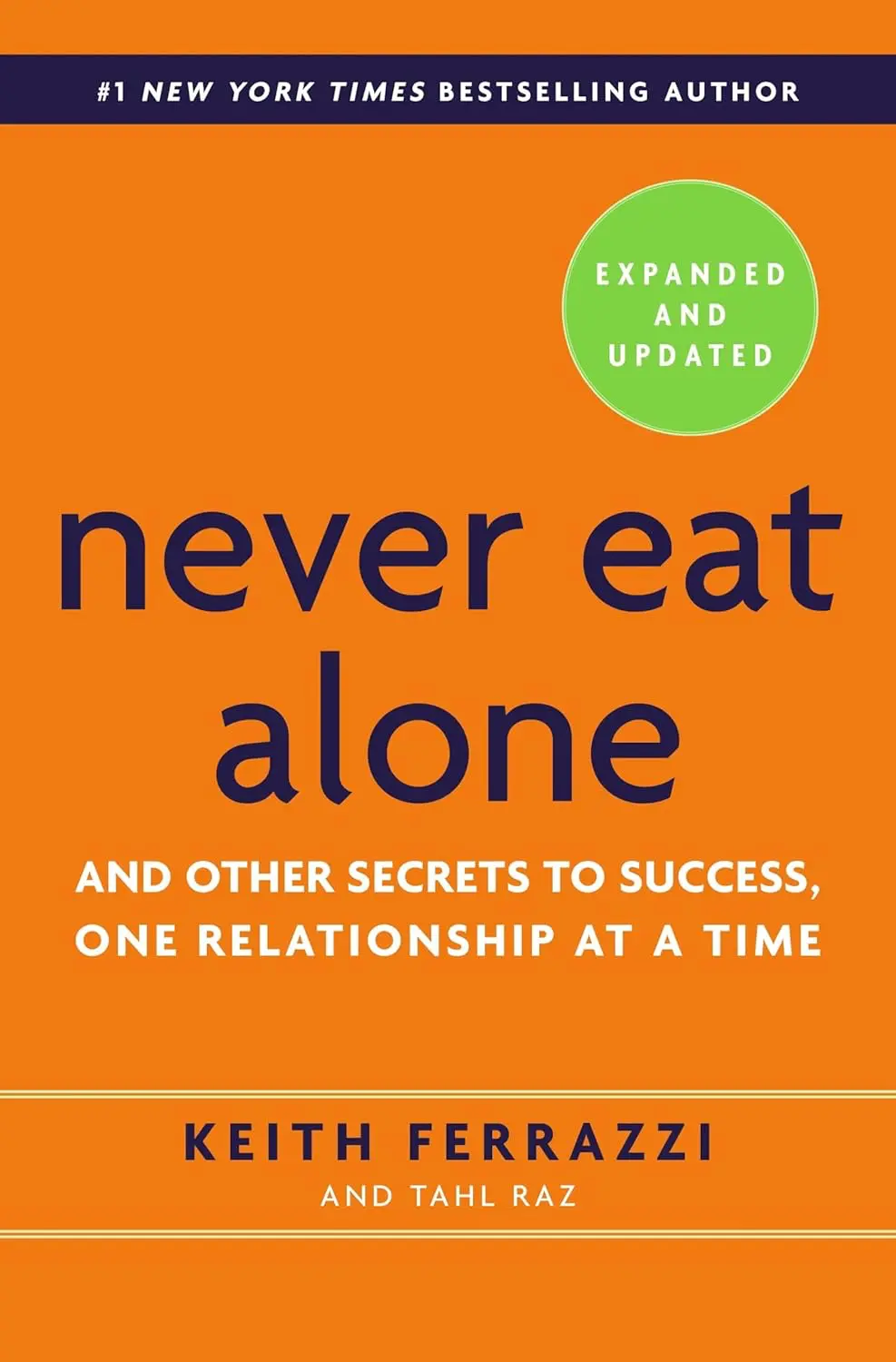
Never Eat Alone is Keith Ferrazzi’s guide to relationship building as a career strategy. Ferrazzi, the son of a steelworker who became the youngest CMO of a Fortune 500 company, built his career largely through his ability to connect with people and to help them before asking for anything in return. The book shares his approach.
The central philosophy is generosity. Ferrazzi argues against the transactional view of networking where you collect contacts and cash in favors. His approach is to lead with help: find out what the other person needs and figure out how you can contribute, whether that’s an introduction, information, or simply your time and attention. The relationships that result are stronger and more productive because they’re built on mutual benefit rather than obligation.
The practical sections are specific. Ferrazzi covers how to research people before meeting them, how to warm up a cold outreach (always through a mutual connection when possible), how to host dinners and events that bring interesting people together, how to follow up after meeting someone (within 24 hours, with something specific), and how to stay in touch with a large network without it consuming your entire schedule.
He also covers the less comfortable aspects of networking: how to approach someone you admire at a conference, how to handle rejection, and how to deal with the awkwardness that many people feel about networking. His advice is to reframe networking as relationship building and to focus on being genuinely interested in other people rather than performing interest.
For founders, who depend on relationships for fundraising, hiring, partnerships, and customer introductions, the skills in this book are directly relevant. Many technical founders are uncomfortable with networking because they associate it with superficiality. Ferrazzi’s emphasis on generosity and genuine connection provides an alternative that feels more authentic.
The writing is energetic and story-heavy. Ferrazzi uses his own career as the primary case study, which means you get a lot of “here’s what I did” storytelling. Some readers find this inspiring; others find it self-promotional. The expanded edition includes updated material on digital networking and social media. The core principles, lead with generosity, follow up consistently, and treat every interaction as a chance to help, have not changed.
