
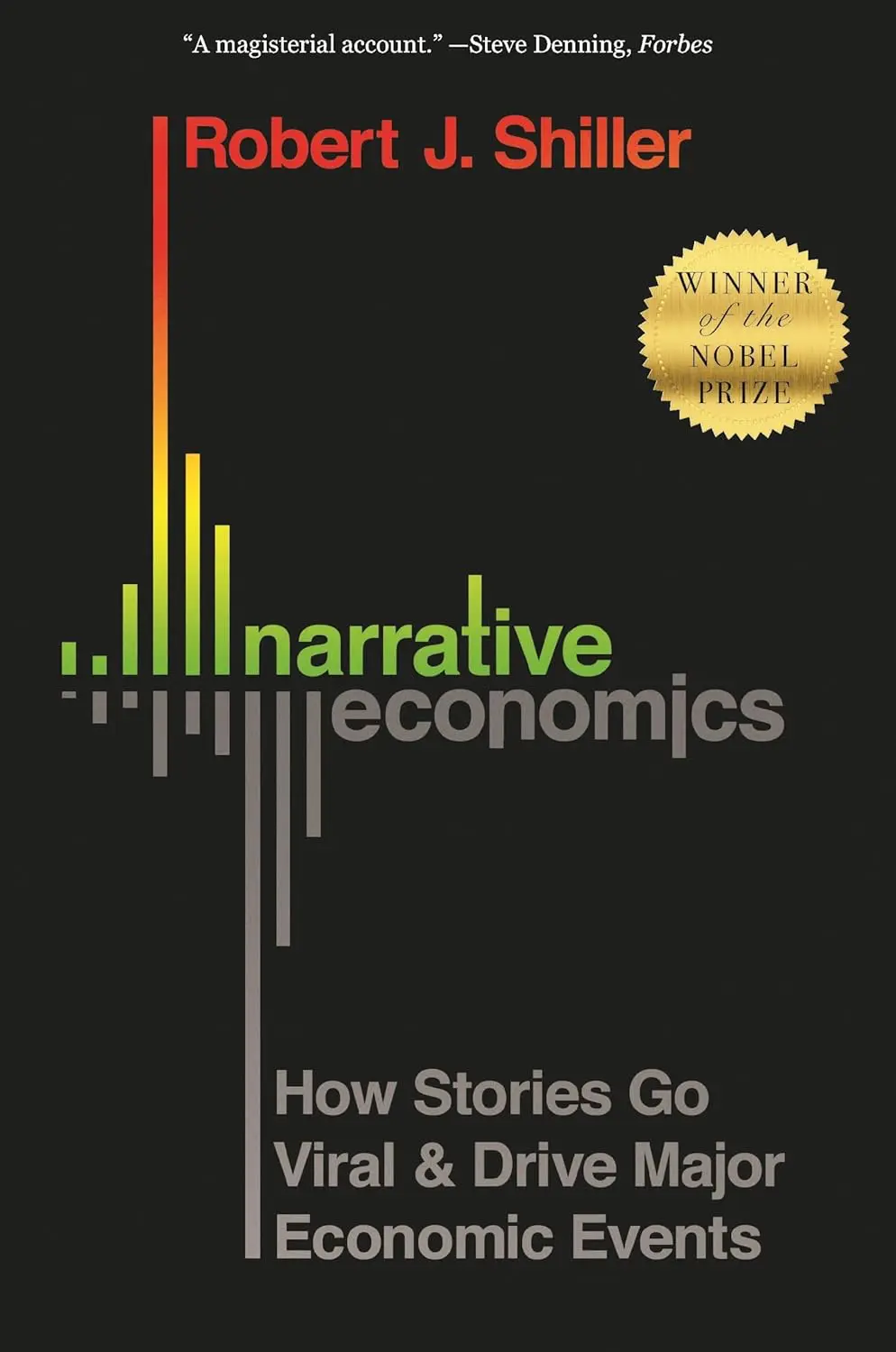
Narrative Economics is Robert Shiller’s argument that economists have been ignoring one of the most powerful forces in the economy: stories. Shiller, who won the Nobel Prize in Economics for his work on asset price bubbles, makes the case that the stories people tell each other about the economy, whether about real estate always going up, about automation taking all the jobs, or about Bitcoin making everyone rich, spread like viruses and directly affect economic behavior.
The book applies the mathematics of epidemiology (the study of how diseases spread) to economic narratives. Shiller shows that narratives follow the same contagion curves as viruses: they have a period of slow spread, a rapid growth phase as they go viral, and an eventual fade as people lose interest or the narrative gets replaced by a new one. Some narratives mutate (the “labor-saving machines” story has been retold for over 200 years with different technologies filling in the blank), and some are perennial (stories about the decline of moral values appear in every generation).
Shiller traces specific narratives through history. The panic of 1837, the Great Depression, the postwar boom, the dot-com bubble, and the 2008 financial crisis all had specific viral narratives associated with them. The stories didn’t just describe what was happening; they shaped how people behaved, which in turn affected what actually happened. A recession narrative, once it goes viral, can cause a recession by changing spending and investment behavior, even if the underlying economic fundamentals don’t warrant one.
For founders, the book is useful for understanding how narratives shape markets and customer behavior. If your product or industry is caught up in a viral narrative (positive or negative), that narrative will affect your business regardless of the underlying reality. Understanding how narratives spread, peak, and fade gives you a framework for anticipating market shifts and timing your own messaging.
The writing is more academic than Shiller’s earlier popular works. The epidemiological modeling can feel dense, and some chapters lean heavily on historical data that not all readers will find engaging. But the core idea, that stories drive economic behavior as much as data does, is original and important. It’s the kind of concept that changes how you read the news.
