
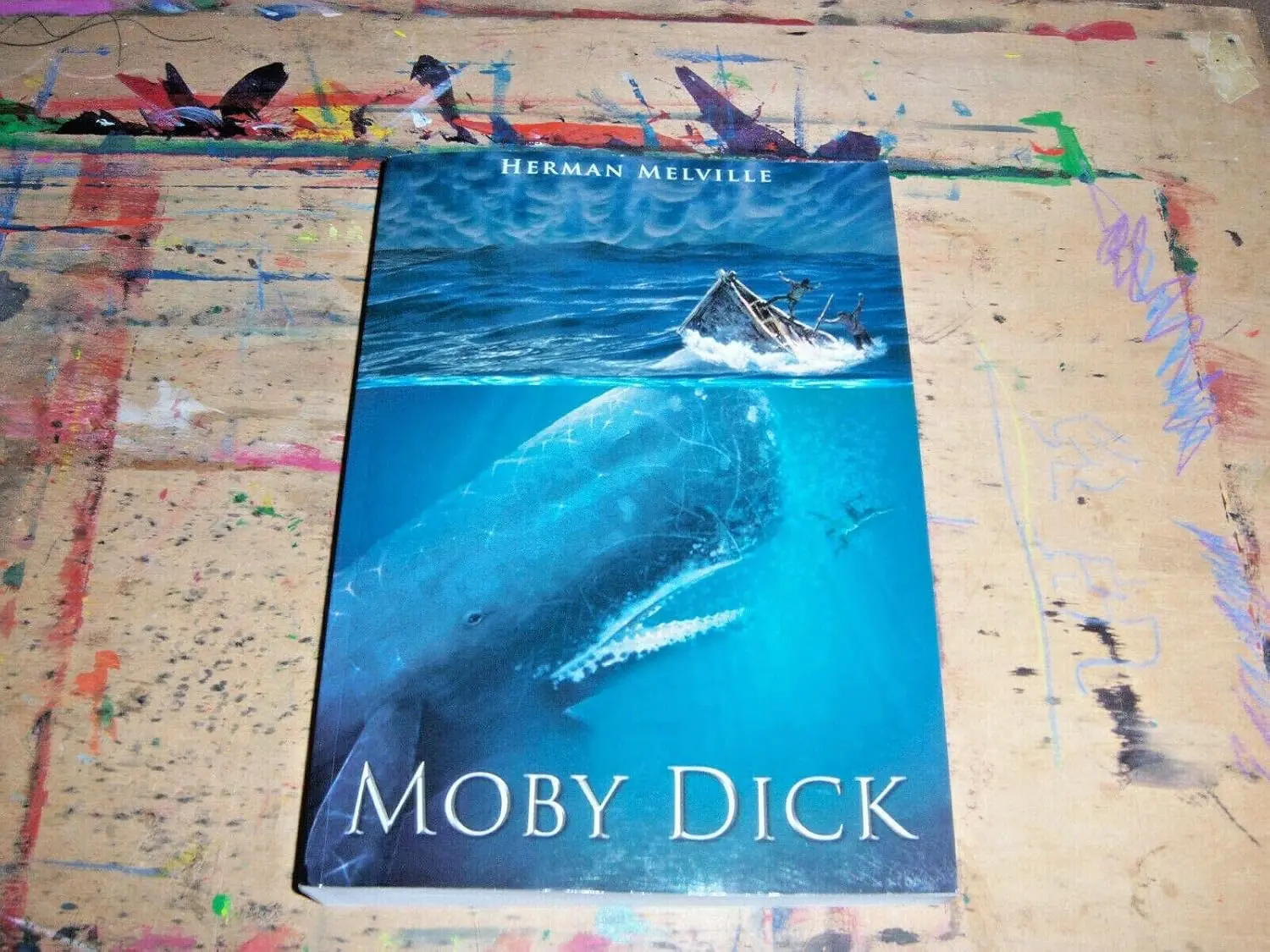
Moby-Dick is narrated by Ishmael, a sailor who signs onto the whaling ship Pequod and discovers that its captain, Ahab, has no interest in commercial whaling. Ahab is consumed by a single purpose: killing the white whale Moby Dick, which took his leg on a previous voyage. The crew is dragged into this obsession, and the novel tracks the voyage from Nantucket across the world’s oceans toward the final confrontation.
The book is famous for being difficult, and parts of it genuinely are. Melville interrupts the narrative regularly with chapters on whale biology, the history of whaling, the various types of whales, the process of rendering whale oil, and dozens of other topics that have nothing obvious to do with the plot. These digressions are either the best or worst part of the book depending on your taste. Some of them are genuinely fascinating (the chapter on the whiteness of the whale is one of the strangest and most original essays in English). Others test your patience.
The story itself, when Melville stays with it, is compelling. Ahab is one of literature’s great characters: charismatic, terrifying, clearly insane, and yet sympathetic in his wounded rage against a universe that seems indifferent to human suffering. Ishmael provides the counterpoint: curious, good-humored, and ultimately humble in a way Ahab cannot be. The supporting cast of harpooners and mates each represents a different attitude toward Ahab’s quest.
For founders, the book’s relevance is in its portrait of obsession. Ahab’s inability to distinguish between his mission and himself, his willingness to sacrifice everything and everyone for a goal that has become inseparable from his identity, is a cautionary tale that applies to any leader who has lost perspective on what they’re actually doing and why.
The book failed commercially when it was published in 1851 and was rediscovered decades later. Most modern readers find it rewarding if they accept that it is not a straightforward adventure novel but something stranger and more expansive. The Penguin Classics edition with notes is helpful for the historical and scientific references.
