
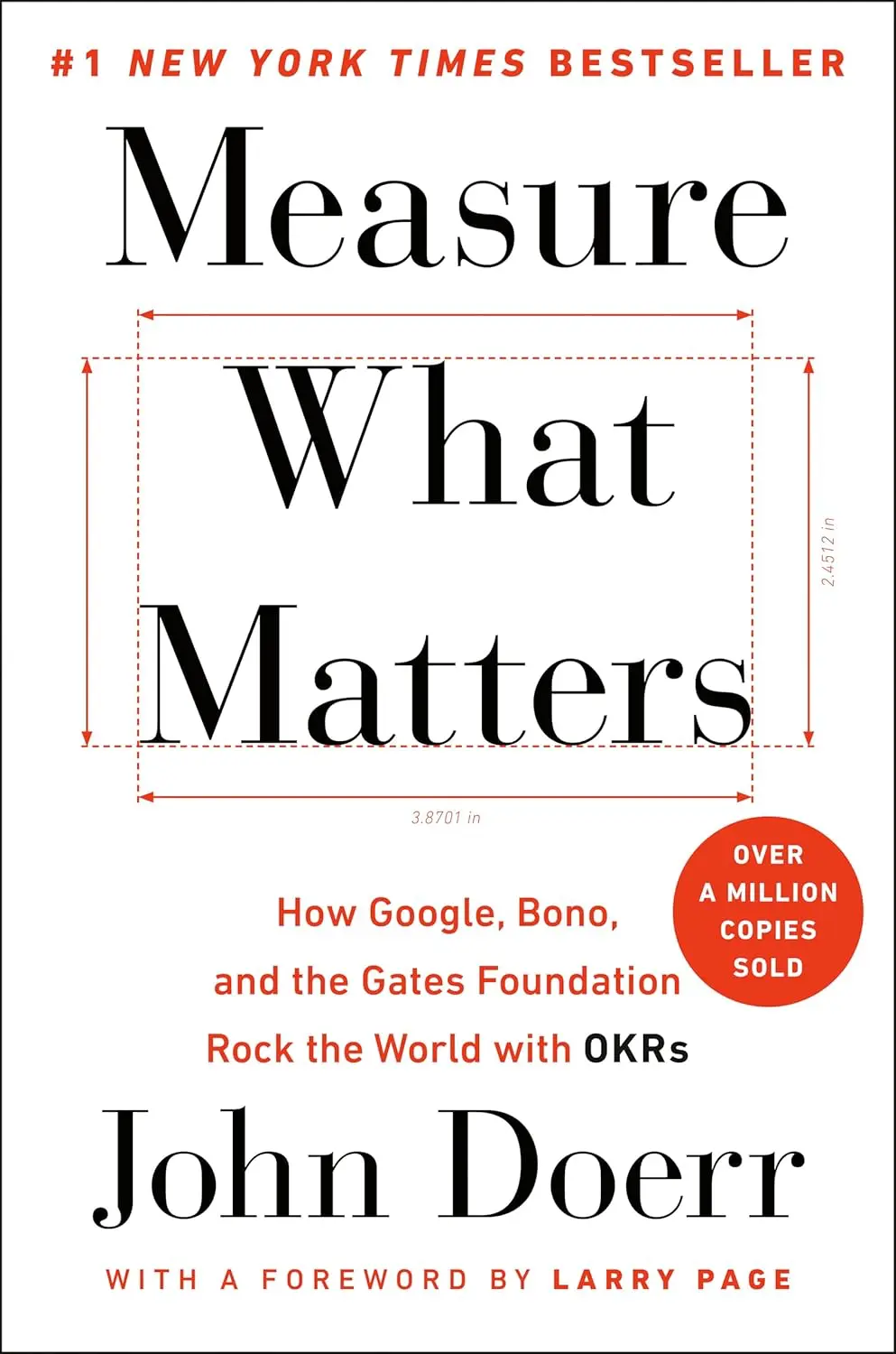
Doerr learned the OKR system from Andy Grove at Intel in the 1970s and spent his career evangelizing it. The framework is simple: set Objectives (what you want to achieve, stated qualitatively and inspirationally) paired with Key Results (how you measure progress, stated quantitatively and specifically). OKRs are typically set quarterly, reviewed regularly, and scored at the end of the period.
The power of OKRs comes from four properties Doerr calls “superpowers.” Focus: by limiting the number of OKRs, you force the organization to choose what actually matters. Alignment: making OKRs visible across the company shows everyone how their work connects to the bigger picture. Tracking: regular check-ins catch problems early and allow adjustments. Stretching: setting ambitious (60-70% achievable) targets encourages teams to reach beyond what feels comfortable.
Doerr illustrates the framework with case studies from Google (where OKRs helped the company scale from 40 employees to tens of thousands while maintaining focus), the Gates Foundation (where OKRs were used to organize complex global health initiatives), and Bono’s ONE Campaign (where they helped a nonprofit measure and communicate its impact).
The book also covers CFRs (Conversations, Feedback, Recognition), which Doerr presents as the human complement to the structural OKR system. Without regular conversations and meaningful feedback, OKRs become just another bureaucratic exercise that people game or ignore.
For founders, OKRs solve a specific problem: as a company grows past a handful of people, alignment breaks down. Teams start pursuing different priorities, communication becomes indirect, and it gets hard to know whether the company is making progress toward what matters. OKRs provide a lightweight structure that addresses this without creating the heavy bureaucracy that kills startups.
The book is about 300 pages. Larry Page wrote the foreword. Dara Khosrowshahi and Bill Gates have recommended it. The framework itself can be explained in a few pages, but the case studies and implementation details make the book worthwhile for anyone actually trying to roll out OKRs in an organization.
