
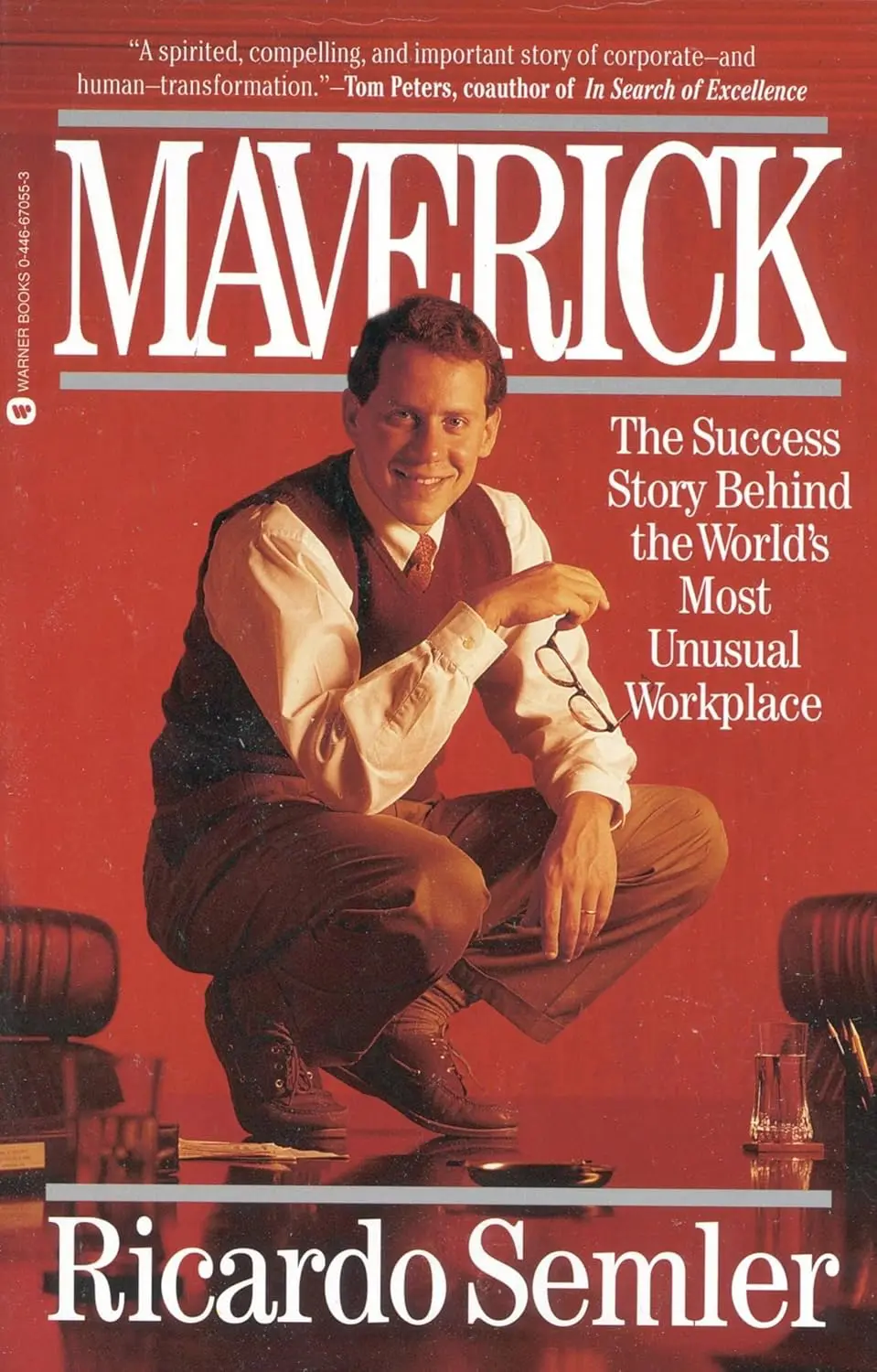
Ricardo Semler took over Semco, a Brazilian conglomerate that makes industrial equipment, from his father in the 1980s. On his first day as CEO, at age twenty-one, he fired two-thirds of the senior management. Then he started experimenting.
Over the next decade, Semler eliminated most of the rules and structures that conventional management considers essential. He removed job titles. He let workers set their own hours. He let them set their own salaries, with the caveat that salary information was transparent and anyone who set their pay too high would face peer pressure. He eliminated most layers of management. He let factory workers redesign the factory floor. He cancelled the dress code, the reserved parking spaces, and the executive dining room.
The results confound anyone who believes that organizations need hierarchy to function. Semco’s revenue grew from $4 million to $212 million during the period Semler describes. Employee turnover dropped to near zero. The company survived the economic turbulence of 1990s Brazil, including hyperinflation that reached 2,000% per year, partly because the distributed decision-making structure allowed it to adapt faster than competitors.
Semler writes with the confidence of someone who has been told repeatedly that his approach cannot work and has watched it work anyway. The tone is provocative but grounded in specifics. He does not just say he trusts his employees. He describes the specific meeting where workers voted to move a factory, the specific process by which managers are reviewed by the people they manage, and the specific moment when he realized that checking the numbers obsessively was making the company worse rather than better.
The book has been criticized for survivorship bias. Semco’s approach worked at Semco, with Semler’s personality, in Brazil’s business culture, in the specific industries Semco operates in. Whether the same approach would work at a Silicon Valley startup, a German manufacturer, or a Japanese bank is genuinely unclear. Semler has acknowledged that his methods are not a template but a provocation.
Maverick was published in 1993 and has sold over a million copies worldwide. Semler followed it with The Seven-Day Weekend, which extends the ideas further. Both books are read as much by people who want permission to try something unconventional as by people who plan to replicate Semco’s specific practices.
