
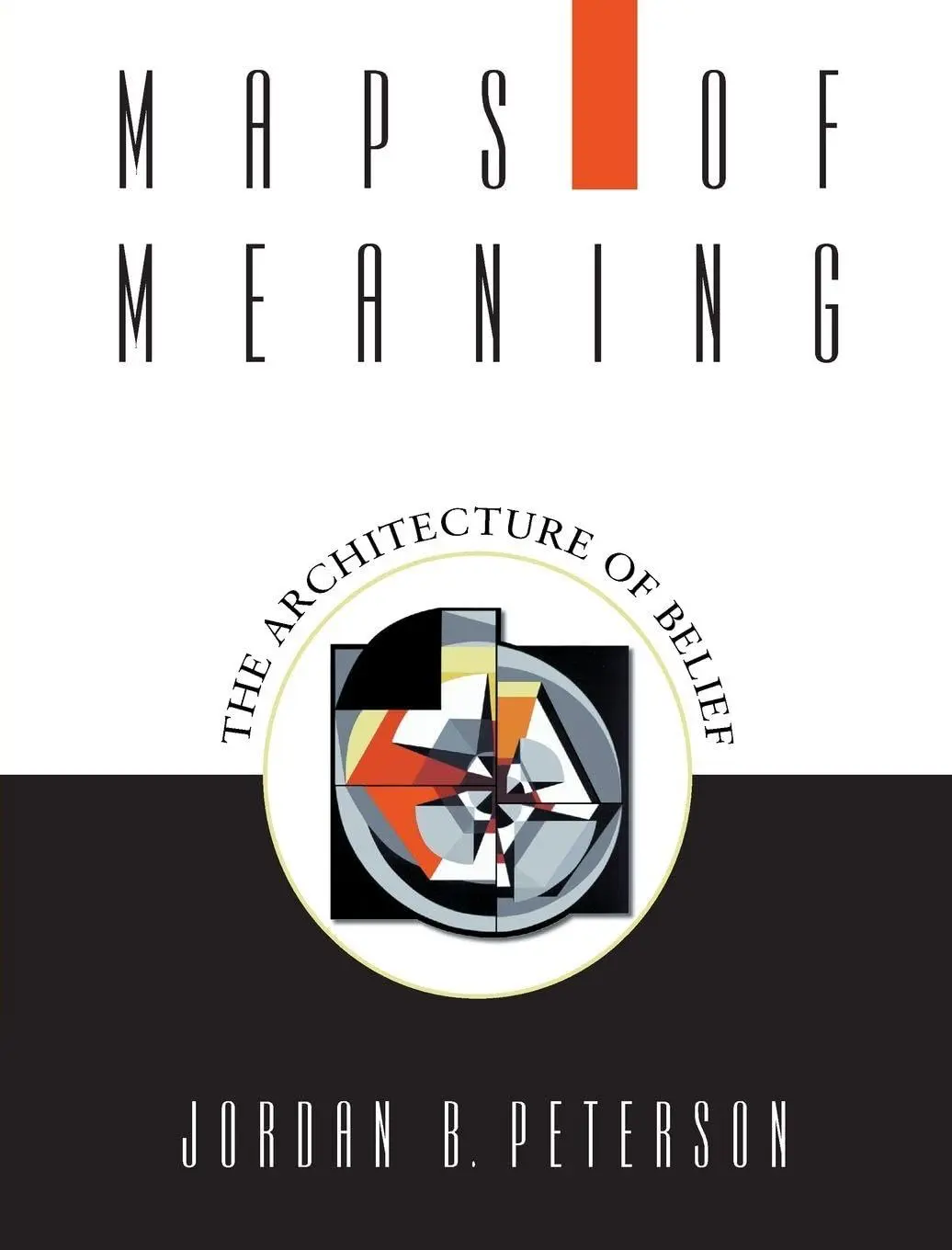
Maps of Meaning is Peterson’s academic magnum opus, written over 13 years and published in 1999. Where 12 Rules for Life is a self-help book that draws on academic ideas, Maps of Meaning is the academic work itself. It is dense, heavily referenced, and not written for a general audience.
Peterson’s central question is: how do humans create meaning? His answer draws on three fields. Neuropsychology explains how the brain processes novel and familiar information (the brain categorizes everything as either “explored territory” or “unexplored territory” and responds to each with different emotional systems). Clinical psychology explains what happens when meaning systems break down (anxiety, depression, addiction, ideological possession). Comparative mythology explains the recurring structures that appear in the stories cultures tell about the world (creation, fall, hero’s journey, death and resurrection).
Peterson argues that myths are not primitive attempts at science. They are intuitive maps of how to act in the world, encoded in narrative form. The hero myth, for example, describes the pattern of venturing into the unknown, confronting chaos, and returning transformed. This pattern recurs across cultures because it describes a universal human experience.
The writing is academic: long sentences, technical vocabulary, and extensive footnotes. Peterson includes original diagrams that map the relationships between order, chaos, the known, and the unknown. These diagrams are central to his argument but require careful study to understand.
For business readers, Maps of Meaning is not practical in any direct sense. It is relevant if you want to understand the deeper ideas behind Peterson’s more popular work, or if you are interested in why people organize their lives around narratives and what happens when those narratives collapse.
At about 560 pages, the book is long and demanding. Peterson’s University of Toronto lecture series on Maps of Meaning, available on YouTube, is an easier way to engage with the ideas for most readers. The book itself is for people who want the full argument with all its supporting evidence and academic apparatus.
