
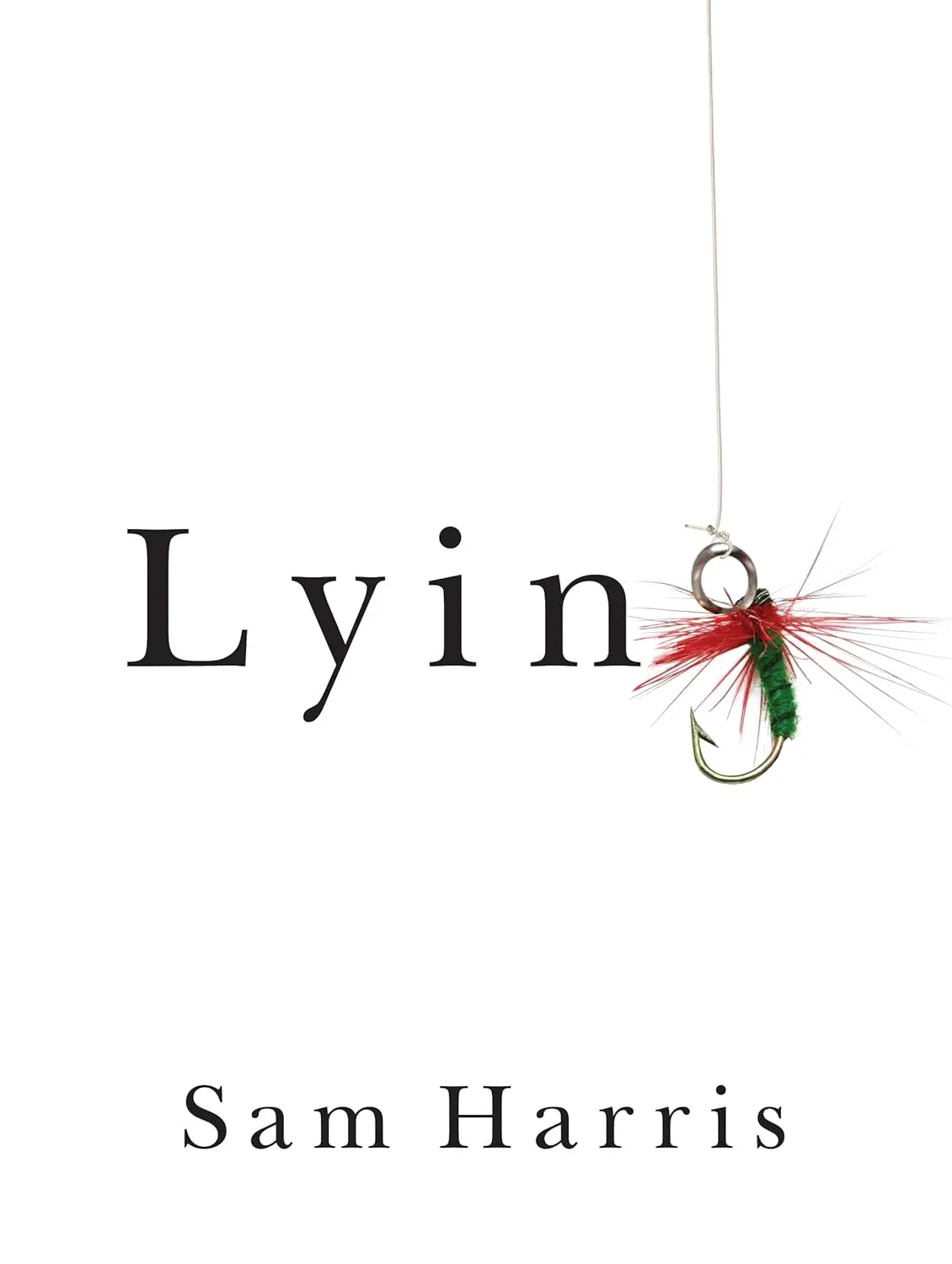
This is a very small book. You can read it in a single sitting, which is probably the best way to read it, because the argument builds steadily and loses momentum if you set it down.
Sam Harris, the neuroscientist and author, wants you to stop lying. All lying. Not just the big lies. The small ones too. The “you look great” when someone does not look great. The “I’m fine” when you are not fine. The “I’d love to come” when you would not. He argues that these small deceptions, which most people consider harmless social lubricant, quietly corrode relationships, erode trust, and prevent people from dealing with reality.
The argument is more rigorous than it sounds. Harris distinguishes between lying and simply being tactful. You do not have to volunteer every negative thought you have. But when someone asks you a direct question, he argues, you owe them a truthful answer. The alternative, telling them what they want to hear, denies them the information they need to make good decisions about their own lives.
He uses specific scenarios. A friend asks whether you liked their manuscript. You thought it was weak. The compassionate lie is to praise it. The honest response is to say what you actually think, with kindness but without distortion. Harris argues that the lie does more harm: it deprives your friend of useful feedback and weakens your relationship, because on some level both of you know the truth is being withheld.
The book extends this logic to bigger situations. Lying to protect someone from bad medical news. Lying to avoid conflict in a marriage. Lying on a resume. In each case, Harris traces the downstream consequences and argues that honesty, even when painful, produces better outcomes over time.
At a hundred pages, the book does not waste a word. Harris writes in the stripped-down style he is known for: precise, assertive, and sometimes blunt to the point of discomfort. The brevity works. A longer treatment would have diluted the impact.
The book is not about building a business or making money. But truthfulness shows up in practically every relationship that matters, whether with co-founders, employees, investors, or customers. The gap between what people say and what they mean is the source of an enormous amount of organizational dysfunction. Harris makes a pointed case for closing that gap.
