
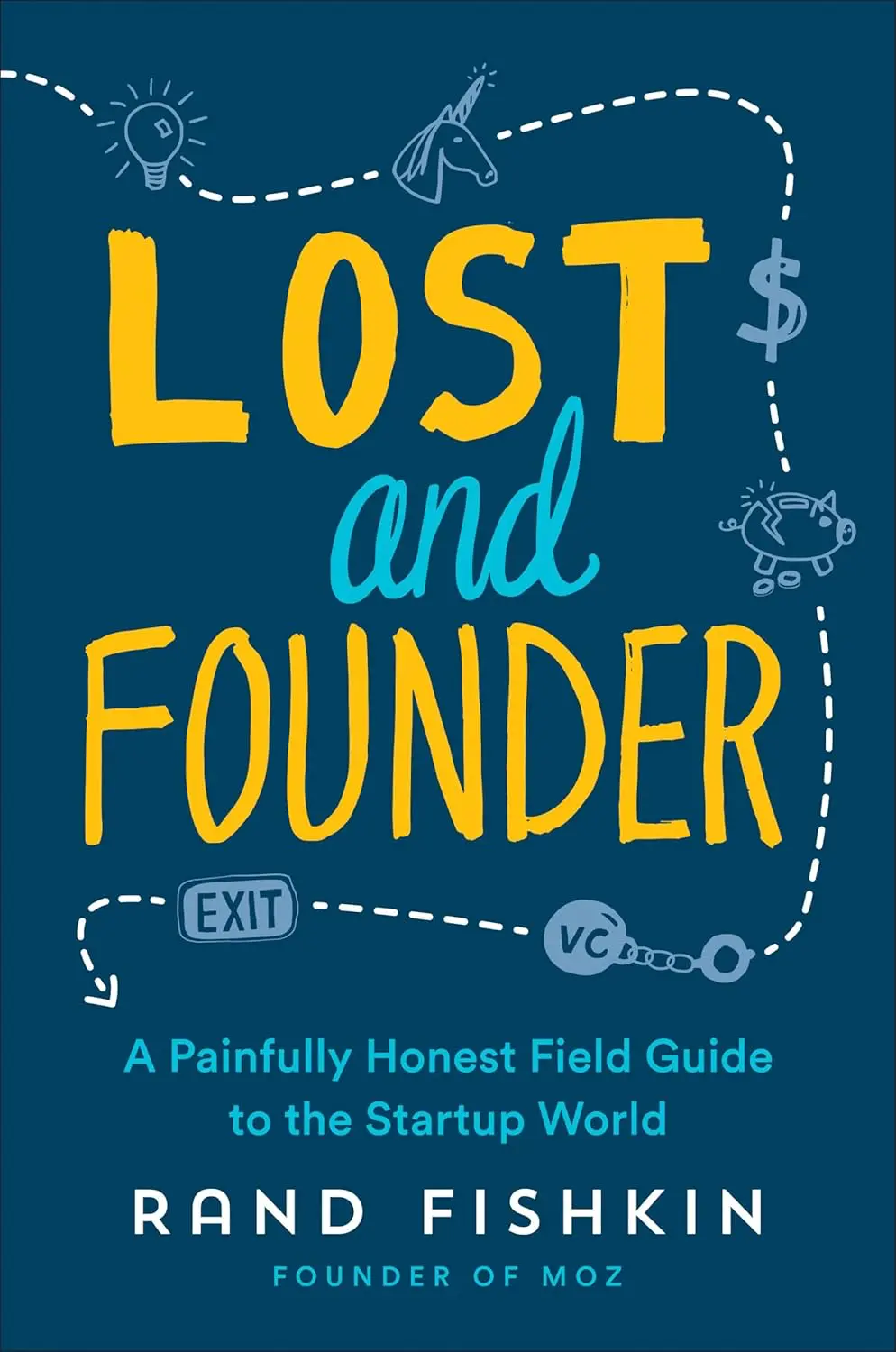
Fishkin founded Moz (originally SEOmoz) in 2004 as a consulting firm, turned it into a software company, raised venture capital, scaled to over 100 employees, and then watched as the growth-at-all-costs model the VCs wanted collided with the profitable, sustainable business he had originally built.
The book is unusually honest. Fishkin describes taking venture funding and realizing the investors’ timeline and his own were incompatible. He describes the depression and anxiety that came with running a company where he felt increasingly out of control. He describes hiring executives who looked great on paper and failed, and the damage those failures caused to the team. He describes the moment he realized he had built the wrong kind of company.
Fishkin is not anti-startup or anti-VC. He is anti-dishonesty about what the startup path actually involves. His frustration is with the mythology that treats every startup as a lottery ticket and every founder as a potential billionaire, when the statistical reality is that most venture-backed companies return nothing to founders after liquidation preferences are paid out.
The book covers specific topics: the hidden costs of raising capital (you lose control, your timeline is no longer yours, your board may fire you), the problem with chasing metrics that do not reflect actual business health, the personal toll of founder life on relationships and mental health, and alternative models for building technology companies.
For founders, especially first-time founders considering venture capital, this book provides a perspective that most pitch decks and blog posts leave out. Fishkin is not saying do not raise money. He is saying understand what you are trading and make the decision with full information.
At about 310 pages, the book reads fast. Fishkin’s writing is personal and direct. He includes specific numbers (revenue, employee count, funding amounts) that most founders would never share publicly. The honesty is the book’s main asset.
