
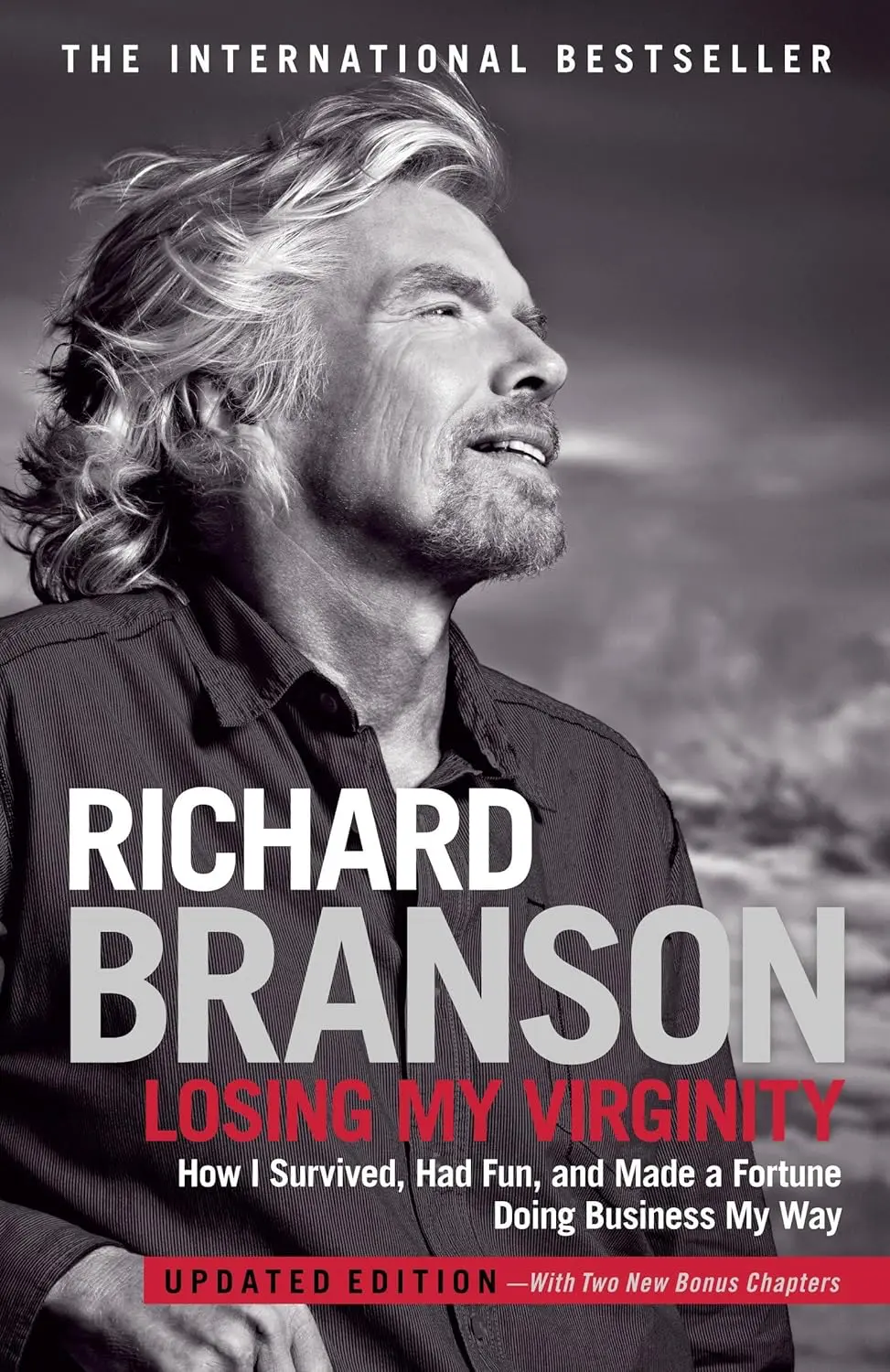
Branson started his first business, a student magazine called Student, at 16. He followed it with a mail-order record business that became Virgin Records (which signed the Sex Pistols and Mike Oldfield), then expanded into airlines (Virgin Atlantic), telecom, fitness, banking, space travel, and dozens of other industries. Losing My Virginity covers all of it in a breathless narrative that rarely pauses for reflection.
The business approach Branson describes is almost entirely instinctual. He does not talk about spreadsheets, market research, or strategic frameworks. He talks about seeing an opportunity, getting excited, calling someone, and figuring it out along the way. When he launched Virgin Atlantic, he had no airline experience. When he got into telecom, he did not understand the technology. His method was to find industries where the incumbents were complacent and the customer experience was bad, then build something better.
The book is full of stories that would be hard to believe if Branson were not who he is. He tried to break the world record for crossing the Atlantic by boat (the boat sank). He tried to circumnavigate the globe in a hot air balloon (multiple attempts, multiple crashes). He challenged British Airways to a public competition. He dressed as a bride to launch a bridal business. The publicity stunts are constant and intentional: Branson treats personal brand and company brand as the same thing.
What the book lacks in analytical depth it makes up for in energy and honesty about risk. Branson has almost gone bankrupt multiple times. He has launched businesses that failed spectacularly. He does not pretend every decision was smart. He admits to making things up as he goes and relying on good people to execute what he starts.
For founders, the book is motivating in the way that any adventure story is motivating. The specific business lessons are thin (Branson’s instinctual approach is hard to replicate), but the underlying message is clear: start, figure it out, do not wait for permission, and if it does not work, try something else.
At about 600 pages, the book is long but moves fast. Branson writes like he talks: enthusiastically, with exclamation marks and stories that skip from topic to topic. It works best as a weekend read when you need a shot of entrepreneurial energy rather than a strategic framework.
