
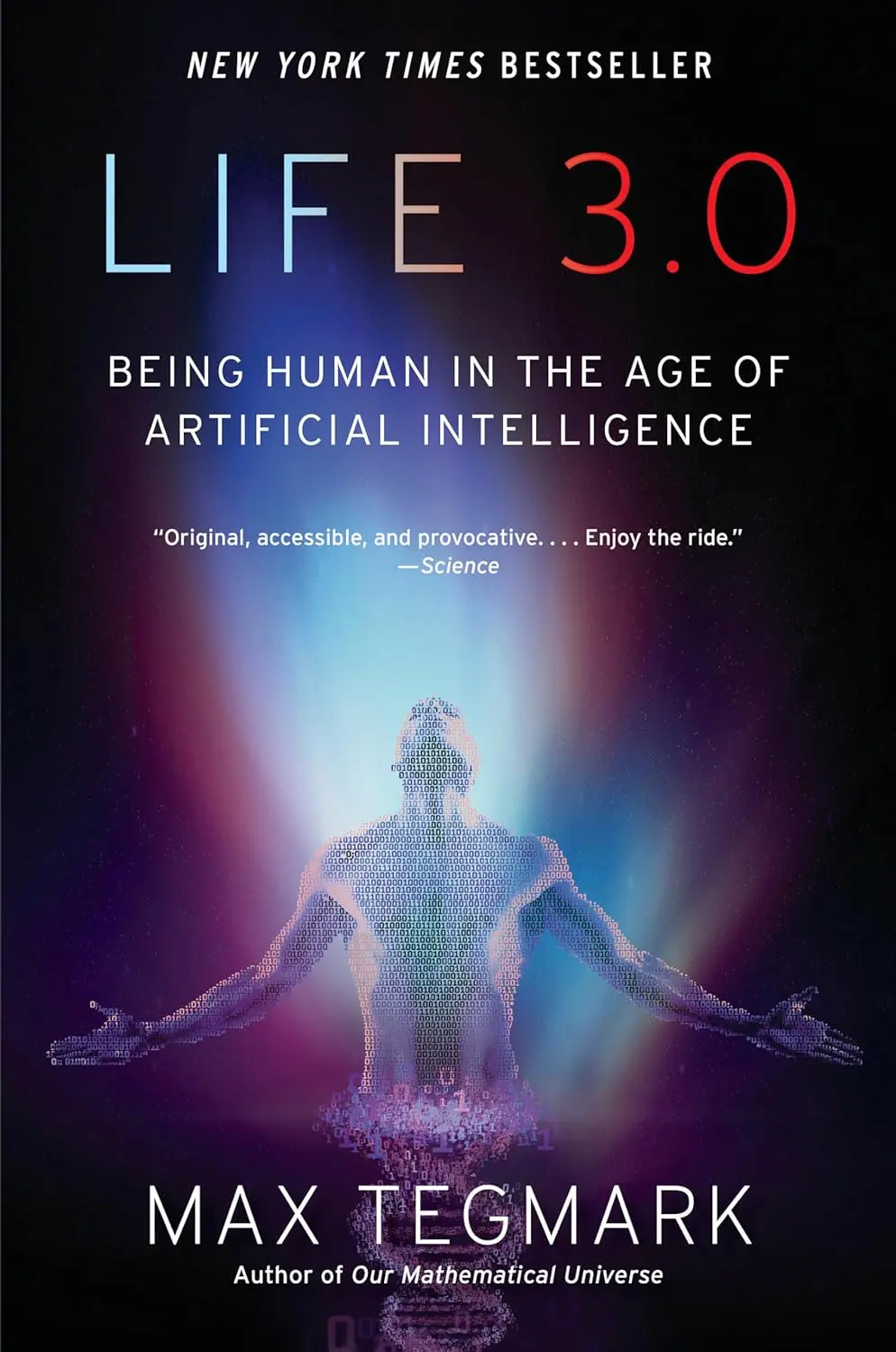
Tegmark organizes the book around a taxonomy of life. Life 1.0 (bacteria) can survive and replicate but cannot redesign itself. Life 2.0 (humans) can redesign its software (learning, culture) but not its hardware (biology). Life 3.0 would be able to redesign both its software and hardware, which is what a sufficiently advanced AI could do.
The book covers three timescales. In the near term (years to decades), AI will automate jobs, change warfare, and reshape economies. Tegmark discusses which jobs are most vulnerable, how autonomous weapons could destabilize international security, and what policies might help manage the transition. In the medium term (decades to a century), artificial general intelligence could arrive, raising the control and alignment problems that Bostrom also covers. In the long term (centuries and beyond), Tegmark speculates about cosmic-scale possibilities: could intelligence spread throughout the universe? What are the physical limits of computation?
The book opens with a fictional scenario called “The Omega Team,” where a group of AI researchers quietly builds a superintelligent system and uses it to gradually take over the world’s economy. The scenario is meant to illustrate how quickly things could change and how many decisions would need to be made before anyone fully understood the consequences.
Tegmark writes clearly for a physicist. He avoids jargon, uses analogies effectively, and maintains a tone that is serious without being alarmist. He does not claim to know which scenario will occur. He argues that the question of what future we want is the most important conversation humanity needs to have.
For founders building AI products or companies adjacent to AI, the book provides a broader context for the work. Understanding the range of possible outcomes, from massive economic gains to existential risk, helps frame decisions about what to build and how to build it responsibly.
Elon Musk endorsed the book publicly. At about 370 pages, it is comprehensive without being exhausting. The near-term chapters are the most immediately practical; the cosmic-scale chapters are the most intellectually stimulating.
