
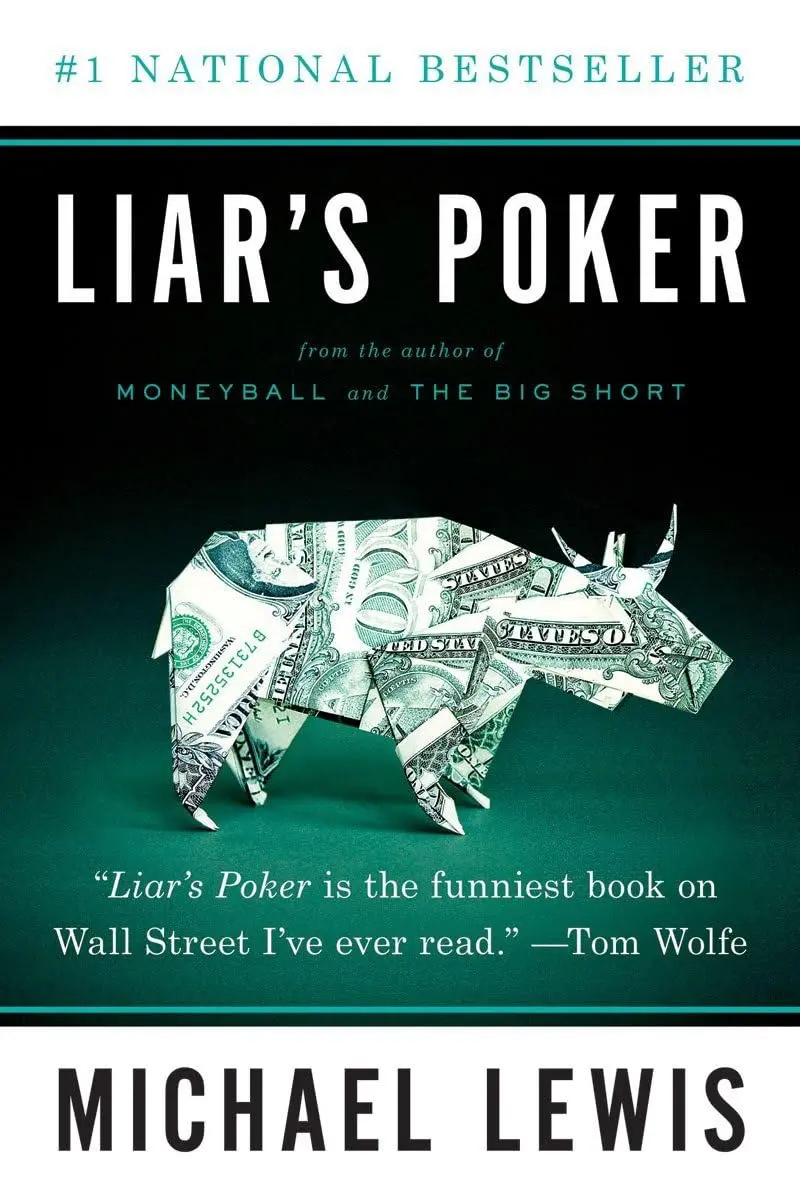
Lewis arrived at Salomon Brothers in 1985 as a 24-year-old with a Princeton degree and an art history background. He had no business being a bond trader, which was his point. The firm trained him for a few months and then put him in a position where he could move millions of dollars with a phone call. The fact that someone with his background was entrusted with that much money suggested that something was wrong with the system.
The book covers the culture of Salomon Brothers during the bond trading boom of the 1980s. The traders were aggressive, profane, and obscenely compensated. The firm pioneered mortgage-backed securities, the same instruments that would cause the 2008 financial crisis twenty years later. Lewis describes the trading floor as a Darwinian environment where status was determined by how much money you made and how loudly you made it.
Lewis is funny about his own incompetence and honest about the randomness of his success. He made money not because he was smarter than other traders but because he happened to be in the right seat at the right time. The book’s humor comes from Lewis observing an insane environment with the detachment of someone who knows he does not belong there.
The bigger story is about the transformation of Wall Street from a staid partnership model (where partners risked their own money) to a publicly traded model (where employees risked shareholders’ money). This shift changed the incentive structure of the entire industry and, Lewis argues, made the 2008 crisis inevitable.
For founders, the book is useful as a study of incentive structures and organizational culture. The culture at Salomon Brothers produced extraordinary short-term profits and extraordinary long-term destruction. The parallels to tech companies that optimize for growth at the expense of sustainability are not hard to see.
At about 250 pages, the book reads fast. Lewis’s prose is sharp and self-deprecating. It remains one of the best-selling business memoirs ever published and launched Lewis’s career as a nonfiction writer.
