
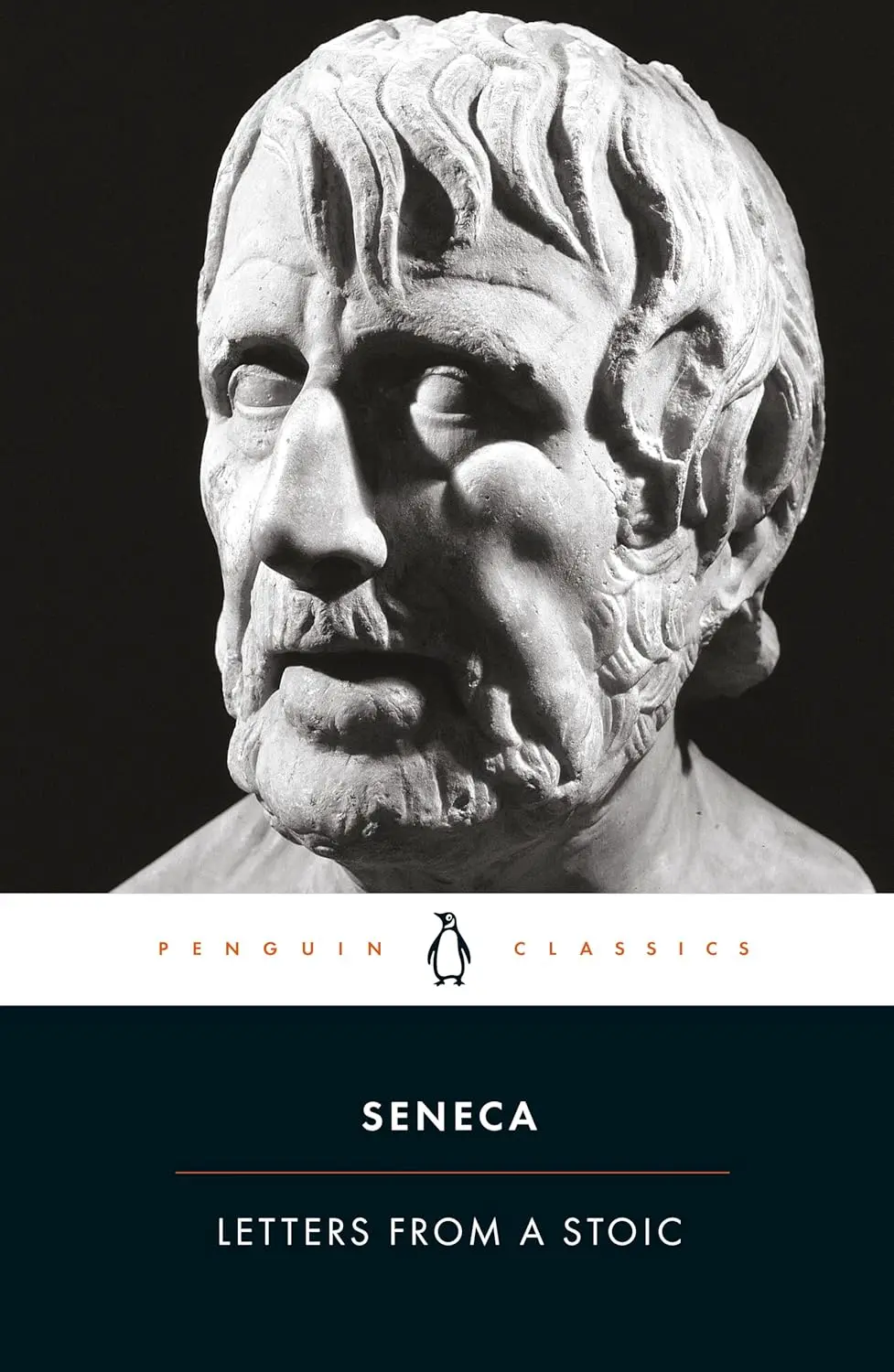
Seneca was a Roman statesman, playwright, and philosopher who served as an advisor to Emperor Nero before being ordered to commit suicide in 65 AD. The Letters to Lucilius were written in the last years of his life, and they read like a series of coaching sessions between a wise older man and a younger friend who is trying to figure out how to live well.
The letters are short, typically a few pages each, and each one addresses a specific topic: how to handle anger, how to choose friends, why busyness is not the same as productivity, why luxury weakens the mind, how to prepare for bad luck, and how to stop worrying about things outside your control.
Seneca’s Stoicism is practical, not academic. He does not argue for indifference to life. He argues for clear thinking about what you can and cannot change, and for investing your energy accordingly. He was also aware of the gap between philosophy and practice. In one letter, he admits that he does not always follow his own advice, which makes him more credible, not less.
The writing is direct and often witty. Seneca uses metaphors from everyday Roman life (gladiator fights, sea voyages, dinner parties) to make abstract ideas concrete. He is also surprisingly modern in his observations about distraction, overconsumption, and the anxiety that comes from having too many choices.
For founders, the letters on time management and adversity are the most applicable. Seneca treats time as the only resource that truly matters, more valuable than money because once spent, it cannot be recovered. His advice on handling setbacks, essentially to accept them quickly and focus on what you can do next, maps directly onto the founder experience.
Ryan Holiday, Tim Ferriss, and Naval Ravikant have all recommended Seneca extensively. The Penguin Classics edition, translated by Robin Campbell, is the most commonly recommended version. The book is about 250 pages and works best read a few letters at a time, which is how Lucilius presumably received them.
