
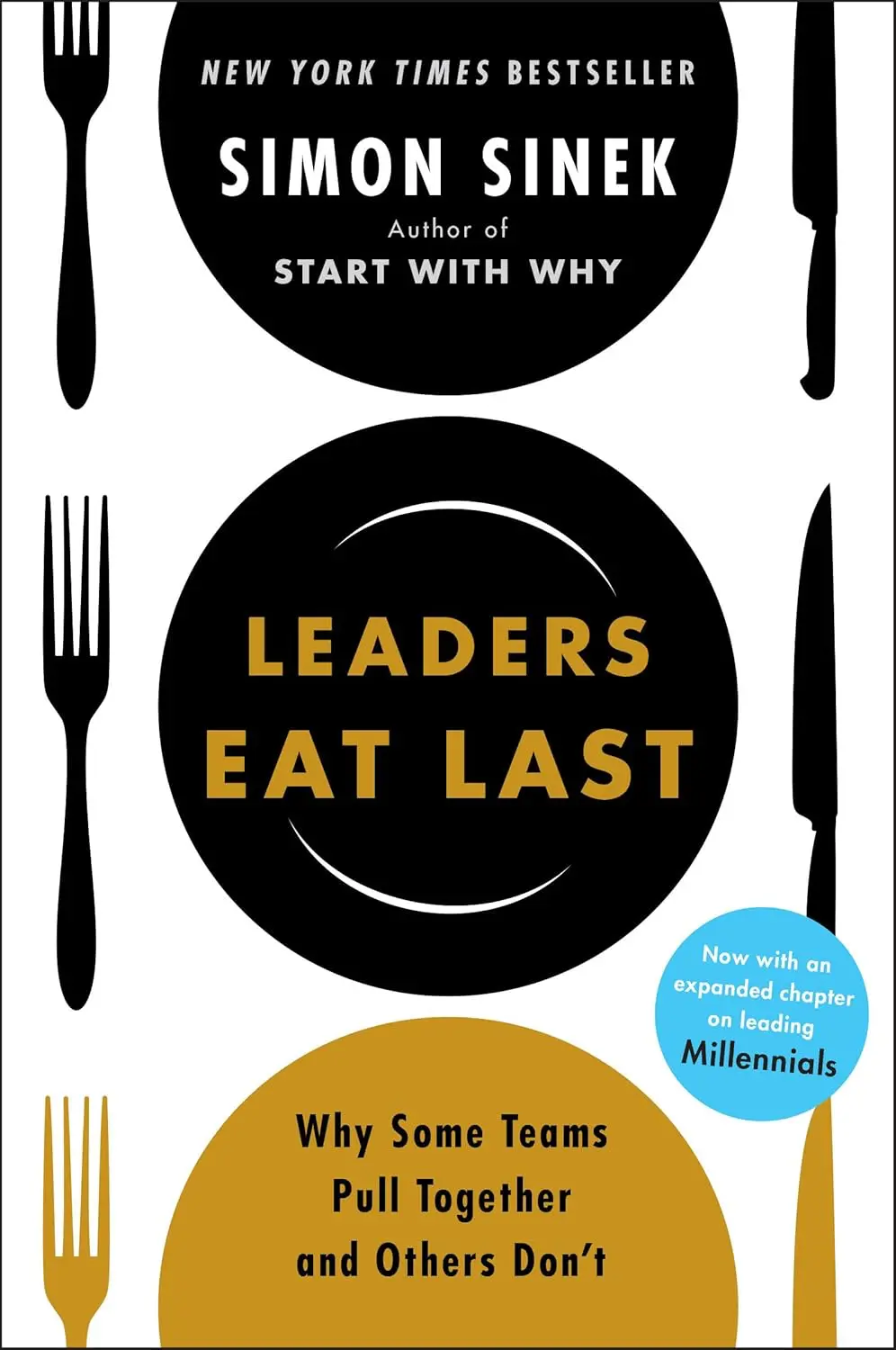
The title comes from a Marine Corps practice: officers eat last at meals, after every enlisted member has been served. It is a small gesture, but it communicates something about the relationship between leaders and the people they lead. Sinek uses this as a metaphor for a broader argument about what makes organizations function.
Sinek’s framework is biological. When people feel safe in a group (what he calls the “Circle of Safety”), their brains produce oxytocin and serotonin, chemicals associated with trust and belonging. When they feel threatened, cortisol floods the system, and behavior shifts toward self-preservation: hoarding information, avoiding risk, and looking out for yourself at the expense of the team.
Leaders control the size of the Circle of Safety. When leaders protect their teams from external threats (unreasonable deadlines, political maneuvering, layoffs used as financial tools), the team focuses outward on customers and competition. When leaders are the source of threat (playing favorites, firing without warning, prioritizing numbers over people), the team focuses inward on self-protection.
Sinek draws examples from the military (where the cost of broken trust is measured in lives), from corporate disasters (Enron, the 2008 financial crisis), and from companies with strong cultures (Costco, the Marines, Barry-Wehmiller). The military examples are the most compelling because the stakes make the dynamics visible in a way that corporate settings often obscure.
For founders, the core message is that culture starts with how the leader treats people. If you sacrifice employees for short-term metrics, they will return the favor by disengaging, hiding problems, and leaving at the first opportunity. If you protect them, they give you their best work.
At about 350 pages, the book covers a lot of ground. Sinek’s writing is accessible and he tells good stories. The biological framework gives the cultural arguments more weight than the usual “be a good leader” advice. Some readers find Sinek repetitive, and the corporate examples are sometimes oversimplified, but the core insight about the Circle of Safety is practical and testable.
