
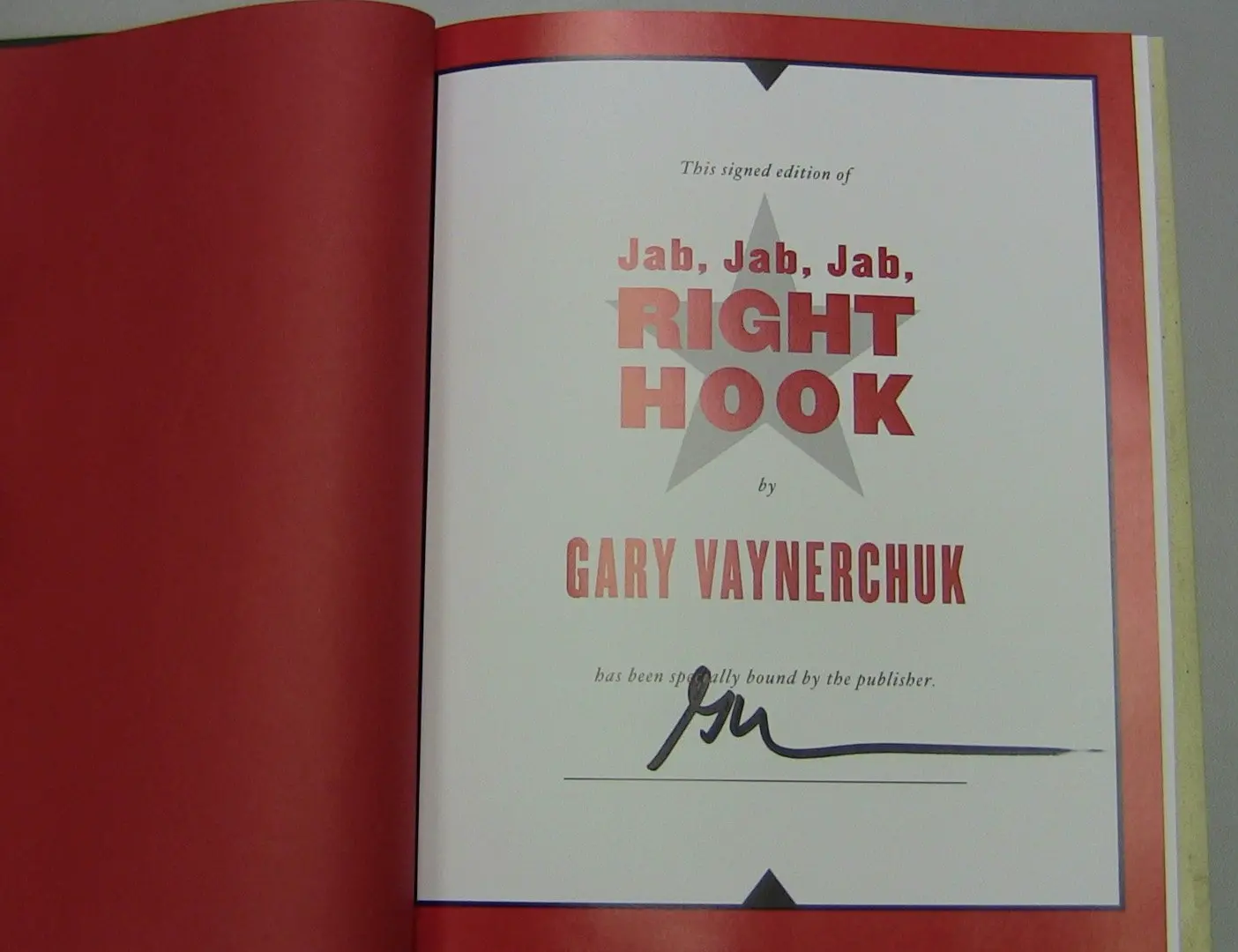
Jab, Jab, Jab, Right Hook is Gary Vaynerchuk’s social media marketing playbook, built around a boxing metaphor. The jabs are content that gives value to your audience without asking for anything in return: entertaining, informative, or engaging posts that build relationship and trust. The right hook is the ask: buy this product, sign up for this event, click this link. Vaynerchuk’s argument is that most brands throw right hooks constantly (buy now, buy now, buy now) without earning the right to ask, and that the brands that win on social media are the ones that jab far more than they hook.
The bulk of the book is visual. Vaynerchuk reproduces dozens of real social media posts from major brands and analyzes each one: what worked, what didn’t, and why. He covers each major platform (Facebook, Twitter, Instagram, Tumblr, Pinterest) with its own section, explaining the specific content formats, norms, and audience expectations that differ from platform to platform. A post that works on Instagram will often fail on Twitter because the platforms have different rhythms and audiences.
The analysis is specific and opinionated. Vaynerchuk is not shy about calling out lazy marketing from brands that should know better. He points out when a brand posts the same content across every platform without adapting it, when images are the wrong size or resolution, and when the copy misses the tone the platform’s users expect. These critiques are educational even when the specific platforms have changed since the book’s 2013 publication.
For founders doing their own social media marketing, the jab/hook ratio is a useful mental model. Most early-stage companies ask too much and give too little on social media, which is why their content gets ignored. Vaynerchuk’s advice to lead with value and build the relationship before making the ask applies whether you have 100 followers or 100,000.
The book is heavily visual and designed to be flipped through rather than read linearly. Some of the platform-specific advice is dated (Tumblr and Vine are less relevant now), but the underlying principles about adapting content to context and leading with generosity have not changed. Vaynerchuk’s energy and confidence come through strongly, which readers either find motivating or abrasive.
