
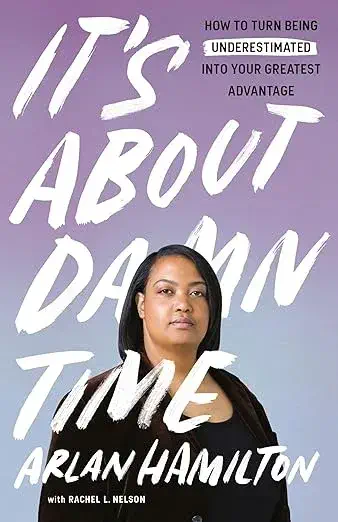
In 2015, Arlan Hamilton was homeless. She was sleeping on the floor of the San Francisco airport while trying to convince anyone who would listen that she could run a venture capital fund. She had no finance background, no technology background, and no existing relationship with anyone in Silicon Valley. She is a Black, gay woman from Dallas, Texas. Nothing about her resume matched what the industry expected a venture capitalist to look like.
She raised her first fund anyway. Backstage Capital launched in 2015 with the specific mission of investing in startups founded by people the industry consistently overlooks: women, people of color, and LGBTQ+ entrepreneurs. By 2020, the fund had invested in over 150 companies.
The book is part memoir, part argument. Hamilton tells the story of her childhood in Dallas, her years working in the music industry as a tour production manager, and the slow realization that the tech world had a pipeline problem. Not a talent problem. A pipeline problem. The founders were out there. The money was not reaching them.
Hamilton’s writing is direct and personal. She does not dress up her experiences in business jargon or translate them into frameworks. She describes what it felt like to pitch investors while living out of a suitcase, to have her emails ignored, to be the only person in the room who looked like her. She also describes the specific strategies she used to break through: cold emails that got responses, relationships she built one meeting at a time, and the bet she made that underestimated founders would outperform the market because they had to be twice as good to get half as far.
The book is honest about the difficulty without being bitter about it. Hamilton has a sense of humor about the absurdity of her position. She also has data. She cites research showing that diverse founding teams generate better returns, and she points to Backstage’s track record as evidence that the thesis works.
Some readers will come to this book for inspiration. Others will come for the practical detail on how Hamilton built a fund from nothing. Both groups will find what they are looking for. The book is short, readable, and specific enough to be useful without ever feeling like a business manual.
It was published in 2020 by Currency, a Penguin Random House imprint.
