
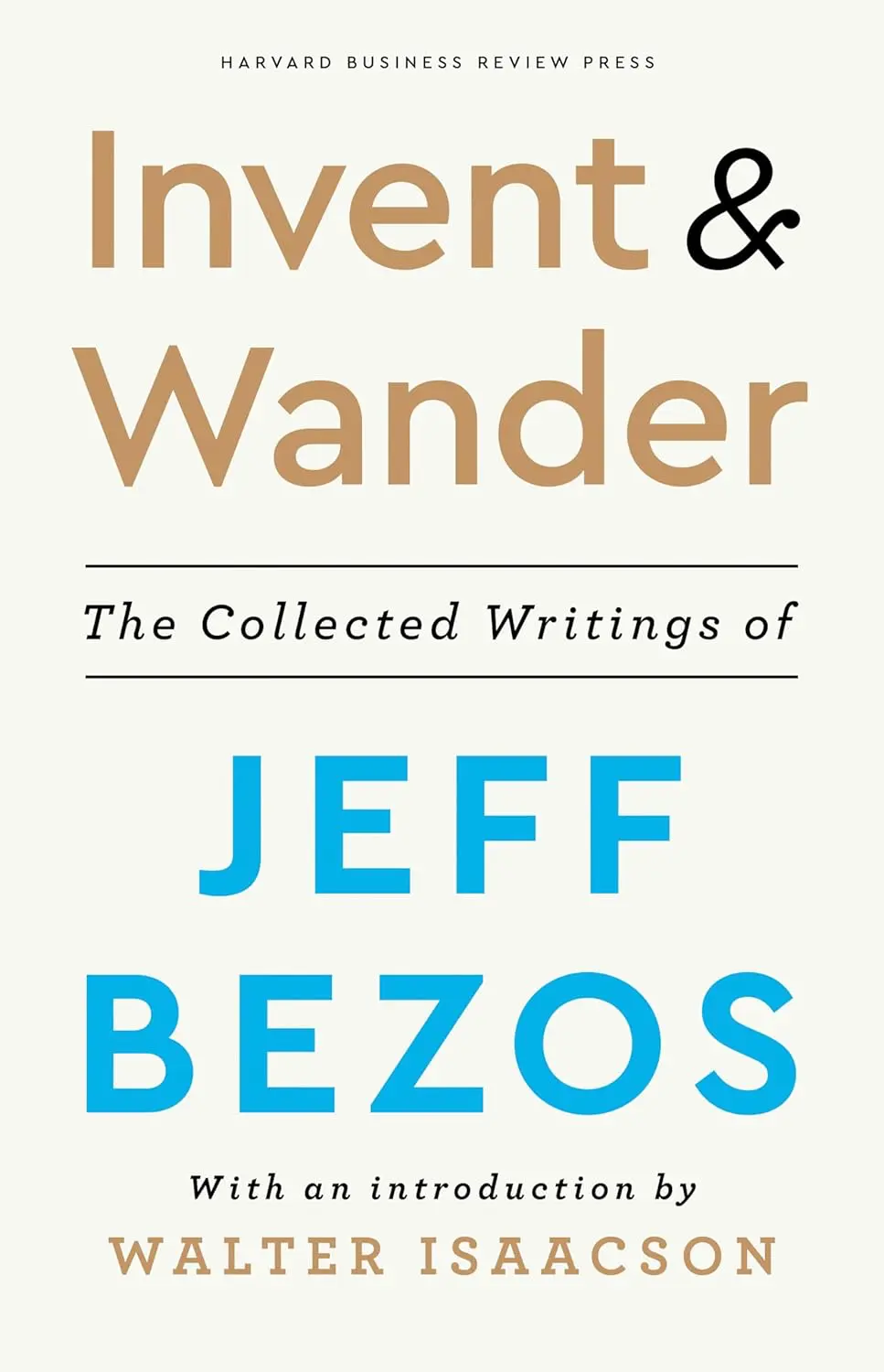
Invent and Wander compiles Jeff Bezos’s annual shareholder letters from 1997 through 2019, along with a selection of speeches and interviews. Walter Isaacson provides an introductory essay that places Bezos’s thinking in the context of other business and technology leaders he has profiled.
The shareholder letters are the backbone of the book, and they are where the real value sits. Bezos wrote these letters as a running commentary on how he thought about building Amazon, and they cover topics like why it matters to maintain a “Day 1” mindset, how to think about customer obsession versus competitor obsession, why high-velocity decision-making beats waiting for perfect information, and how to structure teams small enough to be fed by two pizzas.
The later sections include speeches and interviews where Bezos talks about topics outside of Amazon: space exploration through Blue Origin, his thoughts on the Washington Post, his views on artificial intelligence, and how he thinks about risk. These sections add some texture, though they overlap with themes from the letters.
For founders, the shareholder letters are the most directly useful part. Bezos’s thinking on how to balance long-term investment against short-term pressure, how to know when to keep pushing on a failing initiative versus when to walk away, and how to think about hiring and culture are all explained in specific, operational detail rather than in vague platitudes. The 1997 letter, which Amazon still attaches to every annual report, reads like a manifesto for building a company that prioritizes durable advantage over quarterly results.
The book has a repetitive quality if you read it straight through, since Bezos returns to the same themes year after year. But that repetition is itself revealing: the consistency of his thinking over 20+ years shows just how few core ideas you actually need if you execute on them with enough discipline.
