
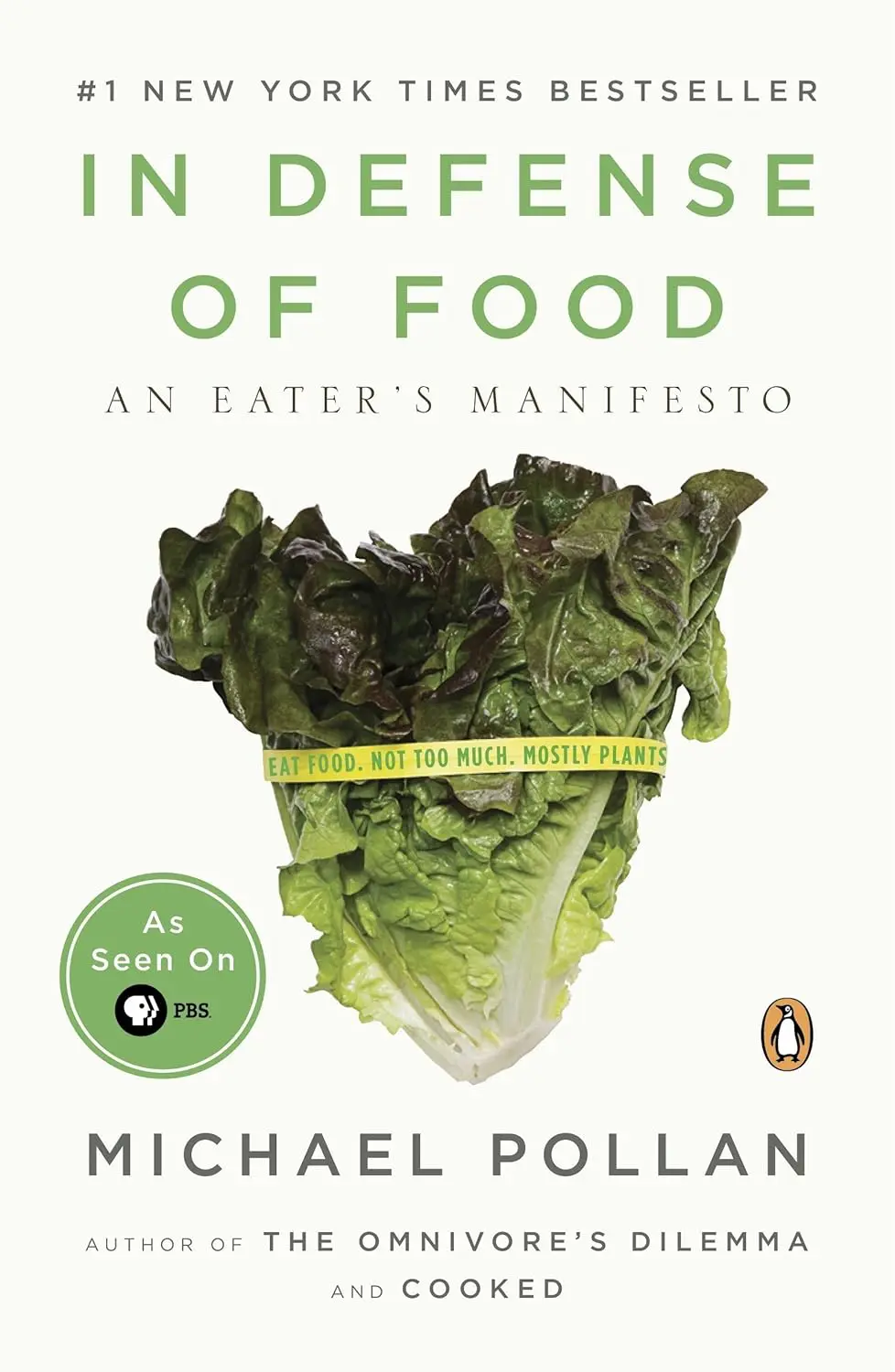
Seven words. That is Pollan’s prescription for healthy eating: Eat food. Not too much. Mostly plants. The book exists because those seven words require about 200 pages of explanation, given how thoroughly the modern food industry has confused the question of what counts as food.
Pollan’s target is what he calls nutritionism, the ideology that reduces food to its nutrient components. Under nutritionism, an orange is not an orange. It is a delivery system for vitamin C, fiber, and various phytochemicals. This way of thinking gave us margarine (which replaced butter’s saturated fat with trans fat, which turned out to be worse), fat-free cookies (which replaced fat with sugar), and an entire supermarket vocabulary designed to make processed products sound healthy: “fortified,” “enriched,” “low-fat,” “heart-healthy.”
The problem, Pollan argues, is that nutritional science does not understand food well enough to reduce it to parts. Scientists keep discovering new compounds in whole foods that affect health in ways nobody predicted. When you eat a carrot, you are eating hundreds of chemicals interacting in ways that nobody can fully describe. When you eat a nutrient bar engineered to deliver specific vitamins, you are eating a product designed by people who understand less than they think they do.
Pollan’s rules are deliberately simple. Do not eat anything your great-grandmother would not recognize as food. Do not eat anything with more than five ingredients. Do not eat anything with ingredients you cannot pronounce. Shop the perimeter of the supermarket, where the actual food is, and avoid the center aisles, where the products are. Pay more for food if you can, and eat less of it.
The book is a follow-up to The Omnivore’s Dilemma, which traced several meals from field to plate and was denser and more reported. In Defense of Food is shorter, more prescriptive, and more accessible. It spent six weeks at number one on the New York Times bestseller list and was adapted into a PBS documentary.
Pollan has been criticized for writing from a position of privilege. His advice to buy organic, shop at farmers’ markets, and cook from scratch assumes a level of time and money that many families do not have. Pollan has acknowledged this, though the book itself does not spend much time on it. The advice is most useful for people who can afford to follow it, which is a real limitation.
The seven-word version is free. The book explains why those seven words are harder to follow than they sound.
