
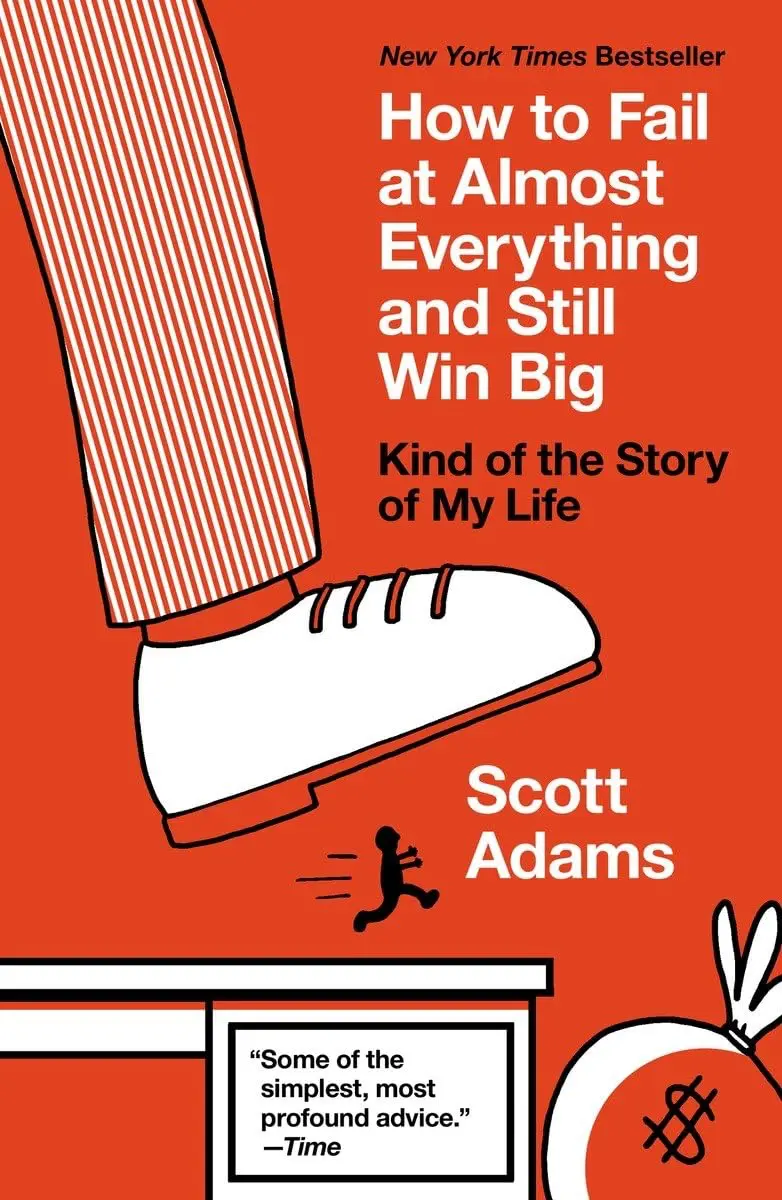
Adams structures the book around his own career, which was a long series of failures before Dilbert became successful. He failed at corporate jobs. He failed at several business ideas. He failed at becoming a famous cartoonist for years. What he learned from this sequence of failures became his operating philosophy.
The book’s central idea is that systems beat goals. A goal is a specific outcome you are working toward (“lose 20 pounds”). A system is a regular practice you follow (“eat right and exercise daily”). Goals are binary: you have either achieved them or you have not, and the time spent not-yet-achieving them feels like failure. Systems are continuous: you follow the system every day, and the results come as a byproduct.
Adams also introduces the concept of a “talent stack,” which is that you do not need to be the best in the world at any single thing. You need to be pretty good (top 25%) at several things that complement each other. Adams is not the best artist, the funniest writer, or the most insightful business commentator. But combining adequate drawing, decent humor, and an understanding of office culture created a combination that was unique and commercially successful.
Other topics include: how to manage your personal energy (schedule demanding tasks when your energy is highest), the value of being a simplifier rather than an optimizer (most advice is too complicated to follow), and why affirmations worked for him (a controversial claim he makes without insisting others adopt it).
For founders, the systems-over-goals framework and the talent stack concept are the most useful ideas. Building a company is a system problem, not a goal problem. And the combination of skills you bring to the table, even if none of them are world-class individually, can create a unique competitive position.
Tim Ferriss and Naval Ravikant have recommended the book. At about 250 pages, it reads quickly. Adams writes with the dry, observational humor of his comic strip. The tone is casual and self-deprecating, which makes the advice feel less preachy than most self-improvement books.
