
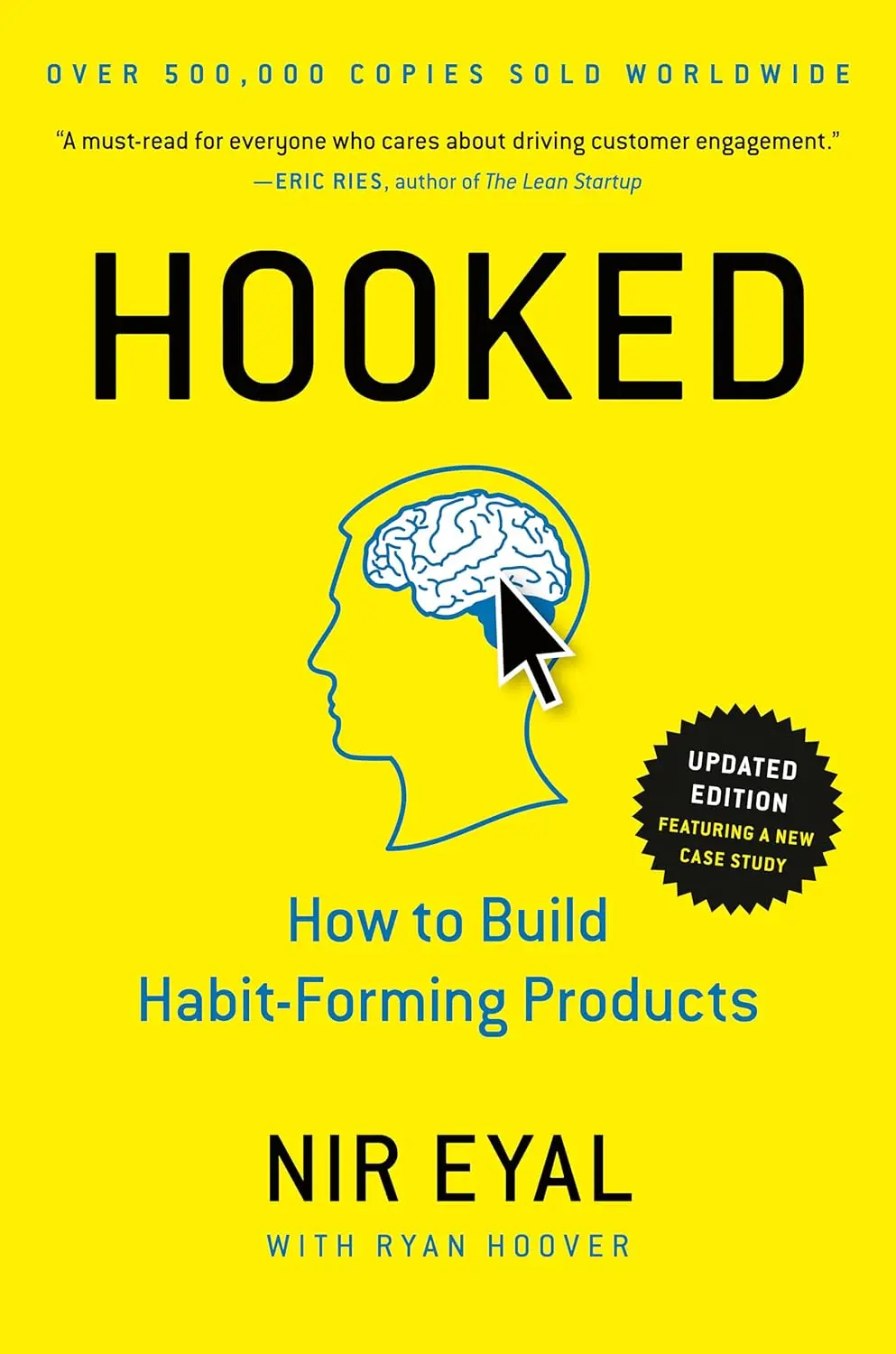
Hooked is built around a simple loop. A Trigger (either external, like a notification, or internal, like boredom) prompts an Action (opening an app, scrolling a feed). The action leads to a Variable Reward (sometimes you see something interesting, sometimes you do not, which keeps you coming back). The reward is followed by an Investment (adding content, following people, customizing settings) that makes the product more valuable for next time and loads the next trigger.
Eyal illustrates this with products like Facebook, Instagram, Pinterest, and the Bible app. Each one follows the same pattern. The variable reward piece is the most psychologically interesting: variable reinforcement (where the reward is unpredictable) creates stronger habits than consistent reinforcement. This is the same principle that makes slot machines addictive.
The book also covers the ethics of habit-forming design. Eyal introduces a “Manipulation Matrix” that asks two questions: does the maker use the product themselves? and does the product materially improve the user’s life? Products that pass both tests are in the “facilitator” quadrant. Products that fail both are in the “dealer” quadrant. This framework does not resolve the ethical questions, but it provides a structure for thinking about them.
Eyal writes clearly and the book is organized around the four steps of the Hook Model with examples at each stage. At about 240 pages, it is concise.
For founders building consumer products or SaaS tools, the Hook Model is a useful diagnostic. If users are not coming back, which step of the loop is broken? Is the trigger missing? Is the action too hard? Is the reward too predictable? Is there no investment that increases switching costs?
The book has been widely read among product designers and growth teams. Some critics argue that applying the Hook Model without ethical guardrails leads to addictive products that harm users. Eyal has addressed this in his subsequent book, Indistractable, which covers the user’s side of the equation. Both books together give a more complete picture.
