
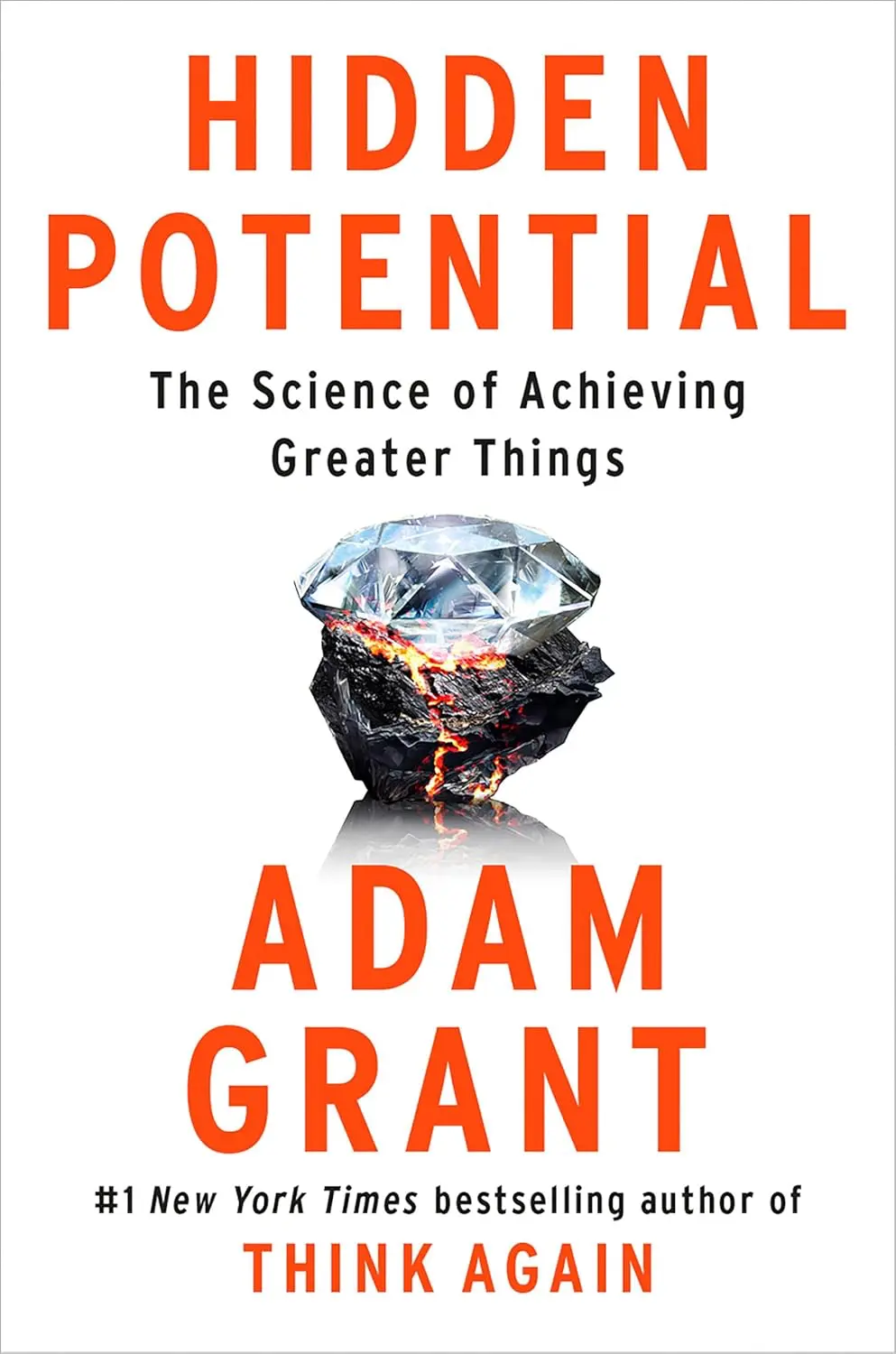
Hidden Potential is Adam Grant’s argument that we’ve been too focused on talent and not focused enough on the systems and habits that help people grow. The book draws from research across education, sports, music, and business to identify what separates people who develop their abilities from those who plateau.
Grant identifies three character skills that matter more than raw talent for long-term development. The first is the ability to absorb information from discomfort, essentially treating difficulty as a signal to learn rather than a signal to quit. The second is acting like a sponge, seeking out feedback and being genuinely open to it even when it stings. The third is what he calls the imperfection of practice, the idea that the best learners don’t try to perfect one thing before moving on but instead embrace messy, varied practice that builds adaptable skills.
The book then shifts to how environments and systems can either support or stifle growth. Grant covers tutoring, coaching, mentoring, and organizational design, showing how the right scaffolding helps people perform beyond what their initial aptitude would predict. He includes stories from Finnish schools (which have some of the world’s best educational outcomes despite not selecting for early talent), from speech and debate communities, and from chess prodigies.
For founders, the implications are practical. If you hire based on current skill rather than growth trajectory, you’ll miss people who would have become your best performers. If your company culture punishes mistakes rather than treating them as learning data, you’ll stifle development. Grant offers specific suggestions for how to build teams and environments that bring out potential rather than just filtering for it.
The writing follows Grant’s familiar style: clear, research-supported, and built around concrete stories. It is his most recent book and feels like a natural continuation of his work on talent and culture from Give and Take and Originals.
