
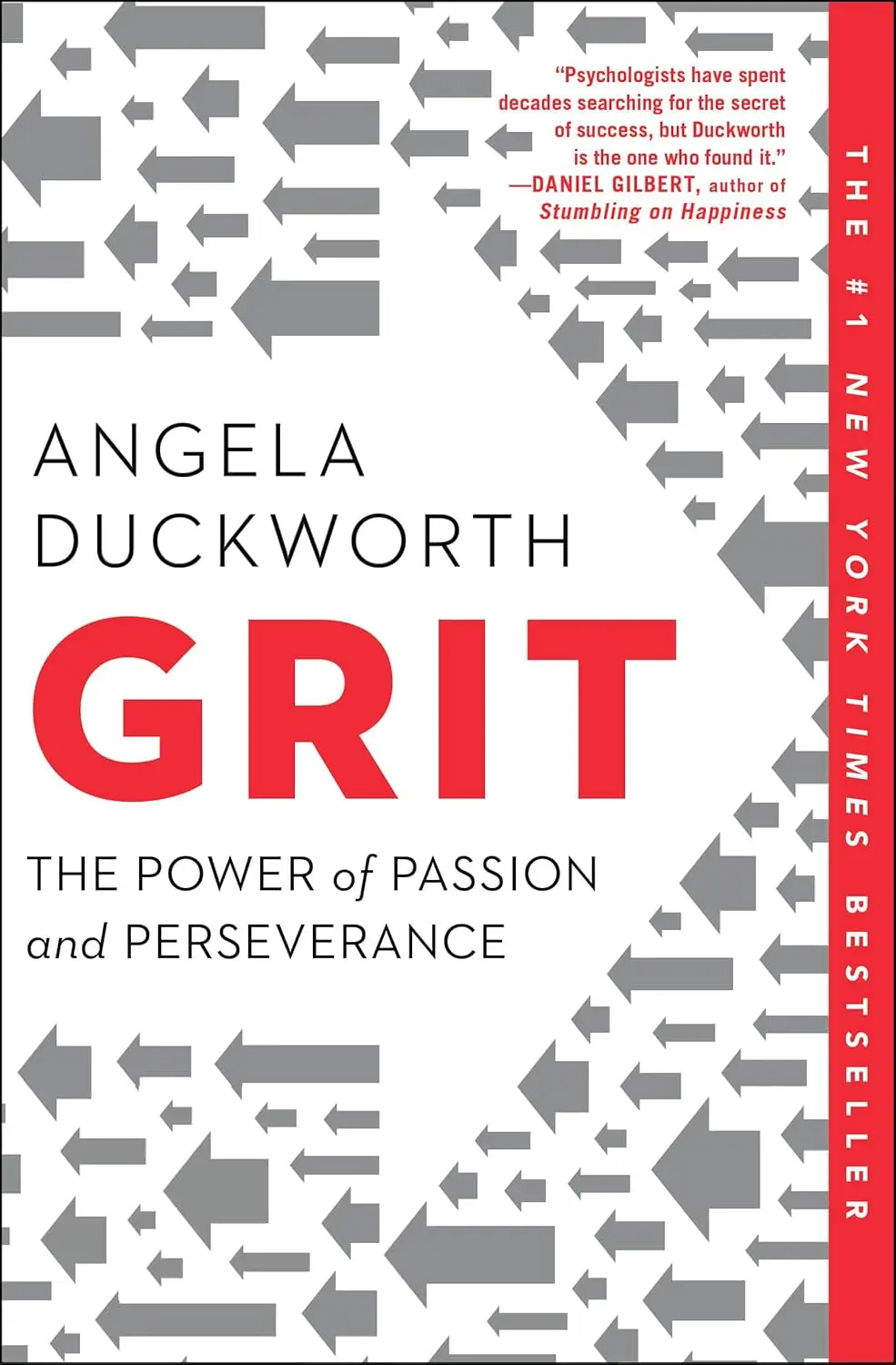
Duckworth’s research began with a question: why do some talented people never reach their potential while less talented people outperform them? Her answer, supported by studies across military cadets, spelling bee contestants, teachers in tough schools, and corporate salespeople, is grit, which she defines as passion and perseverance for long-term goals.
The book separates grit into two components. Passion is not the same as intense enthusiasm. It is consistency of interest over years. Gritty people do not bounce from project to project. They commit to a direction and stick with it even when progress stalls. Perseverance is the effort component: continuing to work hard when results are slow, when the novelty has worn off, and when easier paths are available.
Duckworth addresses the talent question directly. She does not deny that talent matters. She argues that effort counts twice. Talent multiplied by effort produces skill. Skill multiplied by effort produces achievement. So effort enters the equation at two points, and people who assume talent is everything tend to underinvest in effort because they think the outcome is already determined.
The book also covers how grit develops. Parenting style matters (demanding and supportive parents raise grittier kids than permissive or authoritarian ones). Practice matters, specifically deliberate practice that targets weaknesses rather than repeating strengths. And purpose matters: people who connect their work to something larger than themselves tend to sustain effort longer.
For founders, grit maps directly to the startup experience. Building a company takes years. The early enthusiasm fades. The market does not respond as quickly as you expected. Competitors emerge. Revenue grows slowly. The founders who make it through are not always the most talented. They are often the ones who simply kept going.
Bill Gates and Adam Grant have recommended it. At about 350 pages, the book is thorough. Duckworth draws on both her academic research and personal stories, including her relationship with her father, who told her she was not a genius, and her decision to prove that persistence matters more.
