
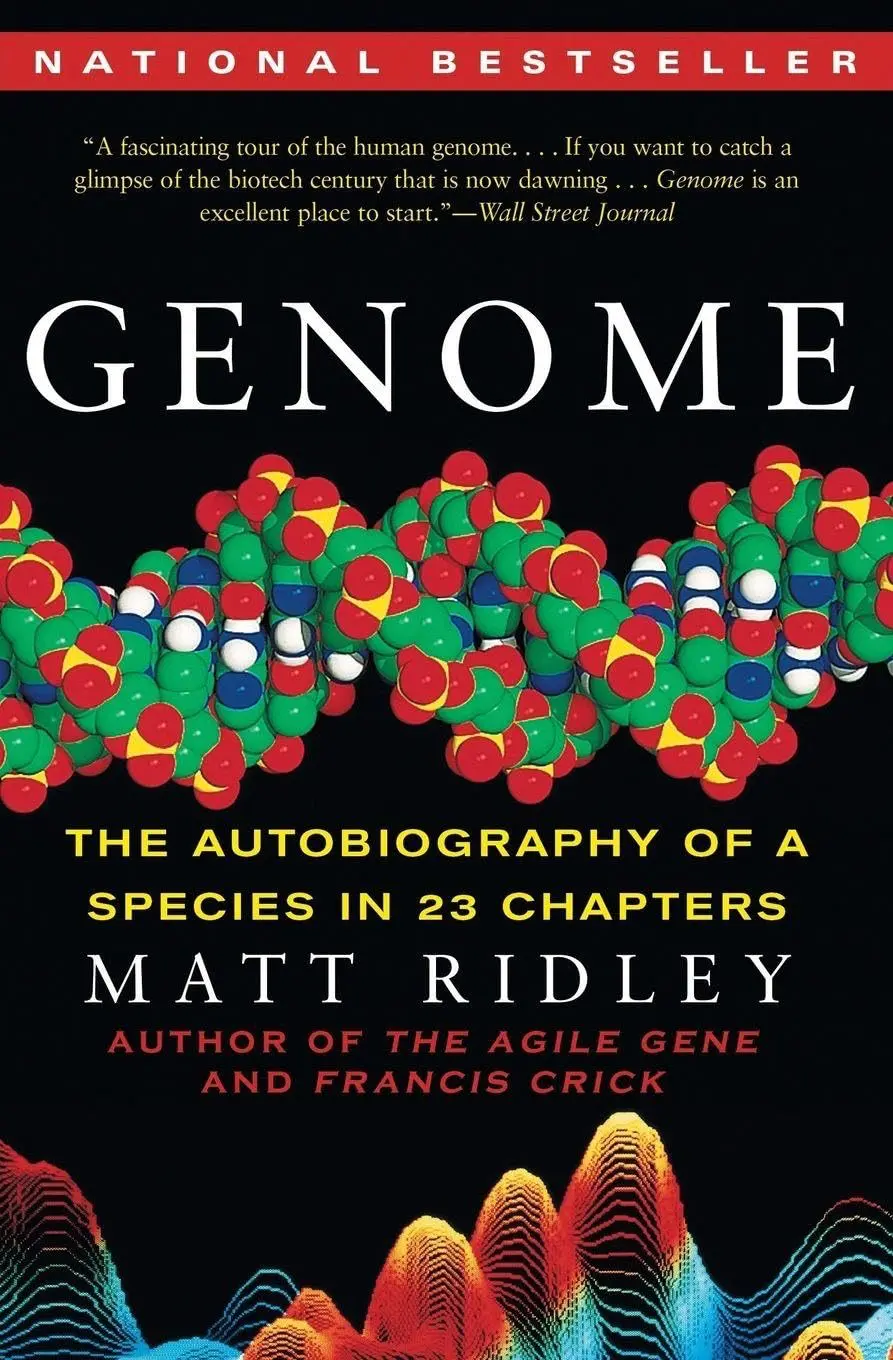
Ridley’s structure is simple and clever. One gene from each of the 23 chromosomes is the starting point for a chapter. Chromosome 1 covers the origin of life. Chromosome 4 covers Huntington’s disease and the question of genetic determinism. Chromosome 6 covers intelligence and the nature-nurture debate. Chromosome 10 covers stress and how genes interact with environment. Chromosome X covers sex and gender.
The format allows Ridley to cover an enormous range of topics without the book feeling scattered. Each chapter is self-contained and can be read independently, but the chapters build a cumulative picture of how genetics shapes human life.
Ridley writes clearly and with a point of view. He is not a neutral reporter of the scientific consensus. He takes positions on controversial topics: genes influence intelligence (but environment does too), genetic determinism is wrong (genes create predispositions, not destinies), and the nature-nurture debate is a false binary (the real question is how genes and environment interact).
The book was published in 1999, before the Human Genome Project was completed, and some of the specific genetic details have been updated by later research. But the conceptual framework holds up: the human genome is a document written over billions of years, and reading it tells you something about evolution, disease, behavior, and what it means to be human.
For founders, especially those in biotech or health tech, the book provides a readable introduction to genetics that goes beyond textbook summaries. For general readers, it is one of the best popular science books on the subject.
Bill Gates has recommended it. At about 350 pages, the book reads quickly because each chapter is a fresh story. Ridley (who also wrote The Rational Optimist) is a skilled writer who makes complex science accessible without losing accuracy. The 23-chapter structure gives the book a satisfying completeness.
