
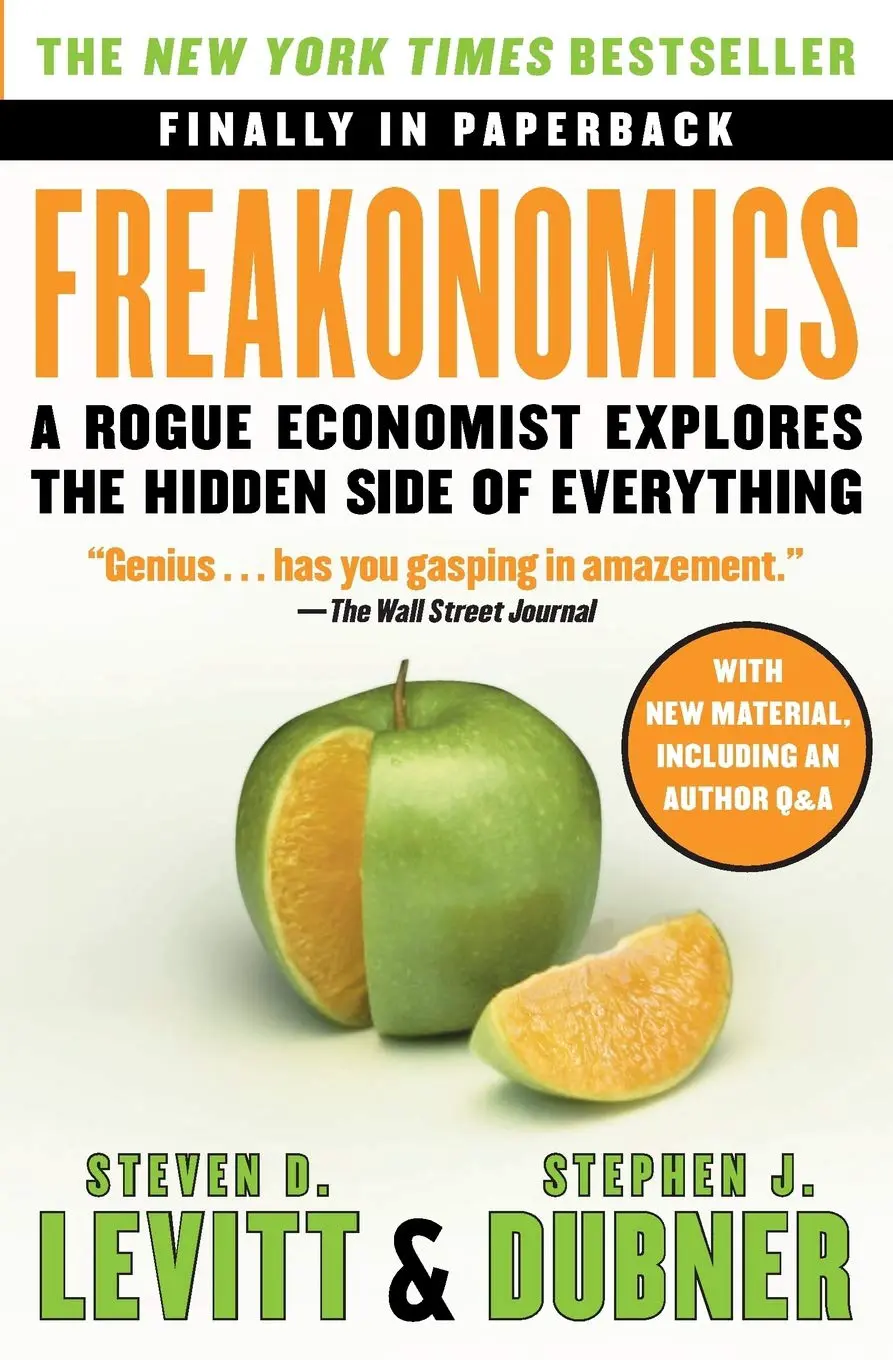
Freakonomics does not have a unified thesis. Instead, it applies the economist’s toolkit, particularly the analysis of incentives, data, and natural experiments, to questions that most economists ignore. The result is a series of surprising findings that challenge conventional wisdom.
The most controversial chapter argues that the legalization of abortion in the 1970s contributed significantly to the drop in crime in the 1990s. The logic: unwanted children born into poverty and instability are statistically more likely to commit crimes. When abortion became legal, fewer unwanted children were born, and the crime rate dropped a generation later. The argument has been debated extensively by other researchers, with some supporting it and others finding methodological problems.
Other chapters are lighter. Levitt analyzes sumo wrestling results and finds statistical evidence of match-fixing. He examines whether a child’s name affects their life outcomes (it does not, once you control for socioeconomic status). He studies what makes a good parent versus a bad parent and finds that who the parents are matters far more than what they do.
The unifying thread is that people respond to incentives, and understanding incentives helps you understand behavior that otherwise seems irrational. Real estate agents, for example, sell their own homes for more money than their clients’ homes because the incentive structure is different: they earn a small commission on your sale but the full profit on their own.
For founders, the incentive-analysis approach is directly useful. Why do employees behave a certain way? Look at the incentive structure. Why do customers make irrational choices? Look at what they are actually optimizing for. Why does a policy produce the opposite of its intended effect? Because the incentives point in a different direction.
Bill Gates has recommended it. At about 260 pages, the book reads quickly. Dubner’s journalistic writing keeps the economics accessible. The main criticism is that some of the headline findings have not replicated well, and the provocative framing can oversell the certainty of the conclusions. But as a demonstration of how to think about incentives, the book is effective.
