
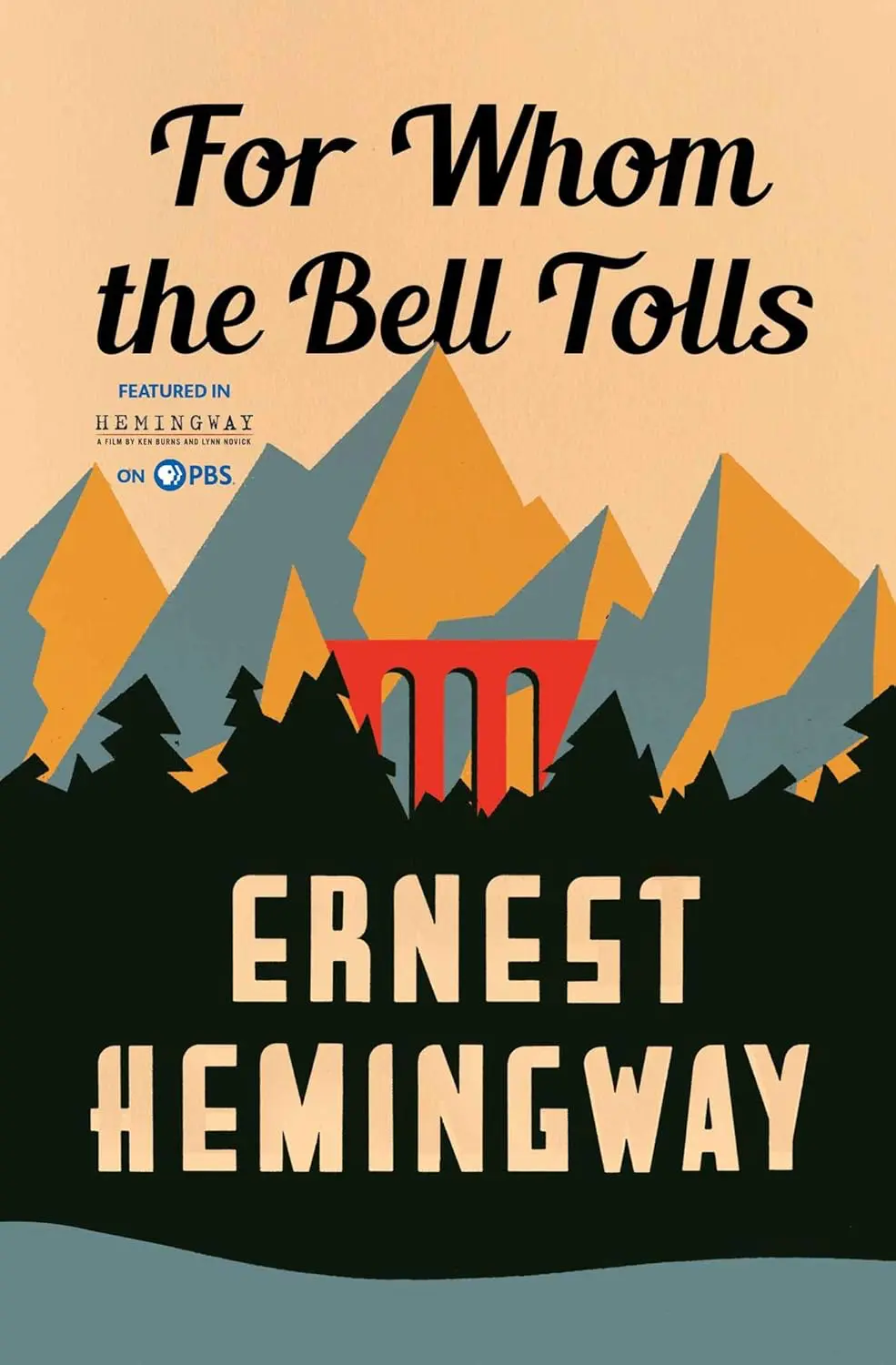
For Whom the Bell Tolls takes place over three days in the mountains of Spain during the Spanish Civil War. Robert Jordan, an American professor who has volunteered for the Republican cause, is sent behind fascist lines to destroy a bridge with the help of a local guerrilla band. The bridge must be blown at a precise moment to support a larger military offensive, and the novel tracks the preparation, internal politics of the guerrilla group, and Jordan’s growing awareness that the mission may be doomed.
Hemingway covered the Spanish Civil War as a journalist, and the novel draws from that experience. The guerrilla fighters are drawn with specificity: Pablo, the once-brave leader who has become a coward; Pilar, his formidable wife who holds the group together through sheer force of personality; and Maria, a young woman recovering from the trauma of capture by fascist soldiers. Jordan’s relationship with Maria, which develops rapidly over the three days, is both a love story and a way for Hemingway to explore what people reach for when they know time is short.
The writing is Hemingway’s most disciplined. The dialogue often mimics the rhythms of Spanish, with formal constructions translated literally into English (“thou” instead of “you”), which gives the speech a formality that some readers love and others find affected. The action sequences, particularly the bridge demolition and the scenes of guerrilla combat, are tense and precisely rendered.
For founders and business readers, the book may seem like an unusual recommendation. But it is fundamentally about leading a team under pressure, making decisions with incomplete information, and accepting the possibility that your best effort might not be enough. Jordan has to manage personalities, maintain morale, and stay committed to a plan while the circumstances around him deteriorate.
The book is long for a Hemingway novel, about 500 pages, and some of the middle sections move slowly as Hemingway builds the internal dynamics of the guerrilla band. But the tension never fully releases, and the final chapters deliver one of the more powerful endings in American fiction.
