
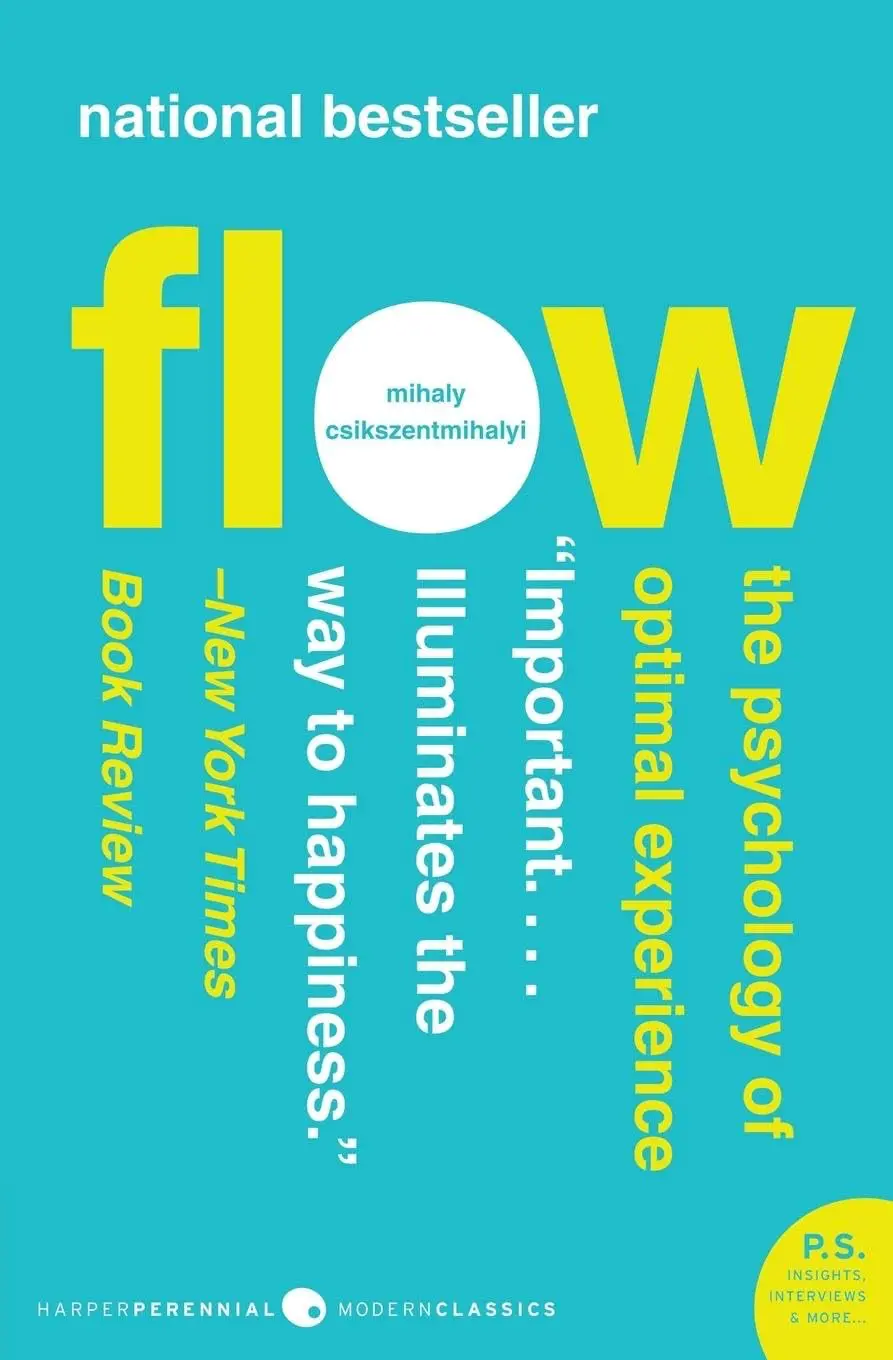
Csikszentmihalyi (pronounced “cheek-sent-me-high”) spent decades studying what makes experiences genuinely satisfying. His conclusion: the moments when people report being happiest are not passive or relaxing. They are moments of deep engagement with a challenging activity, what he calls “flow.”
Flow occurs when several conditions are met. The activity has clear goals and immediate feedback. The challenge matches your skill level (too easy produces boredom, too hard produces anxiety). You feel a sense of personal control. Self-consciousness disappears. Time distortion occurs (hours feel like minutes). The activity becomes autotelic, meaning it is its own reward rather than a means to an end.
Csikszentmihalyi documents flow across domains: athletes describe it during peak performance, musicians during improvisation, surgeons during complex operations, writers during creative work. The state itself is consistent regardless of the activity. What changes is the context.
The practical implication is that happiness is not something that happens to you. It is something you build into your life by structuring activities that produce flow. This requires matching challenge to skill, which means continually developing skills and seeking progressively harder challenges. It also requires attention management, because flow cannot occur when the mind is fragmented or distracted.
For founders, flow matters because the activities that produce the most value (deep product thinking, creative problem-solving, strategic planning) are also the ones most likely to generate flow states. But the typical founder’s day (email, meetings, Slack, interruptions) is designed to prevent flow from ever occurring. Understanding the conditions for flow helps you design your work to include more of it.
Cal Newport’s Deep Work draws heavily on Csikszentmihalyi’s research. At about 300 pages, the book is academic in places but accessible overall. Csikszentmihalyi writes clearly, and the interview-based examples keep the theory grounded in lived experience. The book was published in 1990 and has influenced how psychologists, educators, and business thinkers understand optimal performance.
