
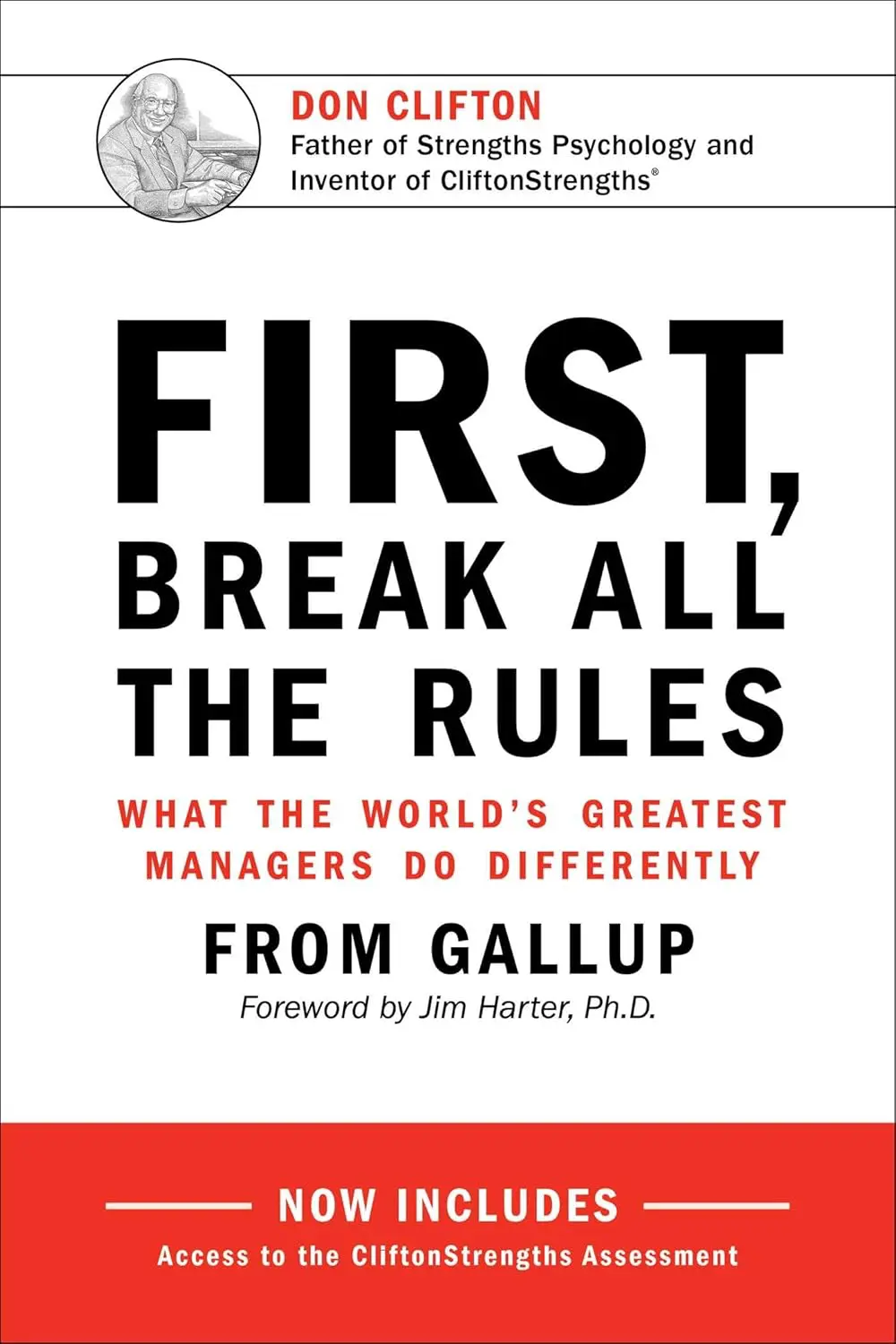
Gallup conducted in-depth interviews with over 80,000 managers across industries, countries, and company sizes. Buckingham and Coffman analyzed the data to identify patterns that separated the best managers (those whose teams had the highest engagement, productivity, and retention) from the rest.
The findings challenged several pieces of conventional management wisdom. Great managers do not try to fix weaknesses. They identify each person’s strengths and put them in roles where those strengths produce results. Great managers do not treat everyone the same. They learn what motivates each individual and manage accordingly. Great managers define outcomes clearly but do not prescribe the steps to get there. They trust people to find their own paths.
The book also introduces twelve questions that predict team engagement and performance. These range from “do I know what is expected of me at work?” to “does my supervisor care about me as a person?” to “in the last seven days, have I received recognition for doing good work?” The simplicity of the questions is the point. Employee engagement does not depend on free lunches or ping-pong tables. It depends on whether people feel their manager knows them, supports them, and puts them in positions to succeed.
The writing is clear and data-driven. Buckingham and Coffman support their arguments with numbers from the Gallup database, which is the largest collection of workplace engagement data ever assembled. The style is practical rather than academic.
For founders, the book is useful as soon as you start managing people. Most first-time managers default to either micromanaging (prescribing every step) or hands-off neglect (assuming good people will figure it out). The Gallup research shows a specific middle path: clarity about outcomes combined with flexibility about methods.
Bob Iger has cited it. At about 270 pages, the book is well-organized. The twelve questions alone are worth the read because they give you a diagnostic for team health that you can use immediately.
