
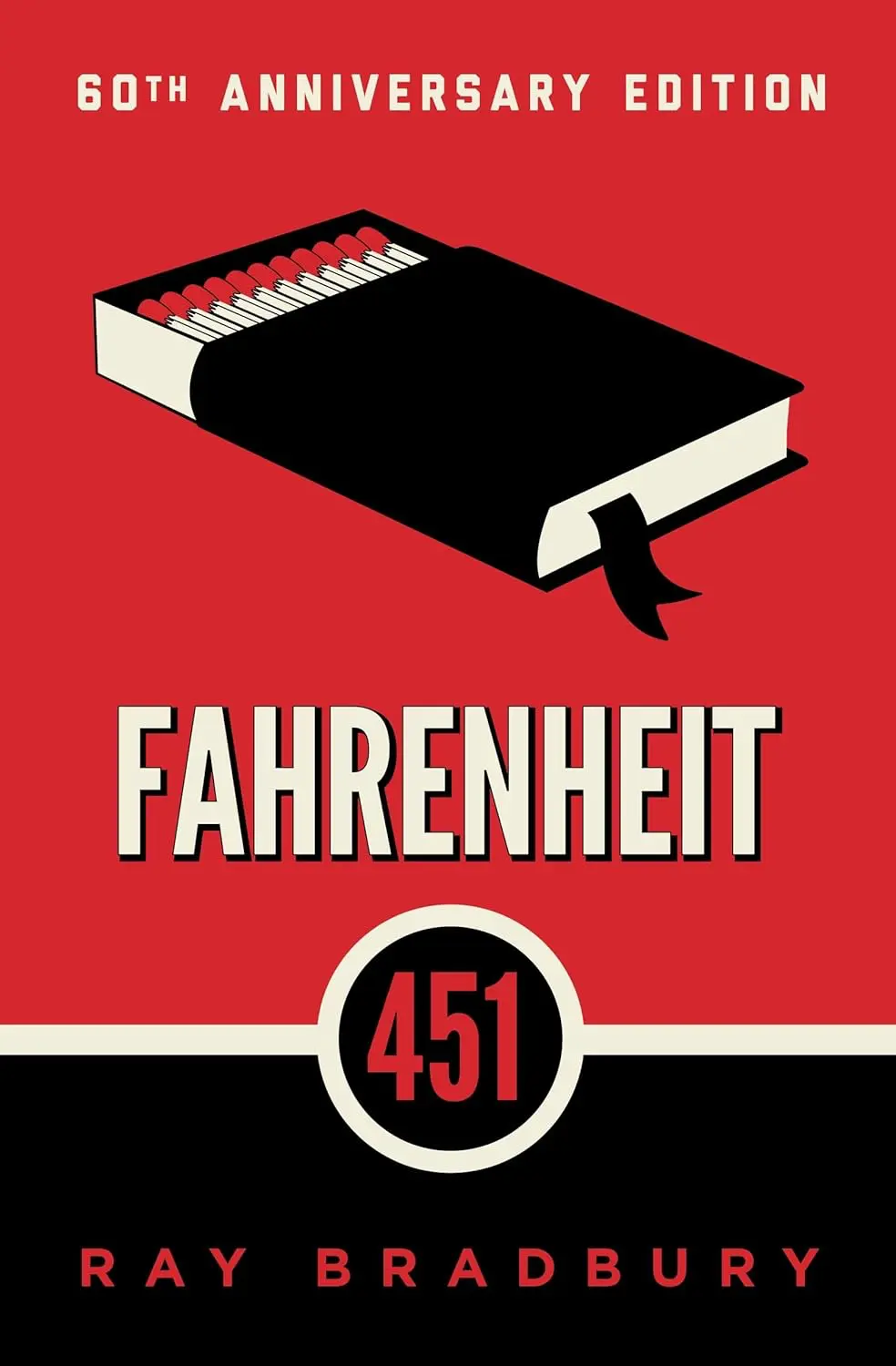
Fahrenheit 451 follows Guy Montag, a fireman whose job is to burn books, which have been outlawed in a future America. People live in homes with wall-sized television screens, wear tiny earbuds that stream constant entertainment, and drive at extreme speeds. Nobody reads. Nobody thinks slowly. Conversations are superficial. Montag does not question any of this until he meets Clarisse, a teenage neighbor who asks him a simple question: are you happy?
The question destabilizes everything. Montag starts hiding books instead of burning them. He reads in secret. He discovers that the world described in the banned books, a world of complexity, ambiguity, and genuine feeling, is the opposite of the shallow, fast-moving society he lives in. His rebellion, and its consequences, form the plot.
Bradbury wrote the book in 1953, and what makes it remarkably prescient is that the censorship is not purely top-down. The government banned books partly because people stopped wanting them. Minorities objected to content they found offensive. Intellectuals were resented. The path of least resistance was to eliminate the source of discomfort. Bradbury was warning not about tyrannical governments but about a populace that trades depth for comfort and calls it progress.
For business readers, the book is relevant to anyone thinking about attention, media, and the information environment. The wall-sized screens and constant earbuds Bradbury described in 1953 look remarkably like smartphones and social media feeds. The question of whether technology is making people more informed or less thoughtful is one that founders building products should sit with.
The book is short, about 160 pages, and reads in a few hours. Bradbury’s prose is poetic and fast-moving. Elon Musk, Naval Ravikant, and Jordan Peterson have cited it. Like 1984 and Brave New World, Fahrenheit 451 belongs to a trio of dystopian novels that each warn about a different failure mode. Orwell warned about oppression. Huxley warned about pleasure. Bradbury warned about indifference.
